

Photo Disclaimer
Description
African Pyxie Bullfrog
Scientific Name: Pyxicephalus adspersus
Common Name: African Pyxie Bullfrog, African Bullfrog
Species Overview
Size: Adult males typically reach 6–9 inches (15–23 cm) in length and are considerably heavier than females, which usually reach 4–6 inches (10–15 cm). Males can weigh up to 2 lbs (0.9 kg).
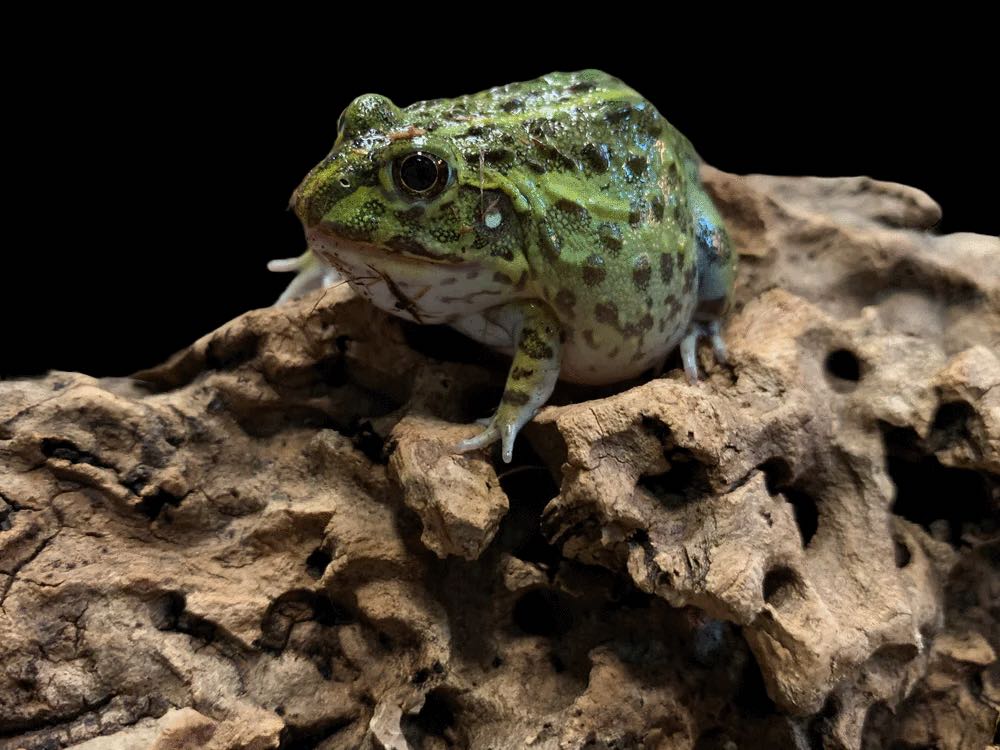
Appearance: African Pyxie Bullfrogs are robust, muscular frogs with a rounded body and large mouth. Colouration ranges from olive green to brown with mottled patterns. Skin is smooth to slightly granular, thick, and slightly waxy. Males develop a pronounced tympanum and robust forelimbs for territorial displays.
Distribution: Native to southern Africa, including South Africa, Botswana, Namibia, and Zimbabwe, inhabiting savannas, grasslands, and semi-arid regions.
Habitat: Terrestrial and burrowing. They spend much of their time underground in aestivation during dry seasons and emerge during rainy periods to breed in temporary pools.
Behaviour: Ambush predator feeding on insects, small vertebrates, and other amphibians. Males exhibit territorial aggression and may care for tadpoles in temporary pools.
Captive Care
Enclosure: A single adult should be housed in a 24 × 18 × 18 inches (60 × 45 × 45 cm) enclosure with a deep substrate (4–6 inches / 10–15 cm) of soil or coco fibre for burrowing. Larger adults may benefit from a 36 × 18 × 18 inches (90 × 45 × 45 cm) enclosure for additional floor space. Include shallow water for soaking and adequate ventilation.
Temperature and Humidity:
Warm area: 78–85°F (26–29°C)
Cool area: 72–75°F (22–24°C)
Humidity: 60–80%, maintained with occasional misting; provide a damp burrowing substrate.
Lighting: Low-intensity lighting with a 12-hour light cycle is sufficient. Low-level UVB may be beneficial but is not essential.
Diet: Feed a variety of appropriately sized insects such as crickets, roaches, and earthworms. Occasional pinky mice or small feeder fish may be offered to adult males. All prey should be gut-loaded and dusted with calcium; multivitamins provided periodically.
Behaviour in Captivity: Mostly sedentary, spending much time partially buried. Feeding is sudden and aggressive. Handling should be minimal due to stress and potential bites.
Special Considerations:
• House singly—highly aggressive, especially males
• Provide deep substrate for burrowing
• Avoid overfeeding to prevent obesity
• Maintain clean water for soaking to prevent infections
Taxonomy Note
African Pyxie Bullfrogs belong to the genus Pyxicephalus, part of the family Pyxicephalidae, a group of robust, burrowing frogs native to sub-Saharan Africa. Members of this family are characterized by their large size, aggressive predation, and fossorial lifestyle. Pyxicephalus adspersus is highly regarded for its territorial behavior, burrowing ability, and parental care of tadpoles in natural habitats.
Genetics Note
Naturally occurring species with no recognized captive-bred morphs.
Estimate shipping