

Photo Disclaimer
Description
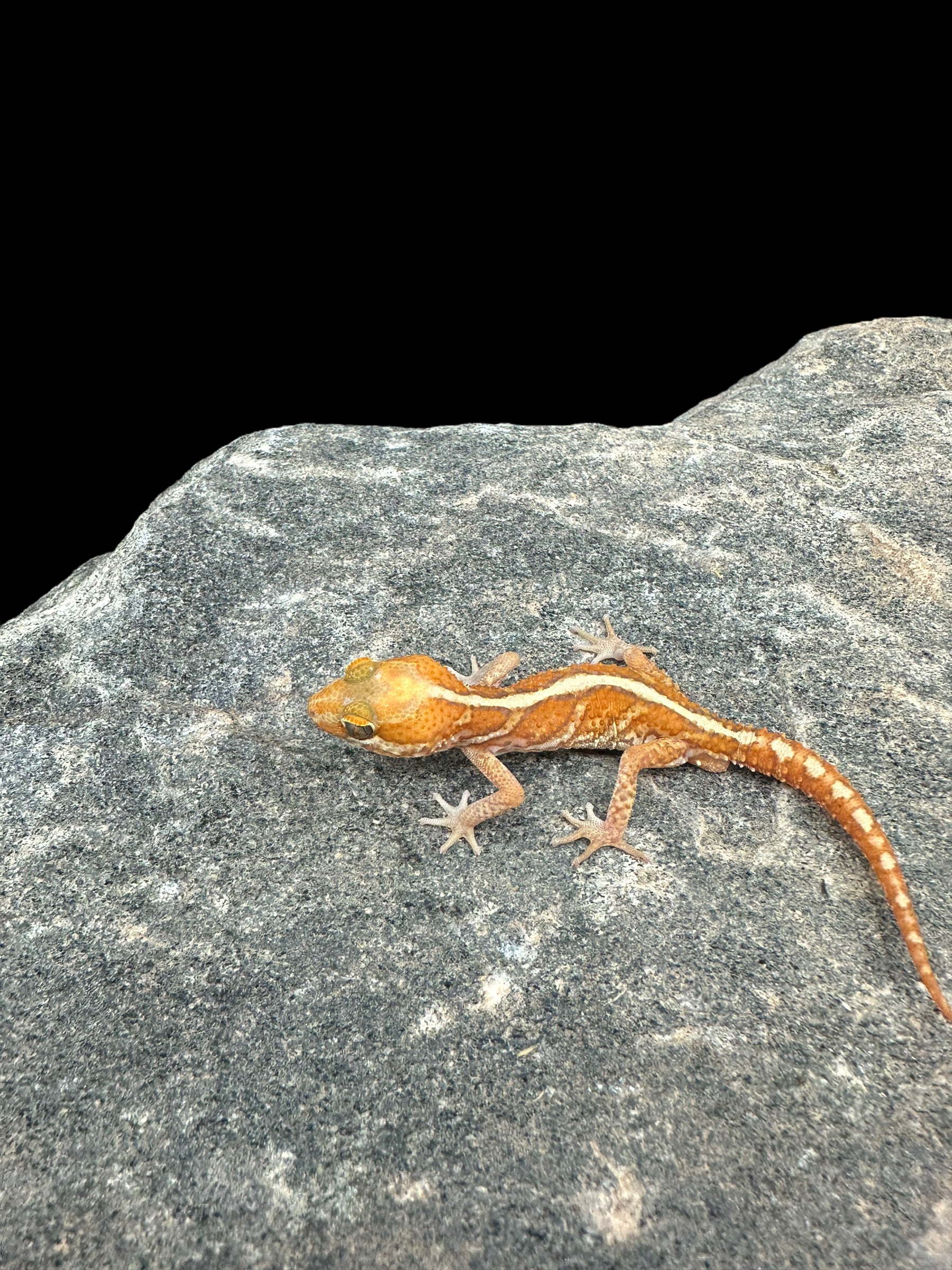
Pictus Gecko (Amel)
Scientific Name: Paroedura pictus
Common Name: Madagascar Ground Gecko, Panther Gecko, Pictus Gecko (Amel)
Species Overview
Size: Adult Amelanistic (Amel) Pictus Geckos typically reach 4–6 inches (10–15 cm) in total length, including the tail. They are small, ground-dwelling geckos with sturdy bodies, short limbs, and expressive eyes adapted for nocturnal life.
Appearance: The Amelanistic Pictus Gecko is a visually stunning morph of Paroedura pictus characterized by the absence of black pigmentation. This genetic trait replaces the species’ usual dark markings with shades of orange, peach, cream, and pink. The base colour is often warm tan or sandy orange, with lighter cream banding across the back and tail. The eyes are silvery-grey to light gold rather than the dark bronze typical of wild-type individuals. The skin retains the same slightly rough, granular texture, and the tail is short, rounded, and capable of regeneration if dropped.
Distribution: The species Paroedura pictus is endemic to southern and southwestern Madagascar, inhabiting semi-arid forests and scrublands. The Amel form is a selectively bred variation found only in captivity.
Habitat: In the wild, Pictus Geckos live in dry, rocky regions with sandy soil and scattered vegetation. They hide under bark, rocks, and leaf litter during the day. In captivity, Amel Pictus Geckos thrive in naturalistic semi-arid setups that provide warmth, soft substrate, and ample hides.
Behaviour: Pictus Geckos are nocturnal, terrestrial, and active hunters. The Amel form behaves identically to the wild type—curious, cautious, and bold once settled. They are hardy and fast-moving but can be startled easily. Handling should be minimal to prevent tail loss and stress.
Captive Care
Enclosure: Provide a terrestrial enclosure measuring at least 18 inches × 18 inches × 12 inches (45 × 45 × 30 cm) for a single adult. Use a sandy soil or clay-sand substrate 2–3 inches deep to allow burrowing. Add cork bark, rock hides, and driftwood for cover. A semi-arid bioactive setup can help maintain humidity balance and encourage natural behaviour.
Temperature & Humidity: Maintain daytime temperatures between 78–86°F (26–30°C) with a basking spot up to 90°F (32°C). Nighttime temperatures can safely drop to 70–74°F (21–23°C). Keep humidity between 50–70%, with light evening misting and a small humid hide for shedding. Ensure good ventilation to prevent damp conditions.
Lighting: While nocturnal, Amel Pictus Geckos benefit from low-level UVB lighting (2–5%) to support calcium metabolism and overall health. Maintain a 12-hour day/night cycle with dim ambient lighting.
Diet: Offer a varied diet of gut-loaded insects such as crickets, roaches, mealworms, and silkworms. Feed adults 3–4 times weekly and juveniles daily. Dust all insects with calcium and multivitamin supplements regularly to prevent metabolic issues.
Behaviour in Captivity: Amel Pictus Geckos are hardy, adaptable, and excellent display animals for naturalistic setups. They exhibit confident feeding behaviour and are often visible at dusk or shortly after lights-out. Their vivid coloration and manageable size make them favourites among gecko keepers.
Special Considerations: Avoid excessive humidity or cold conditions. Provide a humid retreat to aid in shedding but keep the enclosure primarily dry. Handle only when necessary, as stress can lead to tail loss.
Taxonomy Note
The Pictus Gecko (Paroedura pictus) belongs to the family Gekkonidae and is one of Madagascar’s most well-known terrestrial gecko species. It is related to Paroedura bastardi and Paroedura stumpffi and is commonly called the Madagascar Ground Gecko or Panther Gecko. Its popularity in herpetoculture stems from its moderate size, docile nature, and adaptability to captive conditions.
Genetics Note
Amelanism (Amel): A recessive genetic trait that eliminates black pigment, resulting in orange, pink, and cream coloration. Both parents must carry the Amel gene for offspring to visually express the trait.
Inheritance:
-
Het Amel × Het Amel: 25% Amel, 50% Het Amel, 25% Normal
-
Amel × Het Amel: 50% Amel, 50% Het Amel
The Amel morph is the most well-recognized selectively bred genetic form of Paroedura pictus. Other visual variations occasionally appear through natural colour intensity differences but are not distinct morphs.