

Photo Disclaimer
Description
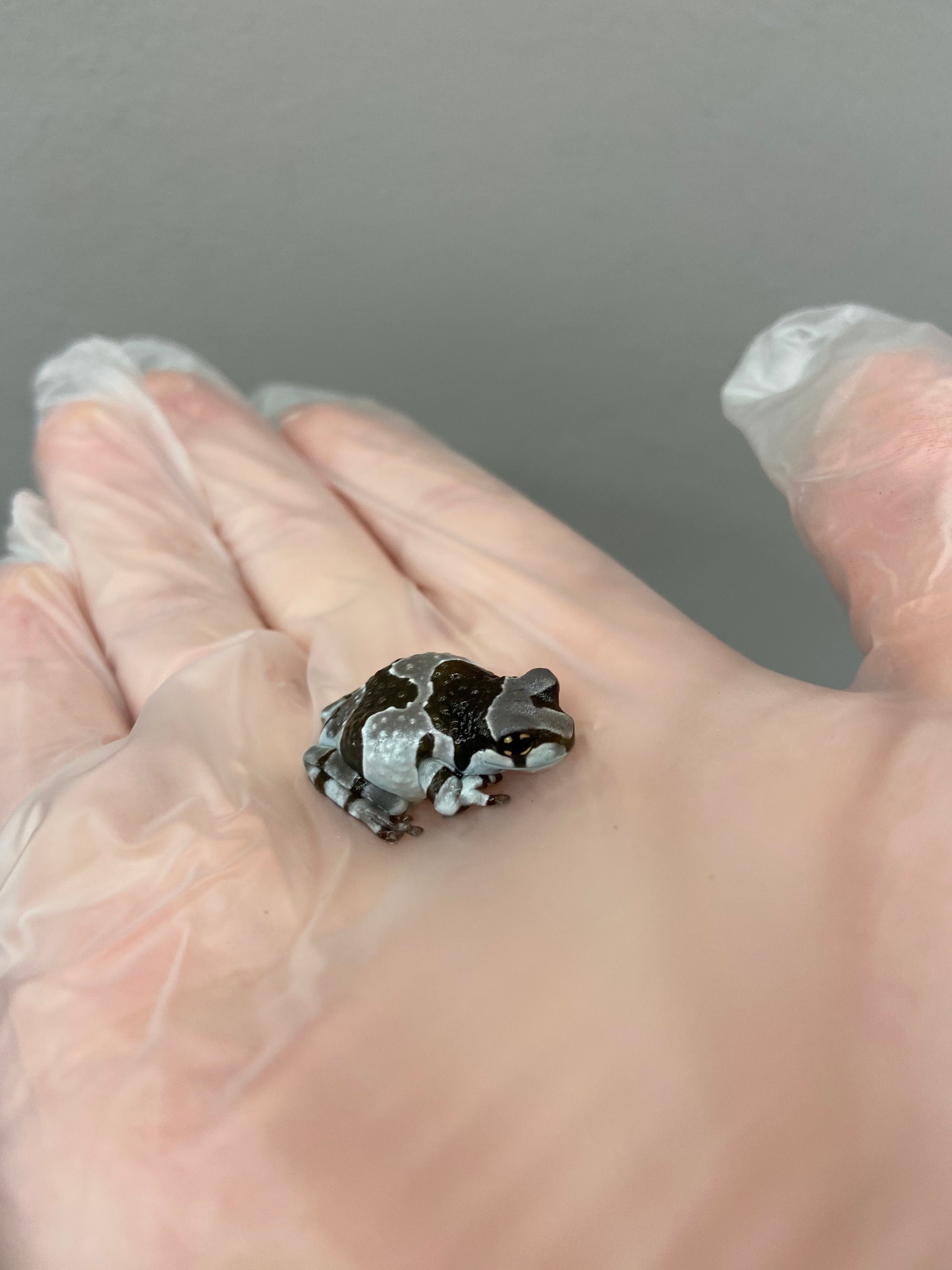
Amazon Milk Frog (Trachycephalus resinifictrix)
Scientific Name: Trachycephalus resinifictrix
Common Name: Amazon Milk Frog, Mission Golden-eyed Tree Frog
Species Overview
Size: Adults typically reach 2.5 to 4 inches (6.5 to 10 cm), with females generally larger and more robust.
Appearance: Amazon Milk Frogs are striking arboreal amphibians with a pale grey to bluish-grey base colour contrasted by bold chocolate-brown banding or blotches. As they mature, their skin develops a powdery “milky” texture, inspiring their common name. Their bodies are sturdy, with slightly granular skin, large adhesive toe pads, and expressive golden eyes with horizontal pupils.
Distribution: Native to the Amazon Basin, including Brazil, Colombia, Venezuela, and the Guianas.
Habitat: Wild individuals inhabit humid lowland rainforest, especially in canopy layers. They make frequent use of water-filled tree hollows for breeding and daytime refuge.
Behaviour: Primarily nocturnal, they rest on leaves or branches during the day and become active at night. When stressed, they produce a thick, sticky “milk” secretion that acts as a mild deterrent.
Captive Care
Enclosure: A single adult or small group thrives in an 18 × 18 × 24 inches (45 × 45 × 60 cm) enclosure, while larger groups benefit from a 24 × 18 × 24 inches (60 × 45 × 60 cm) setup. Provide abundant vertical climbing structure with branches, cork flats, vines, and dense foliage. Use a moisture-retentive, naturalistic substrate such as coco fibre, soil blends, or sphagnum mixes to maintain humidity while allowing proper drainage. Include a shallow water basin for hydration.
Temperature and Humidity:
Ambient temperature: 74 to 82°F (23 to 28°C)
Warm area: around 84°F (29°C)
Night temperature: 68 to 72°F (20 to 22°C)
Humidity: 60 to 80%, maintained with daily misting and strong ventilation.
Lighting: Provide low to moderate UVB (2 to 5%) with bright, diffused lighting to support plant growth.
Diet: Feed small to medium insects such as crickets, roaches, black soldier fly larvae, silkworms, and occasional waxworms or hornworms. Supplement all prey with calcium and multivitamins.
Behaviour in Captivity: Amazon Milk Frogs are hardy, relatively bold, and adapt well to tall, planted enclosures. They climb actively at night and remain perched during the day. Handling should be avoided due to their sensitive skin and defensive secretions.
Special Considerations:
• If handling is necessary, use wet, powder-free gloves or a soft, damp net.
• Provide strong airflow to prevent stagnant humidity or mould.
• Use only dechlorinated water for all misting and water dishes.
• Ensure climbing structures are sturdy—these frogs are heavier-bodied.
• Mist regularly but avoid overly wet substrate.
• Secure all enclosure access points; Milk Frogs are powerful jumpers.
Taxonomy Note
The Amazon Milk Frog belongs to the family Hylidae and the genus Trachycephalus, a group known for large-bodied arboreal frogs that frequently utilise tree cavities for breeding. Their adaptations include strong toe pads, robust limbs, and tolerance for humidity fluctuations typical of rainforest canopies.
Genetics Note
There are no recognised morphs for Trachycephalus resinifictrix. Variation in banding, colour intensity, and pattern layout occurs naturally among individuals but does not constitute defined genetic morphs.
Estimate shipping