

Photo Disclaimer
Description
Amazon Tree Boa / Garden Tree Boa
Scientific Name: Corallus hortulanus
Common Name: Amazon Tree Boa, Garden Tree Boa
Species Overview
Size: Adults typically reach 5–7 feet (1.5–2.1 m) in length, with a slender yet muscular body. Average adult weight ranges from 2–4 pounds.
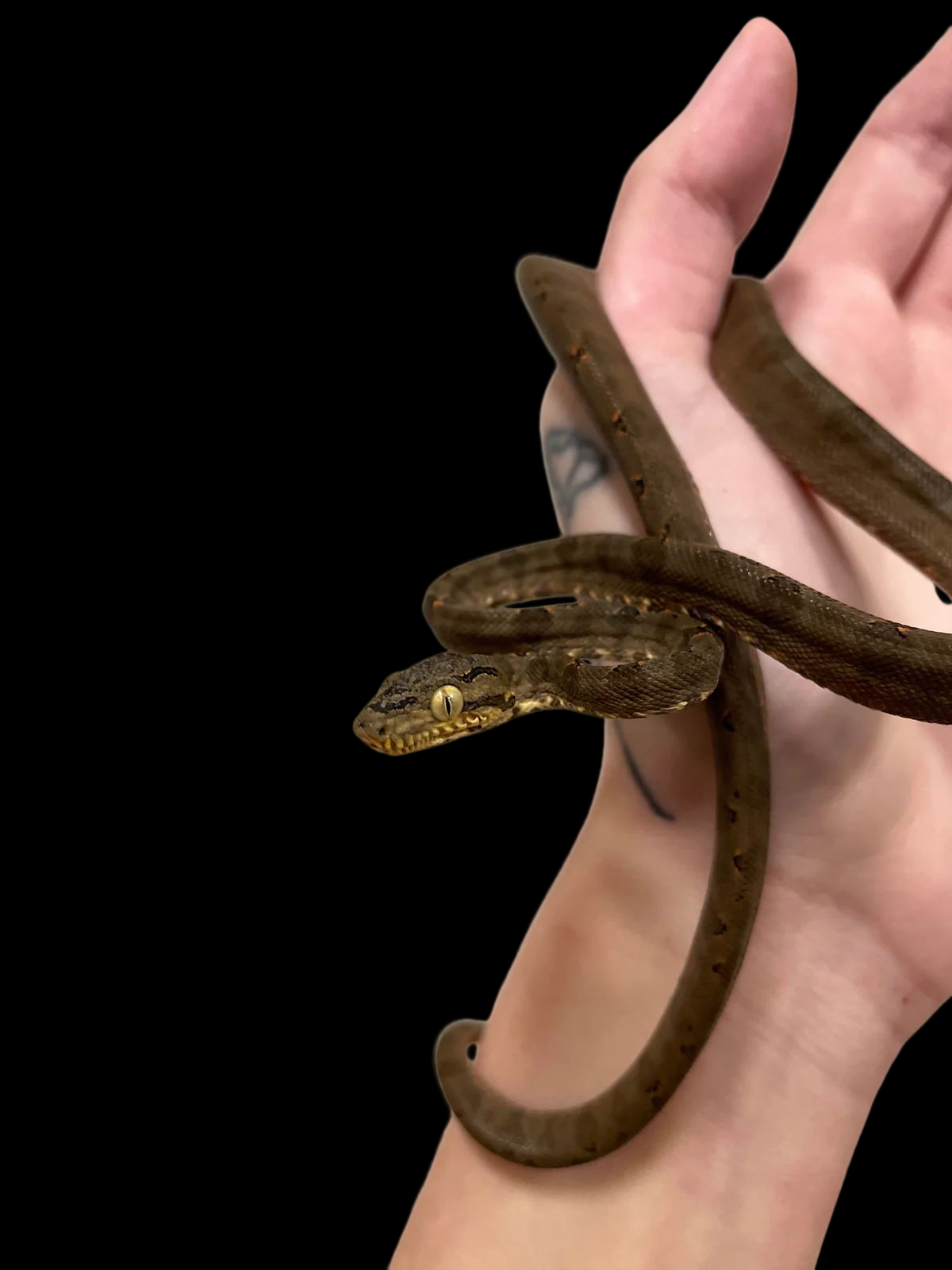
Appearance: One of the most variable boa species in colour and pattern. Natural colour forms range from deep brown or black to bright yellow, orange, and red. Most show distinctive dark hourglass markings across the back, though some may appear nearly uniform. This variability has earned them the nickname “garden phase” boas.
Distribution: Native to the Amazon Basin east of the Andes, including Venezuela, Guyana, Brazil, Ecuador, Peru, and Bolivia.
Habitat: Lowland tropical forests receiving over 60 inches of rain annually, including woodland edges, secondary growth, agricultural zones, and near human habitation. Occurs from sea level up to 3,280 feet (1,000 m), preferring habitats with continuous canopy contact for arboreal movement.
Behaviour: Highly arboreal as adults, while juveniles are often found closer to the ground in low shrubs hunting small lizards. Nocturnal predators using heat-sensing pits to locate prey, including rodents, birds, and lizards.
Captive Care
Enclosure: A single adult should be housed in a vertically oriented enclosure at least 36 × 18 × 18 inches (91 × 45 × 45 cm), with sturdy branches, climbing perches, and dense foliage for cover. Larger setups or custom enclosures provide additional climbing space. Bioactive or naturalistic environments with live plants, cork bark, and leaf litter are recommended.
Temperature and Humidity:
Warm area: 78–85°F (25–29°C)
Basking area: 88–90°F (31–32°C)
Cool area: 75–77°F (24–25°C) at night
Humidity: 60–80%, maintained with misting and good ventilation
Lighting: Low-intensity lighting with a 12-hour light cycle. Low-level UVB is optional but can benefit plant growth in naturalistic setups.
Diet: Appropriately sized rodents, starting with small mice or lizards for juveniles, progressing to rats for adults. Feed every 10–14 days, avoiding overfeeding.
Behaviour in Captivity: Defensive, especially when young. May strike if disturbed but can settle with consistent, low-stress husbandry. Best appreciated as a display species rather than frequently handled pet.
Special Considerations:
• Prefer captive-bred over wild-caught specimens to reduce parasite risk
• High humidity and naturalistic climbing structures are essential
• Recommended for intermediate to advanced keepers
Taxonomy Note
Amazon Tree Boas belong to the genus Corallus, part of the family Boidae, a group of non-venomous constrictors native to Central and South America. Members of this family are characterized by their arboreal tendencies, heat-sensing pits, and diverse coloration. Corallus hortulanus is valued for its striking pattern variability, arboreal hunting behavior, and display appeal.
Genetics Note
Amazon Tree Boas display extensive natural polymorphism, with a wide range of colours and patterns arising from complex, polygenic inheritance. Captive-bred individuals may express traits such as calico, candy cane, leopard, tiger, hypomelanistic, or melanistic patterns, with considerable variation even among siblings from the same clutch. These genetics contribute to the species’ reputation for highly variable and visually striking appearances.
Estimate shipping