


Photo Disclaimer
Description
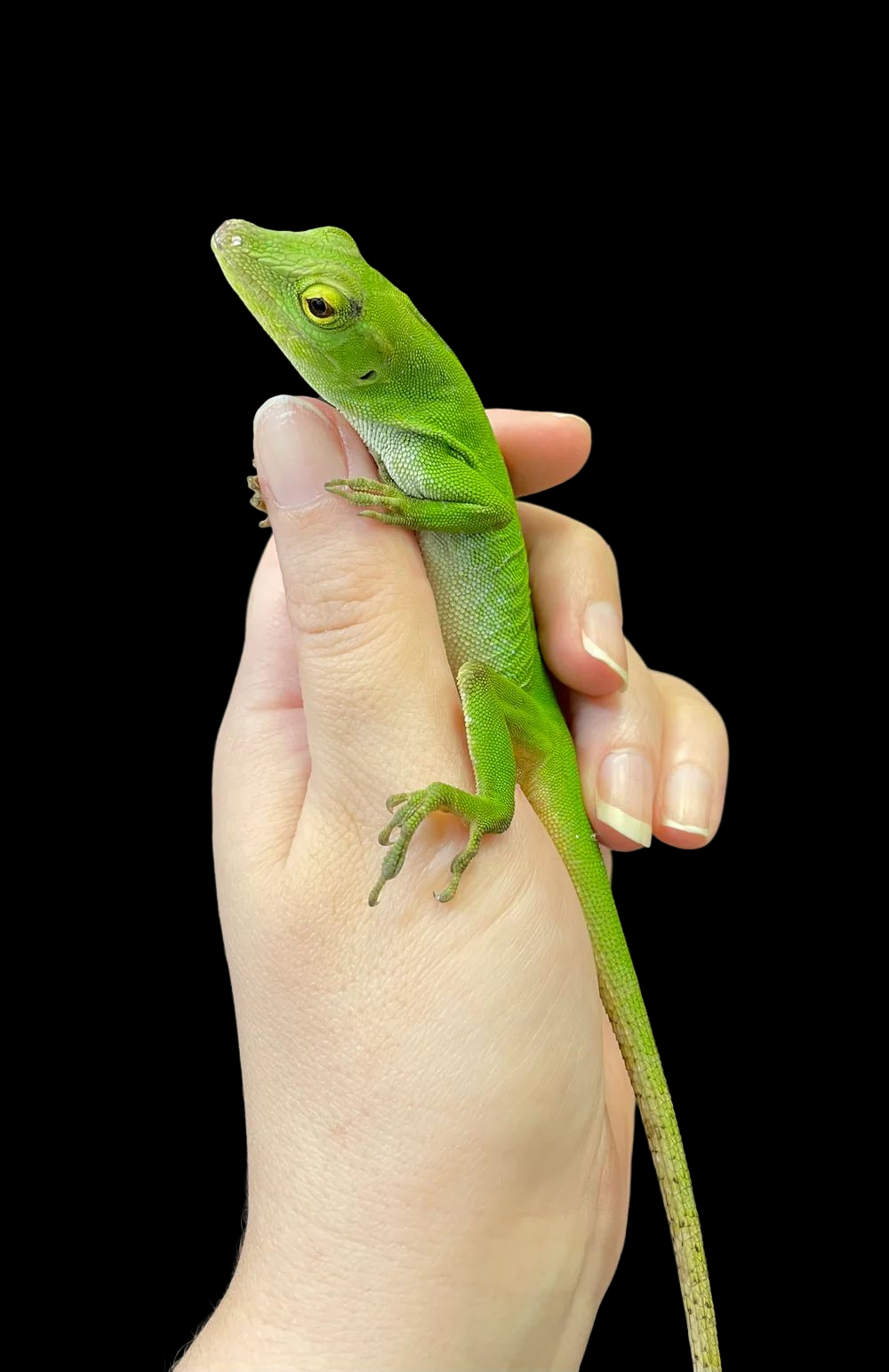
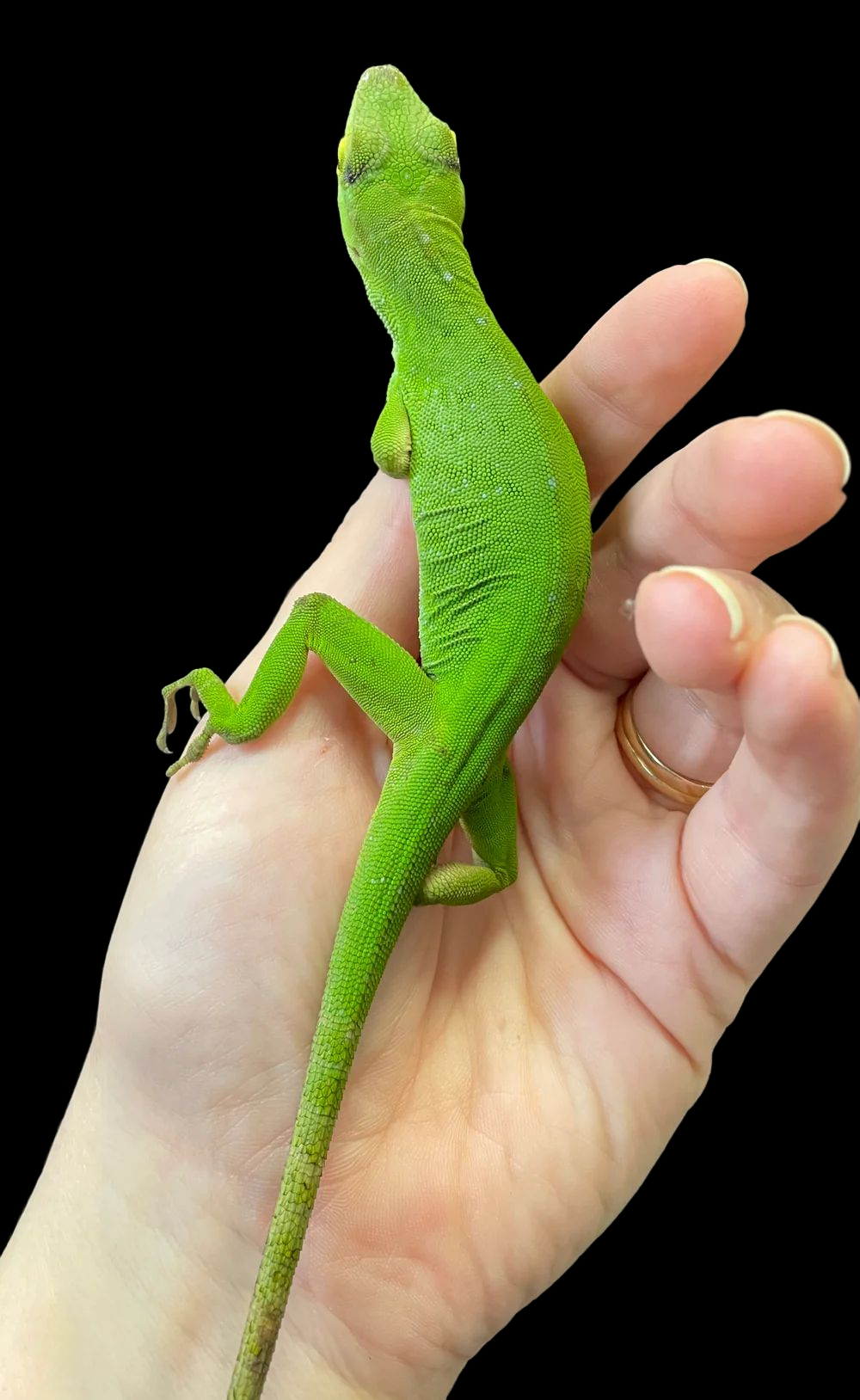
Green Neotropical Anole (Anolis biporcatus)
Scientific Name: Anolis biporcatus
Common Name: Green Neotropical Anole, Giant Green Anole
Species Overview
Size: Adults typically reach 10–12 inches (25–30 cm) in total length, with a notably long tail and a slender, athletic build. Males are often larger and display more pronounced head structure and dewlap size.
Appearance: The Green Neotropical Anole is a vibrant emerald-green lizard with a sleek, elongated body, long limbs, and a sharply defined head profile. Colour can shift subtly between bright green, yellow-green, or turquoise tones depending on mood, temperature, and surroundings. Males possess a sizeable dewlap that ranges in colour from pale yellow to orange or cream. Two faint ridges may run along the body, reflecting the species name “biporcatus.”
Distribution: Widely distributed across Central America, including southern Mexico, Guatemala, Honduras, Nicaragua, and Costa Rica.
Habitat: This species inhabits humid, warm, low- to mid-elevation forests, thriving in arboreal environments with abundant vegetation. They are often found in canopy-edge zones, along forest margins, and in dense shrub layers.
Behaviour: Green Neotropical Anoles are diurnal, alert, and strongly territorial. Males use head-bobbing, dewlap displays, and chasing to establish dominance. They are active climbers and primarily insectivorous, though they may consume nectar or soft fruit when available. They move with quick, precise motions and often perch on vertical branches to scan for prey.
Captive Care
Enclosure: Provide a vertically oriented enclosure measuring at least 36 inches × 24 inches × 24 inches (90 × 60 × 60 cm). Dense branching, vines, cork, and live plants are essential for movement, cover, and security. These anoles thrive in naturalistic, heavily planted setups with strong airflow and well structured climbing routes.
Temperature and Humidity:
Basking area: 90–95°F (32–35°C)
Ambient temperature: 75–82°F (24–28°C)
Night temperatures: 68–72°F (20–22°C)
Maintain humidity between 60–80% through daily misting, live plants, and proper ventilation.
Lighting: Provide bright full-spectrum lighting with a moderate to high UVB output. Strong lighting encourages natural basking, enhances colouration, and supports long term health. A wide, sunlit zone paired with shaded microclimates creates a balanced environment.
Diet: Offer a varied insect diet including roaches, crickets, black soldier fly larvae, silkworms, hornworms, and occasional mealworms. Supplement feeders with calcium frequently and provide multivitamins weekly. Some individuals may accept small amounts of mashed fruit or nectar substitutes, though this is not essential.
Behaviour in Captivity: Green Neotropical Anoles are active, responsive, and display oriented. They are best considered visual display animals rather than handling pets. When housed in a spacious, naturalistic enclosure, they exhibit natural hunting behaviour, territorial displays, and rapid branch to branch movement.
Special Considerations:
• Provide abundant climbing structure, foliage, and visual barriers.
• Avoid frequent handling to reduce stress.
• Strong ventilation paired with moderate humidity is critical.
• Ensure UVB coverage is adequate for their vertical climbing habits.
Taxonomy Note
Anolis biporcatus is one of the larger species within the diverse Anolis genus, a group known for rapid adaptive radiation across the Caribbean and Central America. This species’ size, dewlap structure, and arboreal habits align it with trunk canopy anoles specialized for life in high vegetation layers.
Genetics Note
There are no recognized morphs for the Green Neotropical Anole. Natural variation includes changes in green intensity, subtle turquoise or yellow accents, dewlap colour range, and faint dorsal ridge prominence. These reflect normal genetic diversity across its broad geographical range rather than captive selective breeding.