


Photo Disclaimer
Description
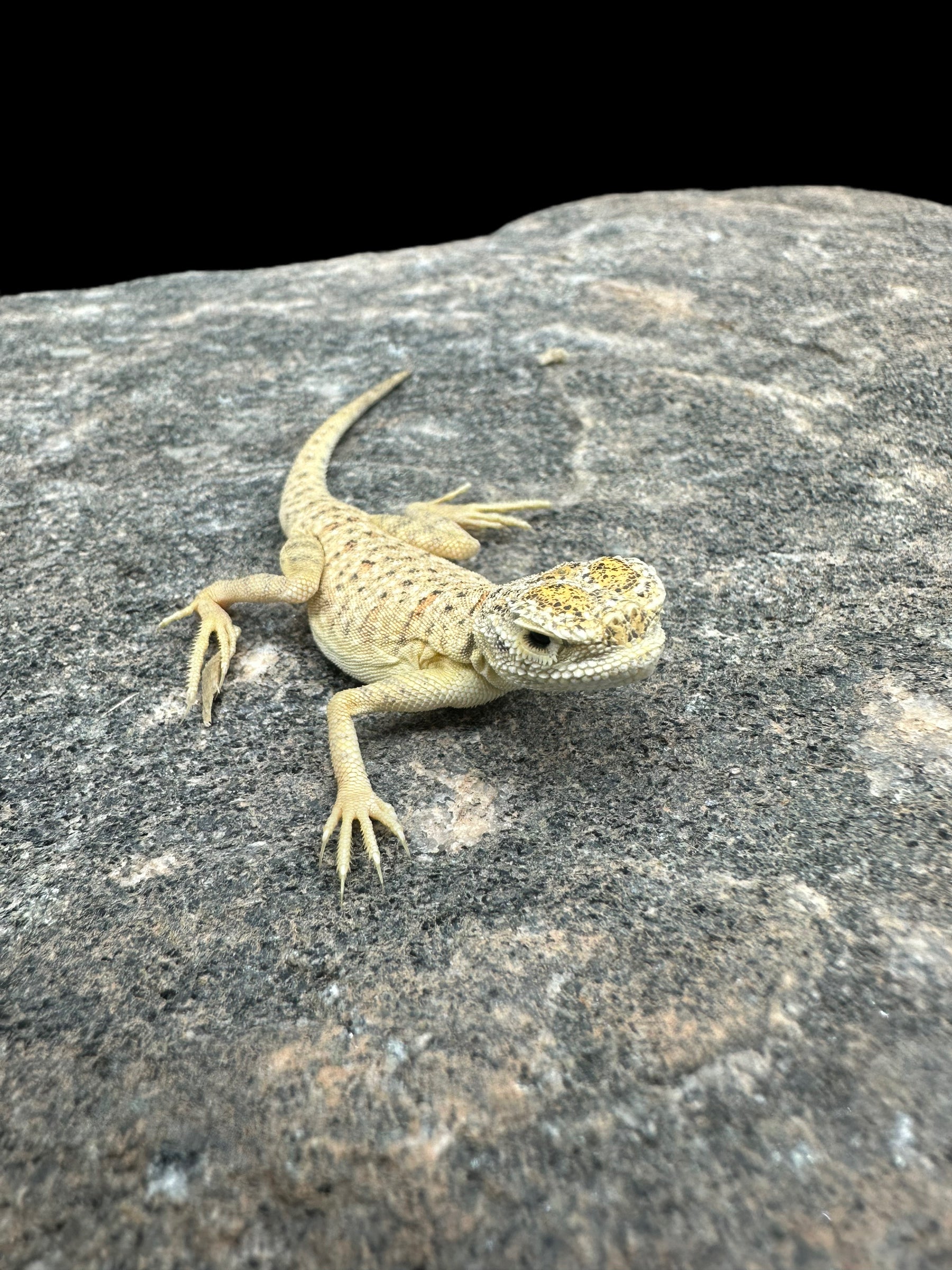
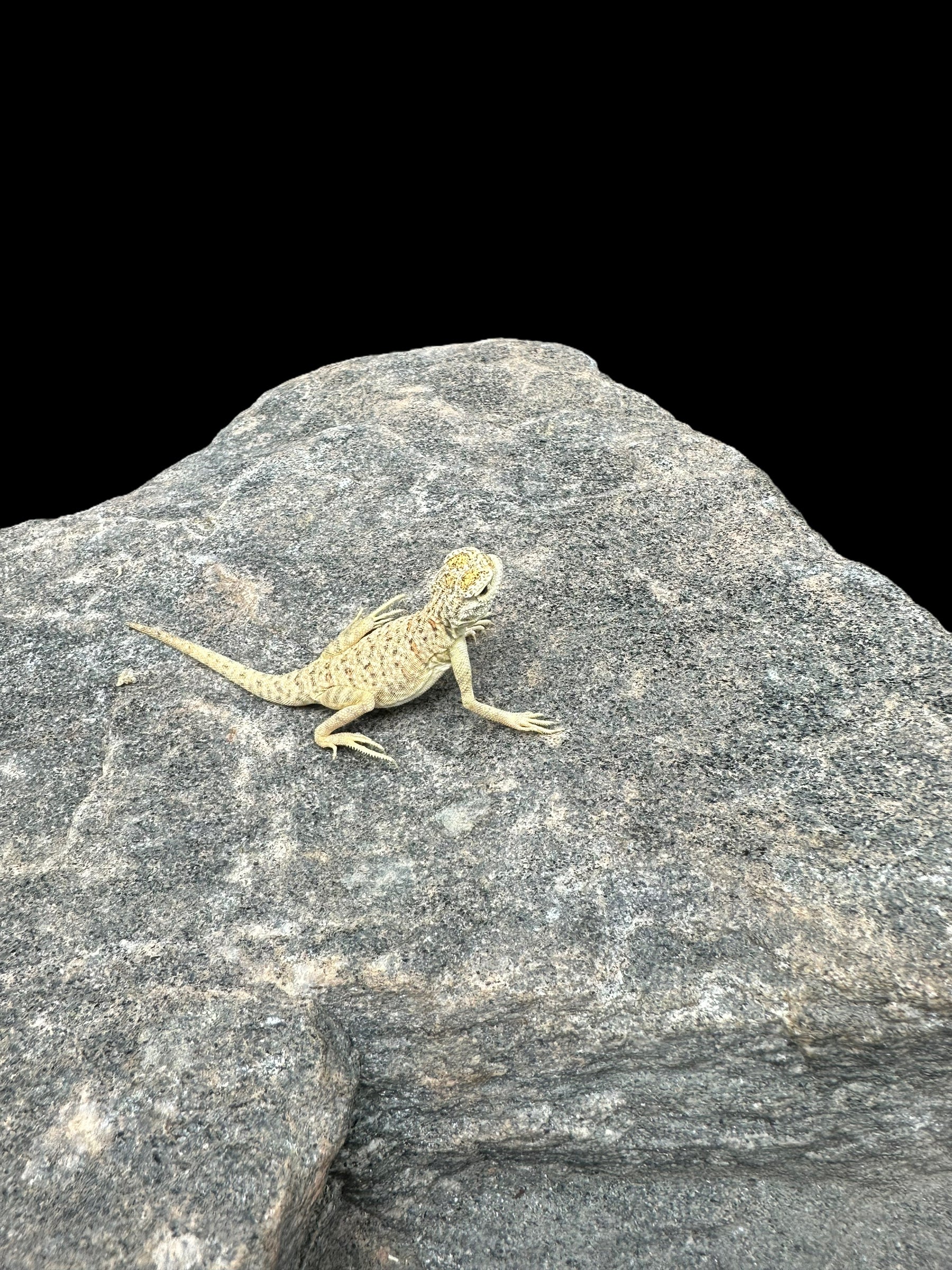
Arabian Toad-headed Agama
Scientific Name: Phrynocephalus arabicus
Common Name: Arabian Toad-headed Agama
Species Overview
Size: Adults typically reach 3.5 to 4.5 inches (9 to 11.5 cm) in total length, excluding the tail, and 5.5 to 7 inches (14 to 18 cm) including the tail.
Appearance: The Arabian Toad-headed Agama is a small, desert-adapted lizard with a round, slightly flattened head and a compact, streamlined body. Its colouration ranges from sandy beige to grey and light brown, often matching the surrounding desert substrate. Many individuals display subtle speckling or faint crossbands, aiding in camouflage. Pronounced fringes along the toes help with stability and movement on loose, shifting sand. When threatened, they may flatten their body and raise their tail in a rapid curl, showing bold black and white markings beneath.
Distribution: Found across the Arabian Peninsula, including Saudi Arabia, Oman, the United Arab Emirates, Yemen, and parts of Jordan.
Habitat: This species inhabits open sandy deserts, gravel plains, dune fields, and sparsely vegetated semi-arid regions. They bask on open ground and use shallow burrows or scrapes in the sand for refuge. In captivity, they require arid enclosures with deep sandy substrate and strong lighting.
Behaviour: Arabian Toad-headed Agamas are diurnal, quick, and alert. They are active foragers and display characteristic head-bobbing, tail-curling, and body-flattening behaviours. They are skittish but may settle well when provided with proper environmental conditions. Handling should be minimal due to their delicate size and speed.
Captive Care
Enclosure: A terrestrial enclosure measuring at least 24 inches × 18 inches × 18 inches (60 × 45 × 45 cm) is suitable for a small group or pair. Provide deep, fine sand for digging, along with flat stones, secure hides, and low climbing features.
Temperature & Humidity: Maintain a hot basking area of 110 to 125°F (43 to 52°C) with ambient daytime temperatures of 85 to 95°F (29 to 35°C). Night temperatures may drop to 68 to 75°F (20 to 24°C). Humidity should remain extremely low, between 10 and 30%.
Lighting: Provide strong full-spectrum lighting and high-output UVB (10–12%) for 12 to 14 hours daily. This species relies heavily on intense UV exposure and heat gradients.
Diet: Offer small insects such as crickets, mini roaches, bean beetles, soldier fly larvae, and termites when available. Feeding should occur daily for juveniles and every 1–2 days for adults. All feeders must be gut-loaded and dusted with calcium and vitamins.
Behaviour in Captivity: With proper heat and lighting, Arabian Toad-headed Agamas display lively hunting behaviour, sand-swimming, and basking. They thrive in open, bright environments with consistent warmth and very low humidity.
Special Considerations: These agamas are highly heat-tolerant but extremely sensitive to excess humidity. Proper ventilation, dry substrate, and powerful basking zones are essential. Their small size and speed also necessitate secure enclosures.
Taxonomy Note
The Arabian Toad-headed Agama belongs to the genus Phrynocephalus, a group of specialised desert lizards often known for their round heads, sand-running adaptations, and unique threat displays. This genus spans much of the Middle East and Central Asian deserts.
Genetics Note
There are no recognised morphs or selective breeding lines for the Arabian Toad-headed Agama. Natural variation in pattern, dorsal shade, and tail-marking intensity occurs across its range, but these differences are locality-based rather than genetically defined morphs.