

Photo Disclaimer
Description
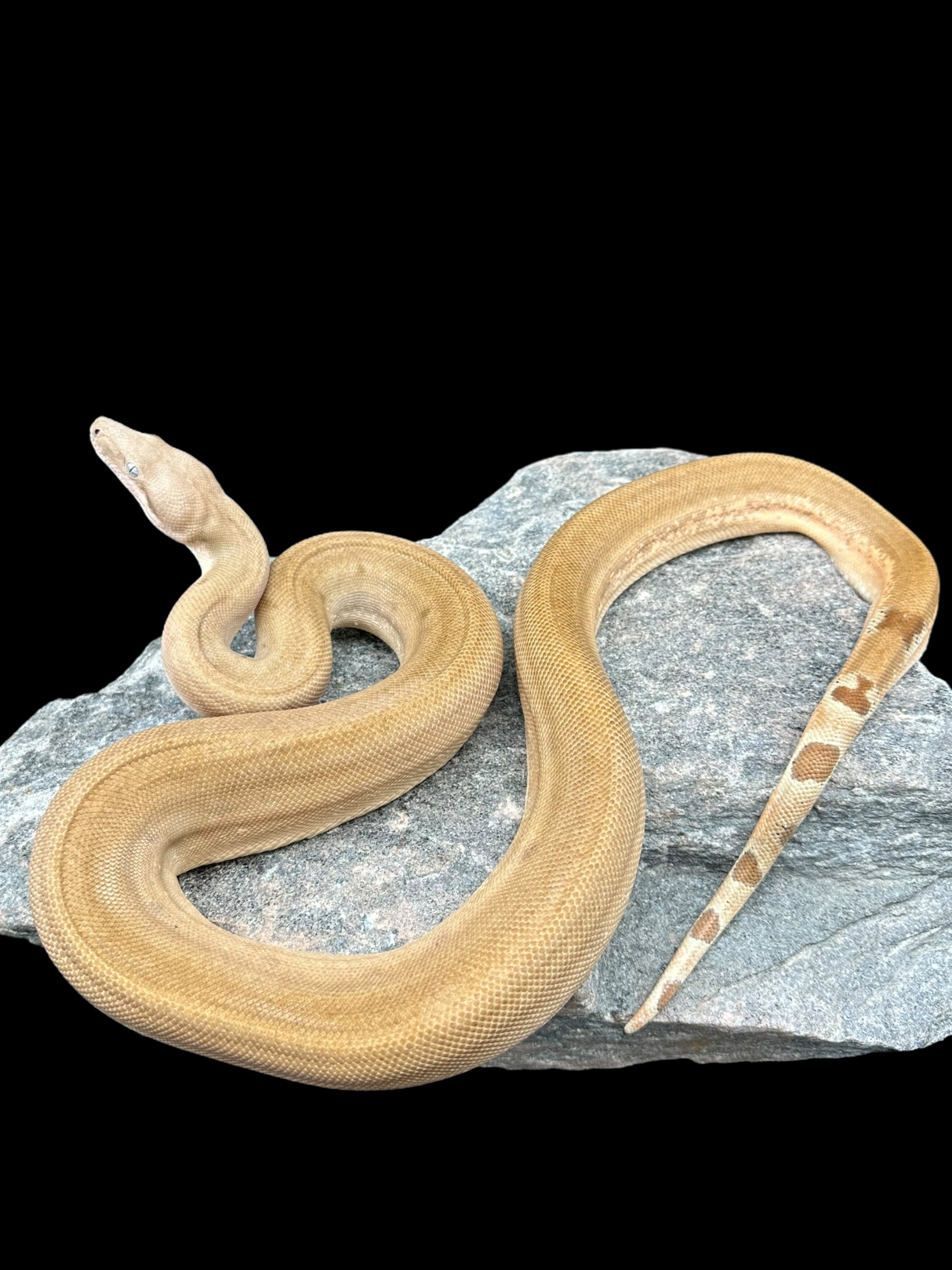
B.C.I (Hypo Scoria Het Anery)
Scientific Name: Boa constrictor imperator
Common Name: B.C.I, Hypo Scoria Het Anery
Species Overview
Size: Adults typically reach 6–8 feet (1.8–2.4 m) in length, with females generally larger and heavier-bodied than males. Adult weight commonly ranges from 15–30 pounds, influenced by sex, genetics, and husbandry.
Appearance: Hypomelanistic Boa constrictors expressing the Scoria pattern display reduced dark pigmentation paired with bold, irregular patterning and increased contrast. The Hypo influence brightens the overall colouration, while the Scoria trait creates a more chaotic, broken pattern appearance. This individual carries Anery genetics without visual expression.
Distribution: Native to Central America and northern South America.
Habitat: Occupies a wide variety of environments including tropical forests, scrublands, forest edges, and regions near rivers or wetlands.
Behaviour: A nocturnal ambush predator that relies on concealment and patience. Juveniles may utilise low vegetation or climbing opportunities, while adults are primarily terrestrial and spend daylight hours hidden.
Captive Care
Enclosure: A naturalistic enclosure is strongly recommended. Adults should be housed in a minimum enclosure size of 6′ × 2′ × 2′ (183 × 61 × 61 cm). Provide multiple hides, sturdy branches, cork bark, and visual barriers. Soil-based or mulch substrates help maintain humidity and support natural behaviours.
Temperature and Humidity: Maintain an ambient temperature range of 80–85°F (27–29°C), with a basking area of 88–92°F (31–33°C). Nighttime temperatures may drop to 75–78°F (24–26°C). Humidity should remain between 55–70%, supported by a large water dish and occasional misting.
Lighting: Standard ambient lighting on a day–night cycle is sufficient. Low-output UVB is optional and may be beneficial in planted or bioactive enclosures.
Diet: Juveniles should be fed appropriately sized rodents every 7–10 days. Adults typically feed every 14–21 days, adjusted based on prey size and body condition.
Behaviour in Captivity: Generally hardy and adaptable. Most individuals settle well into captivity and tolerate routine handling, though feeding responses can be strong.
Special Considerations: Given their potential adult size and strength, long-term enclosure planning is essential. Larger individuals may benefit from assisted handling, and having a second set of hands is recommended for safety and control.
Taxonomy Note
Boa constrictor imperator is a member of the family Boidae and is widely kept due to its adaptability, robust build, and extensive genetic diversity developed through selective breeding.
Estimate shipping