
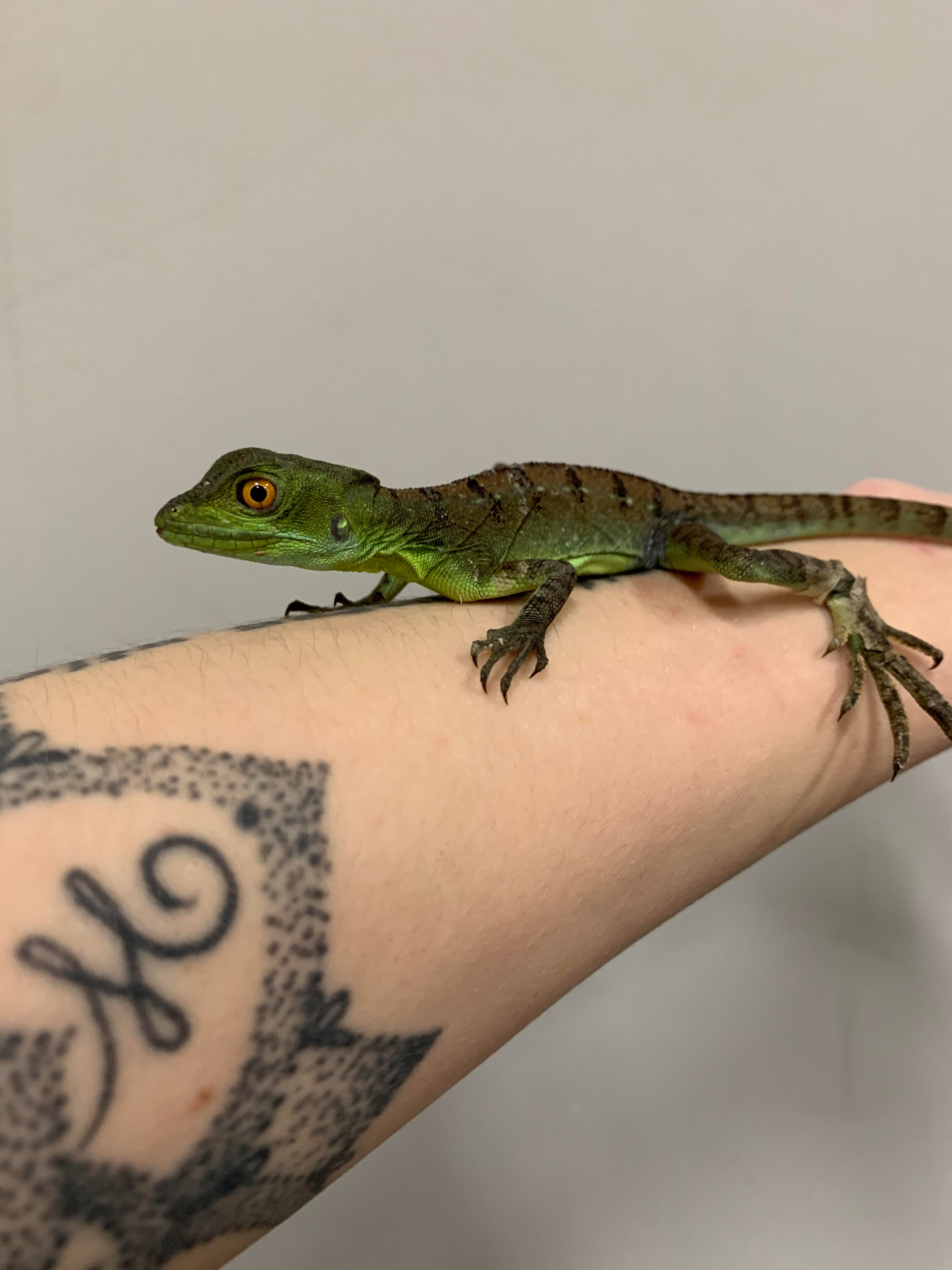
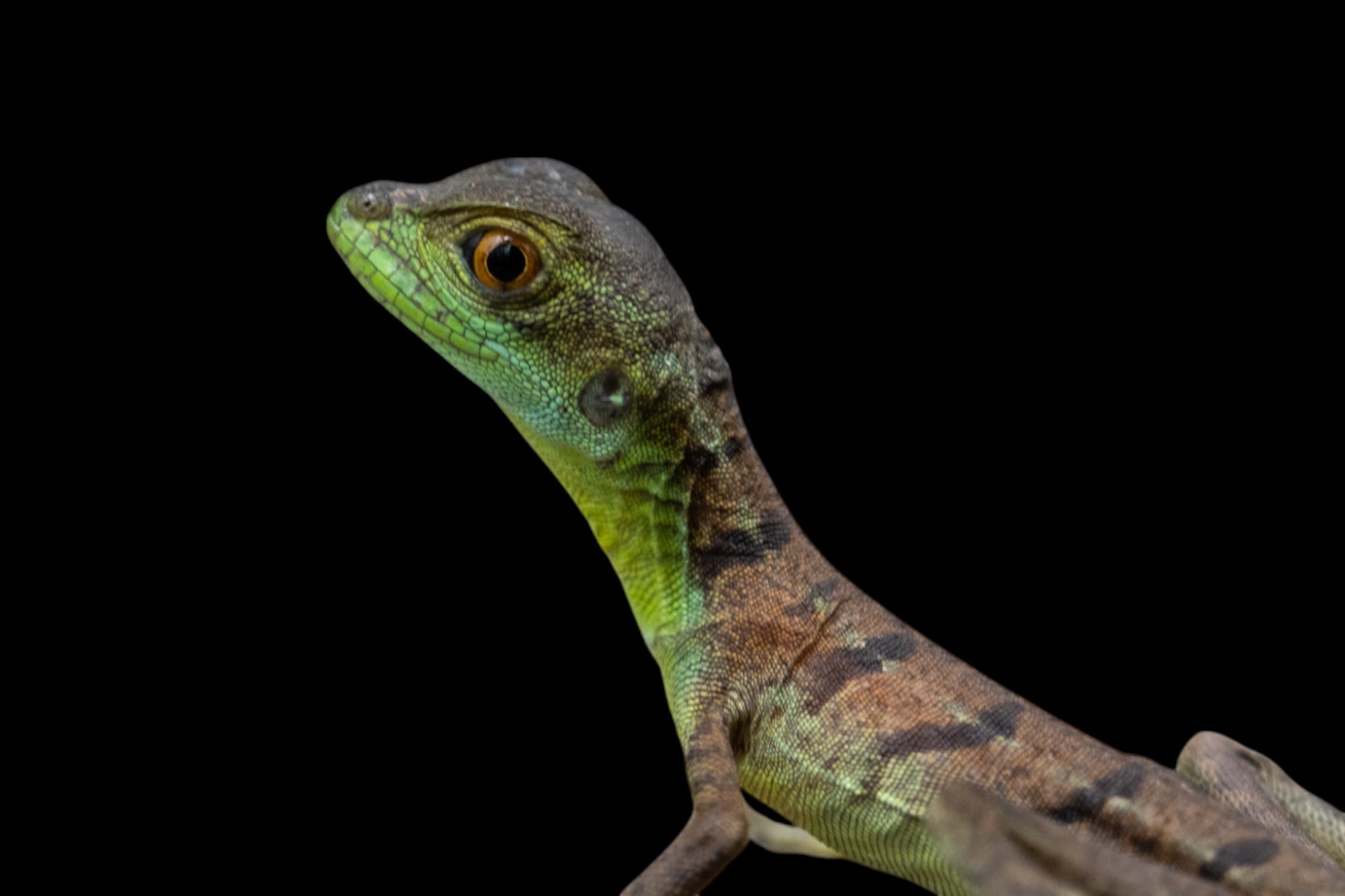
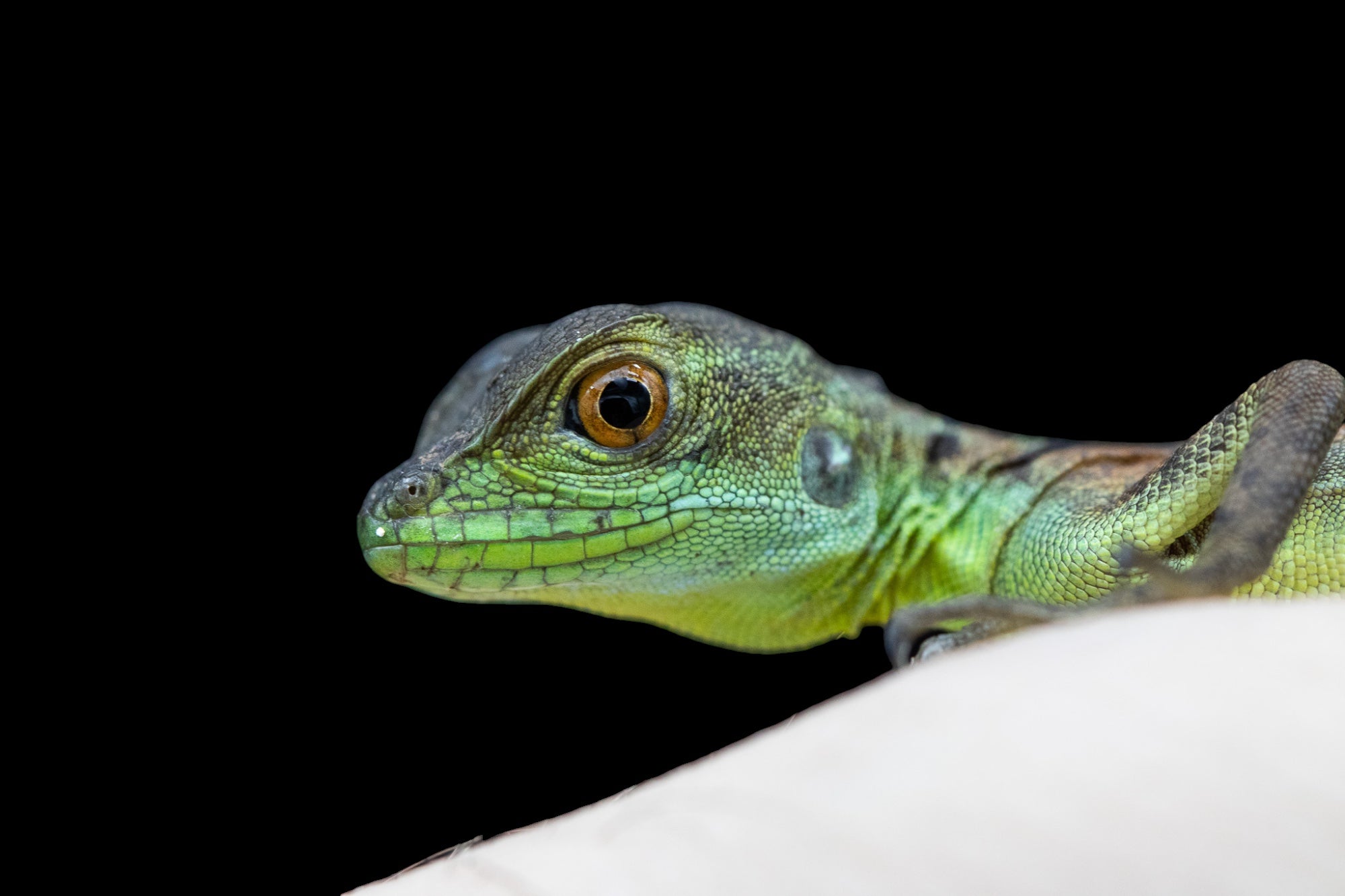
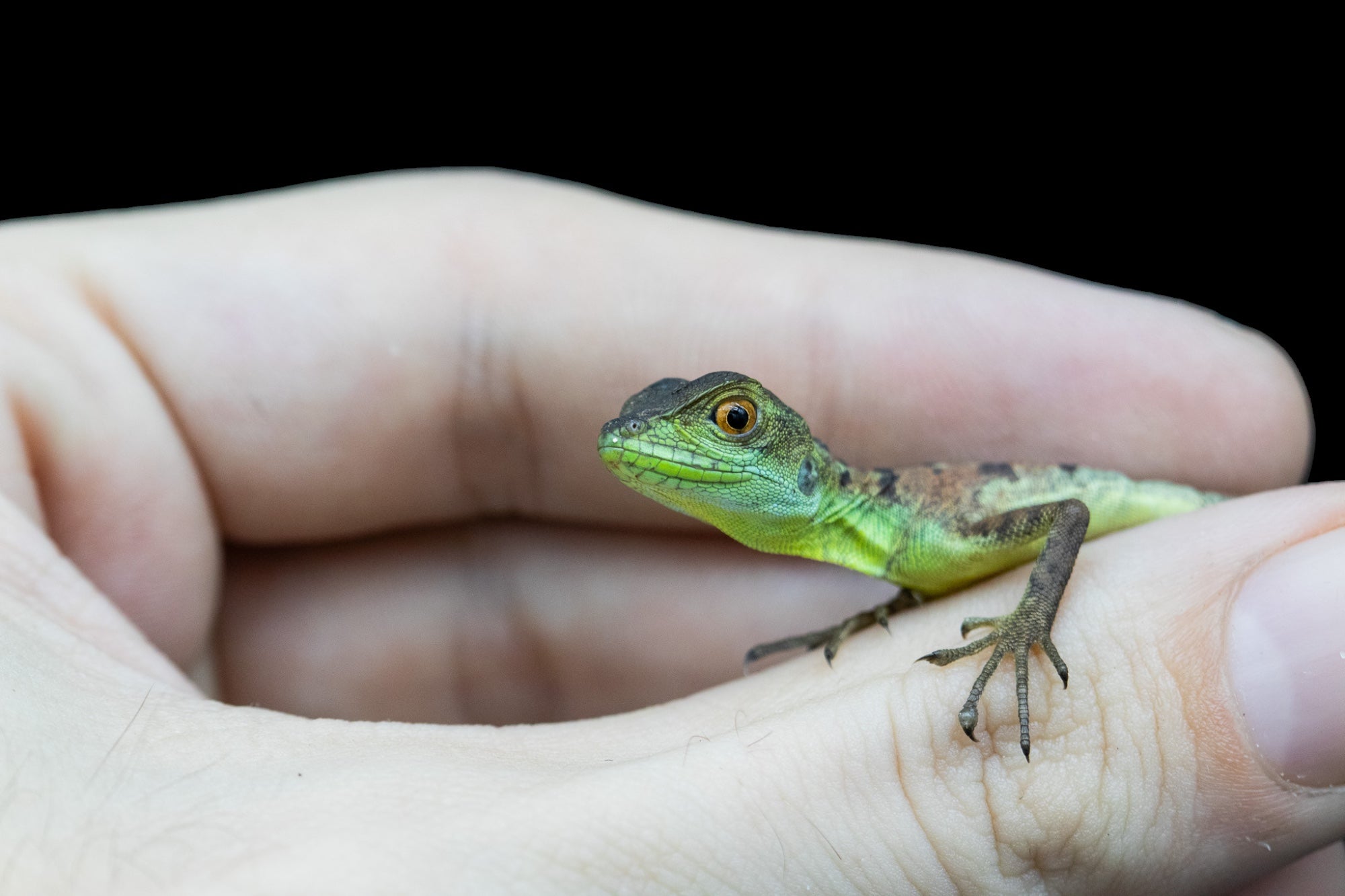


Photo Disclaimer
Description
Green Basilisk
Scientific Name: Basiliscus plumifrons
Common Name: Green Basilisk, Plumed Basilisk, Jesus Lizard
Species Overview
Size: Adults typically reach 24–30 inches (60–76 cm) in total length, with males often significantly larger and adorned with full crests.
Appearance: Green Basilisks are bright emerald-green lizards with varying blue or turquoise speckling, giving them a striking, jewel-toned look. Males have three distinct crests along the head, back, and tail, while females retain a streamlined profile with smaller or absent crests. They are built for speed and agility, with long hind legs, lightweight bodies, and impressive balance. Their ability to run across water is due to specialized elongated toes and powerful hindlimb movement.
Distribution: Native to Central America, including Honduras, Nicaragua, Costa Rica, and Panama.
Habitat: This species inhabits lowland tropical rainforests, heavily vegetated riverbanks, and humid riparian zones. They prefer areas with abundant climbing opportunities and quick escape routes into water.
Behaviour: Green Basilisks are diurnal, extremely fast, and visually oriented. They frequently perch on branches above water, diving or sprinting away when startled. They are omnivorous, feeding on insects, small vertebrates, aquatic prey, fruits, and flowers. Males are territorial and use crest-flaring, dewlap extension, and head-bobbing as dominance signals.
Captive Care
Enclosure: Provide a large, vertically oriented enclosure at least 48 inches × 24 inches × 36 inches (120 × 60 × 90 cm) for a single basilisk. Furnish the space with thick branches, vertical and horizontal perches, bamboo, cork rounds, and dense foliage. Include a sizeable water basin or shallow pool, as many individuals enjoy soaking and may enter the water when startled.
Temperature and Humidity:
Basking area: 95–100°F (35–38°C)
Ambient temperature: 80–88°F (27–31°C)
Night temperatures: 72–75°F (22–24°C)
Maintain humidity between 60–80%, achieved with daily misting and moderate enclosure airflow.
Lighting: Provide strong full-spectrum lighting with high UVB (10–12%). Intense lighting supports their basking behaviour, metabolic needs, and colour vibrancy.
Diet: Offer a varied omnivorous diet including roaches, crickets, black soldier fly larvae, silkworms, mealworms, small fish, pinky mice (sparingly), chopped fruits, and leafy greens. Juveniles require daily feeding; adults can be fed every 1–2 days. Provide calcium supplements frequently and multivitamins weekly.
Behaviour in Captivity: Green Basilisks are active, alert, and best housed as display animals. They can be shy or skittish and rarely tolerate regular handling. With a large enclosure, dense plant cover, and access to water, they show natural behaviours such as basking, sprinting, leaping, and diving.
Special Considerations:
• Large enclosures are essential for physical and mental well-being.
• Provide a secure water feature for soaking and natural behaviour.
• Avoid frequent handling due to their high stress response.
• Ensure the enclosure is fully secured—they are extremely fast and agile.
Taxonomy Note
The Green Basilisk belongs to the family Corytophanidae, known for crested, visually oriented species adapted to arboreal and semi-aquatic lifestyles. Basiliscus plumifrons is one of the most iconic members of the group.
Genetics Note
There are no recognized morphs for the Green Basilisk. Natural variation includes differences in green intensity, the degree of blue speckling, and crest size in males. These traits reflect normal individual and locality-based genetic diversity rather than any selective breeding.