

Photo Disclaimer
Description
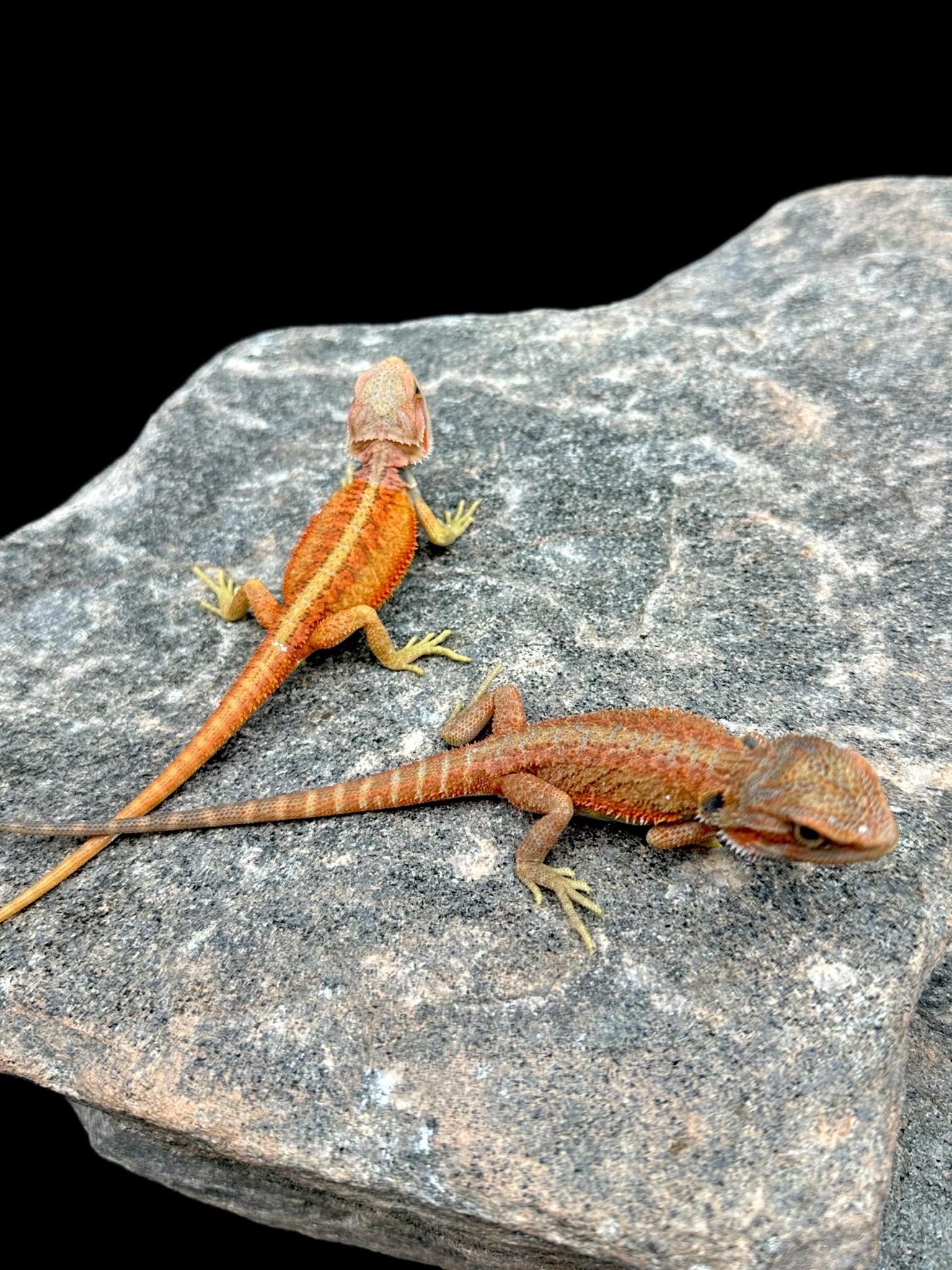
Bearded Dragon (Ultra High Colour)
Scientific Name: Pogona vitticeps
Common Name: Bearded Dragon (Ultra High Colour)
Species Overview
Size: Adults typically reach 18 to 22 inches (46 to 56 cm), with males slightly larger and broader-headed.
Appearance: Ultra High Colour Bearded Dragons carry the Ultra High Colour trait, which intensifies reds, oranges, and yellows beyond standard High Colour levels (polygenic trait). The result is a vibrant dragon with bold, saturated colours. Body structure, scale morphology, and overall patterning remain standard.
Distribution: Native to the arid interior regions of central Australia.
Habitat: Wild Bearded Dragons inhabit dry scrublands, semi-desert plains, rocky outcrops, and open woodlands. In captivity, they thrive in spacious terrestrial enclosures with basking areas, climbing structures, and secure hides.
Behaviour: Bearded Dragons are diurnal, active, and alert. They display normal behaviours including basking, digging, climbing, arm-waving, and head-bobbing. Expression of Ultra High Colour does not affect temperament.
Captive Care
Enclosure: Provide a terrestrial enclosure at least 48 inches × 24 inches × 24 inches (120 × 60 × 60 cm). Use a soil–sand substrate mixture that is dry on top but deep enough to retain some moisture in the lower layers, supporting natural digging behaviour. Include basking platforms, hides, branches, rocks, and open floor space.
Temperature & Humidity:
-
Basking area: 110 to 115°F (43 to 46°C)
-
Warm side: 88 to 95°F (31 to 35°C)
-
Cool side: 75 to 82°F (24 to 28°C)
-
Night temperatures may drop to 68 to 72°F (20 to 22°C)
-
Humidity should remain 30–40%
Lighting: Provide strong full-spectrum lighting and high-output UVB (10–12%) for 12–14 hours daily. Proper UVB and heat gradients support calcium metabolism and natural behaviour.
Diet: Offer a varied omnivorous diet including crickets, roaches, silkworms, hornworms, black soldier fly larvae, leafy greens, vegetables, and occasional fruits. Juveniles require daily feeding; adults eat every 1–2 days. Use calcium and multivitamin supplements.
Behaviour in Captivity: These dragons are active, exploratory, and responsive. They bask, dig, climb, and display natural behaviours when provided with proper husbandry.
Special Considerations: Ensure proper UVB exposure, secure enclosure, substrate depth, and heat gradients. Overfeeding or insufficient lighting can lead to metabolic issues.
Taxonomy Note
The Bearded Dragon belongs to the genus Pogona, a group of Australian agamids adapted to arid environments. Pogona vitticeps is widely kept due to its hardy nature, manageable size, and engaging personality.
Genetics Note
Ultra High Colour (polygenic):
Ultra High Colour intensifies red, orange, and yellow pigmentation. Expression varies depending on polygenic contributions.
Genetic Combination Summary:
This Bearded Dragon expresses Ultra High Colour, producing bold, saturated colours. The trait can be passed to offspring according to polygenic inheritance patterns.