
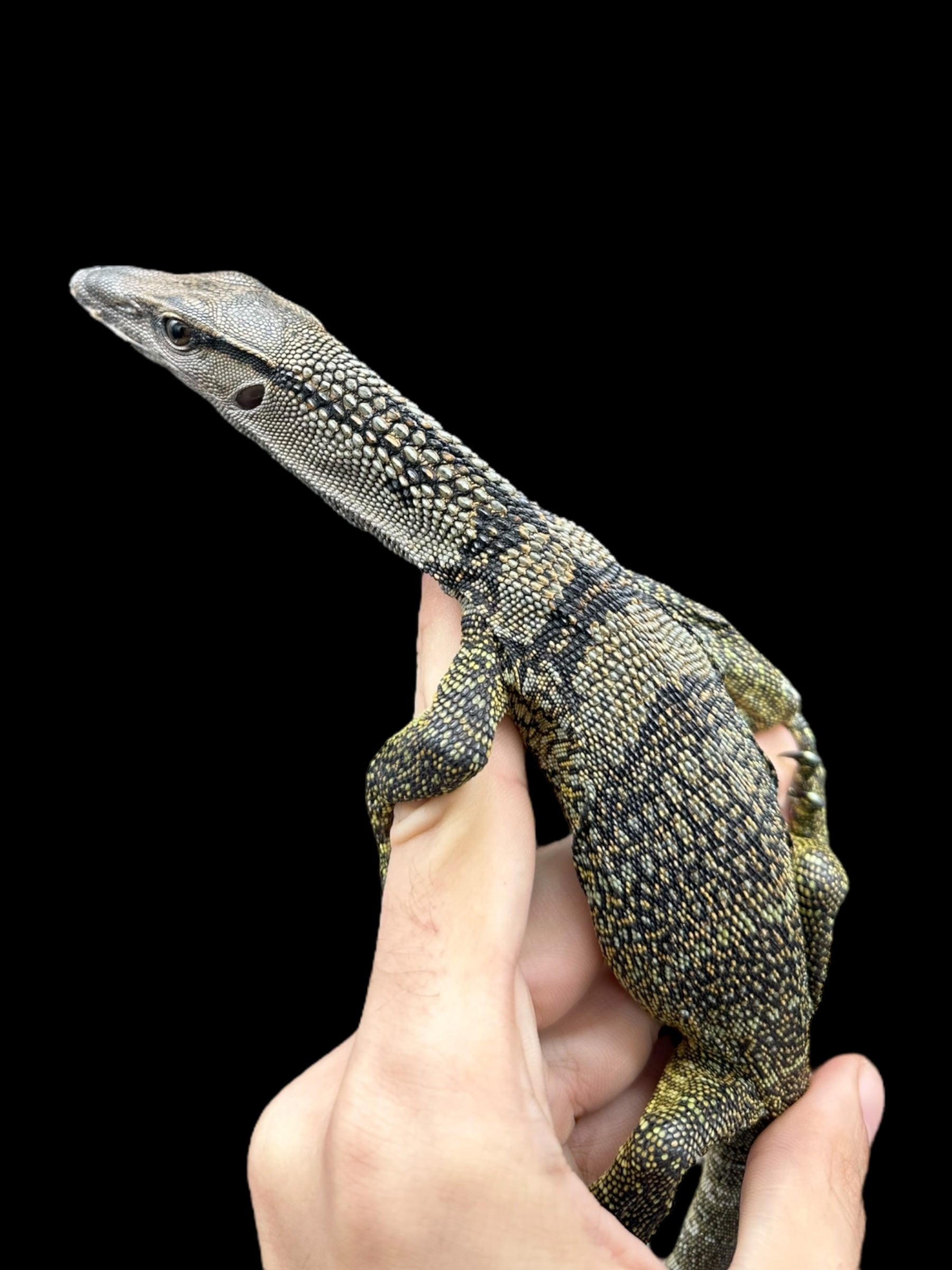
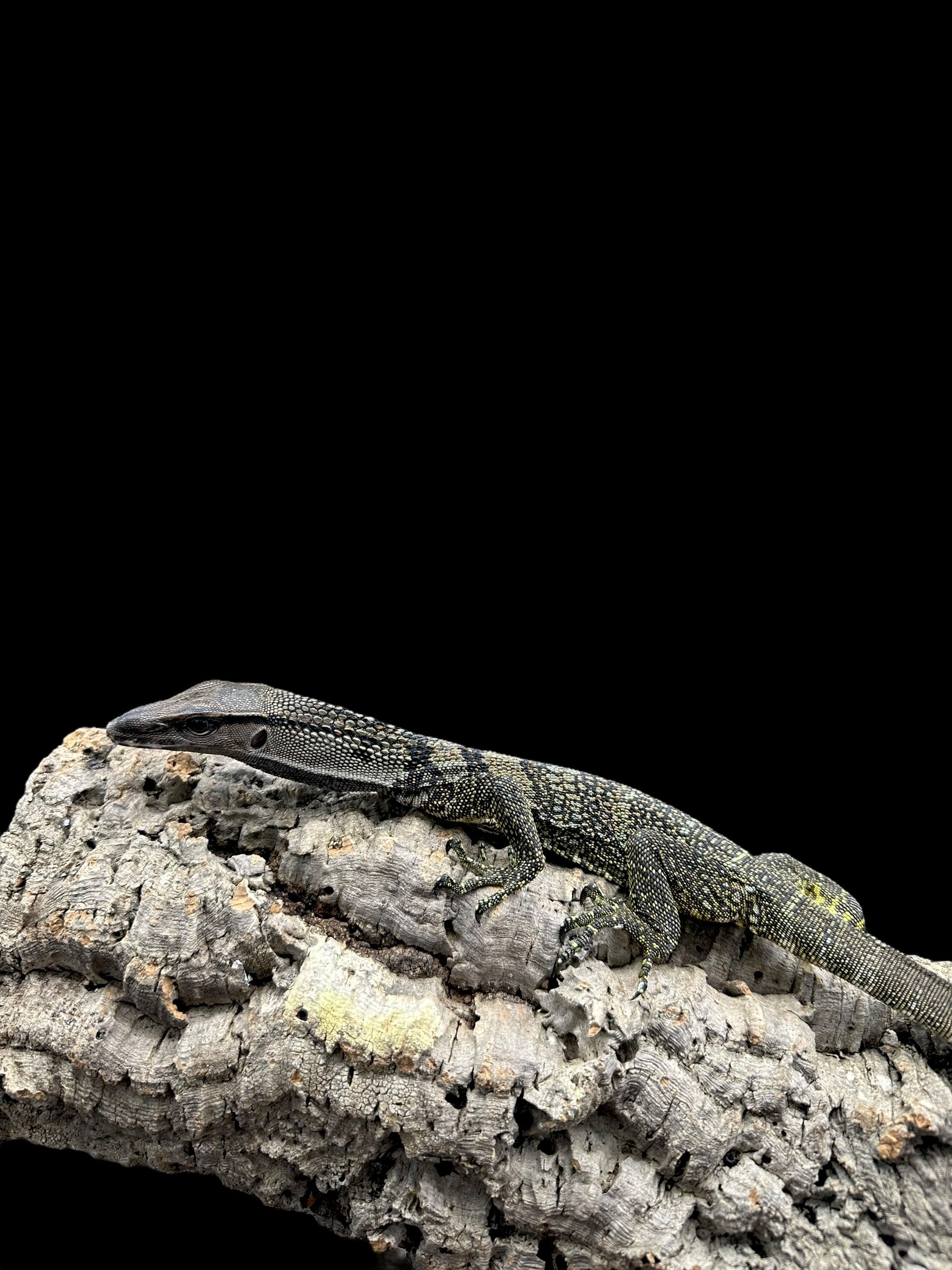


Photo Disclaimer
Description
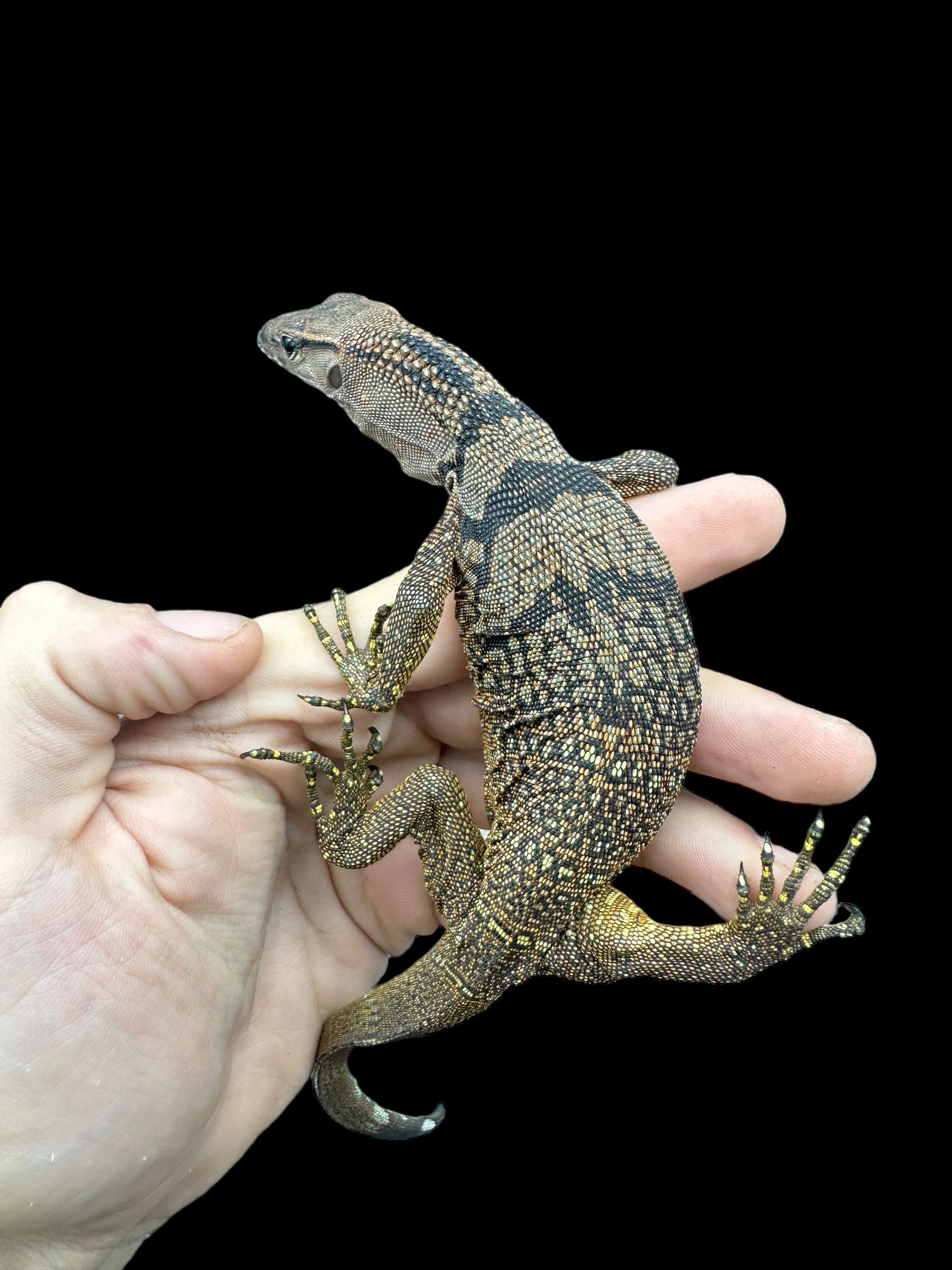
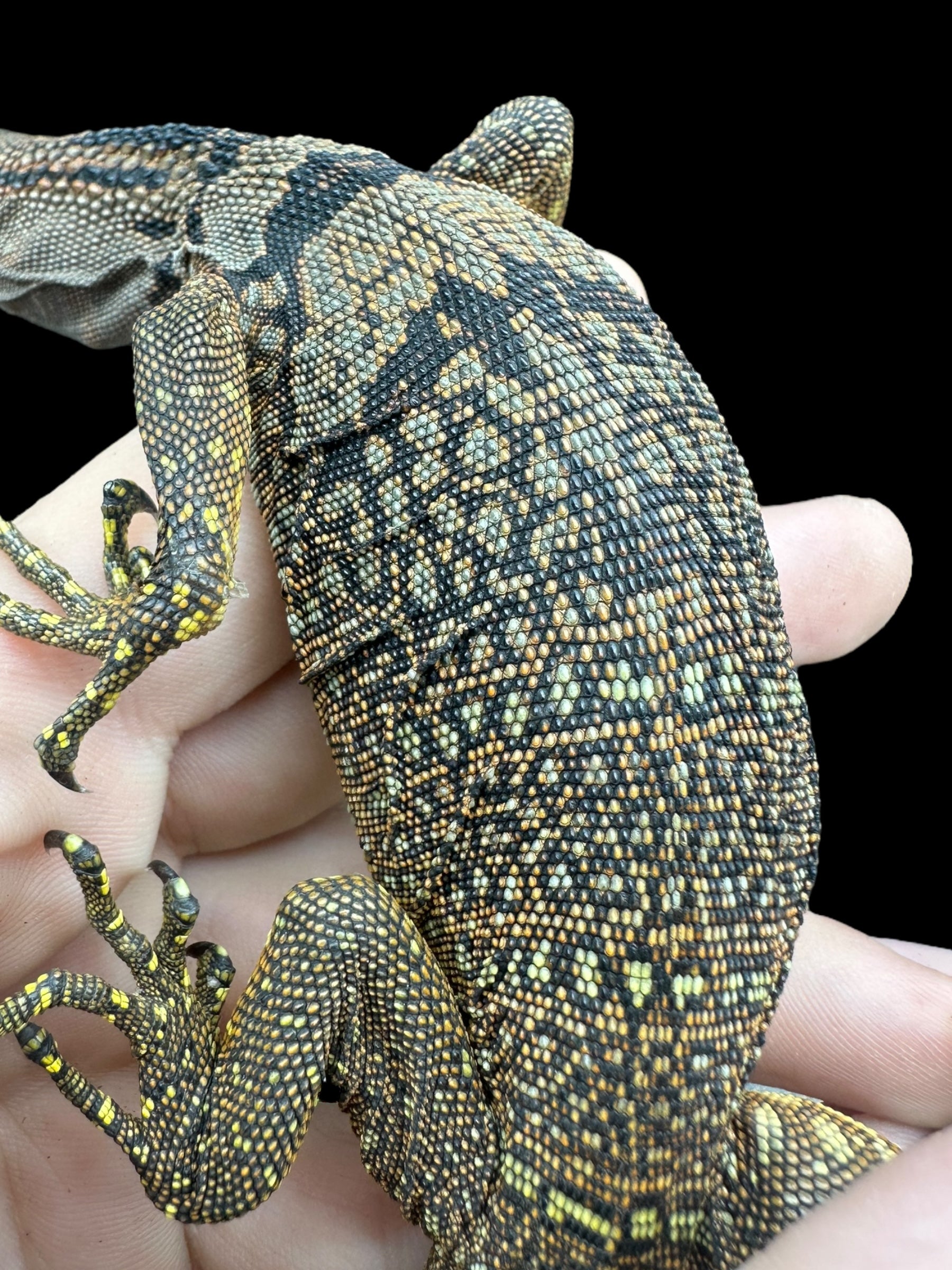
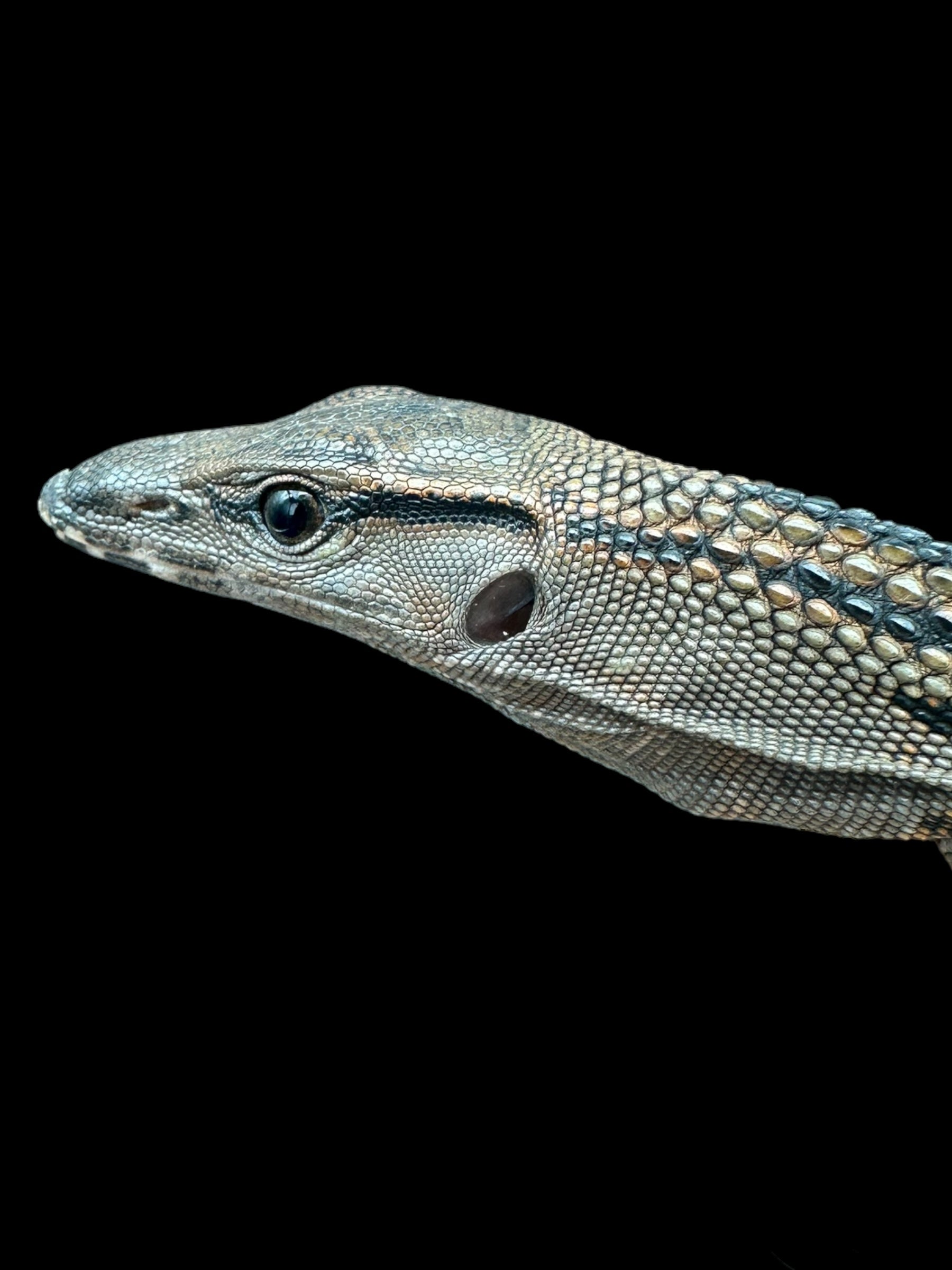
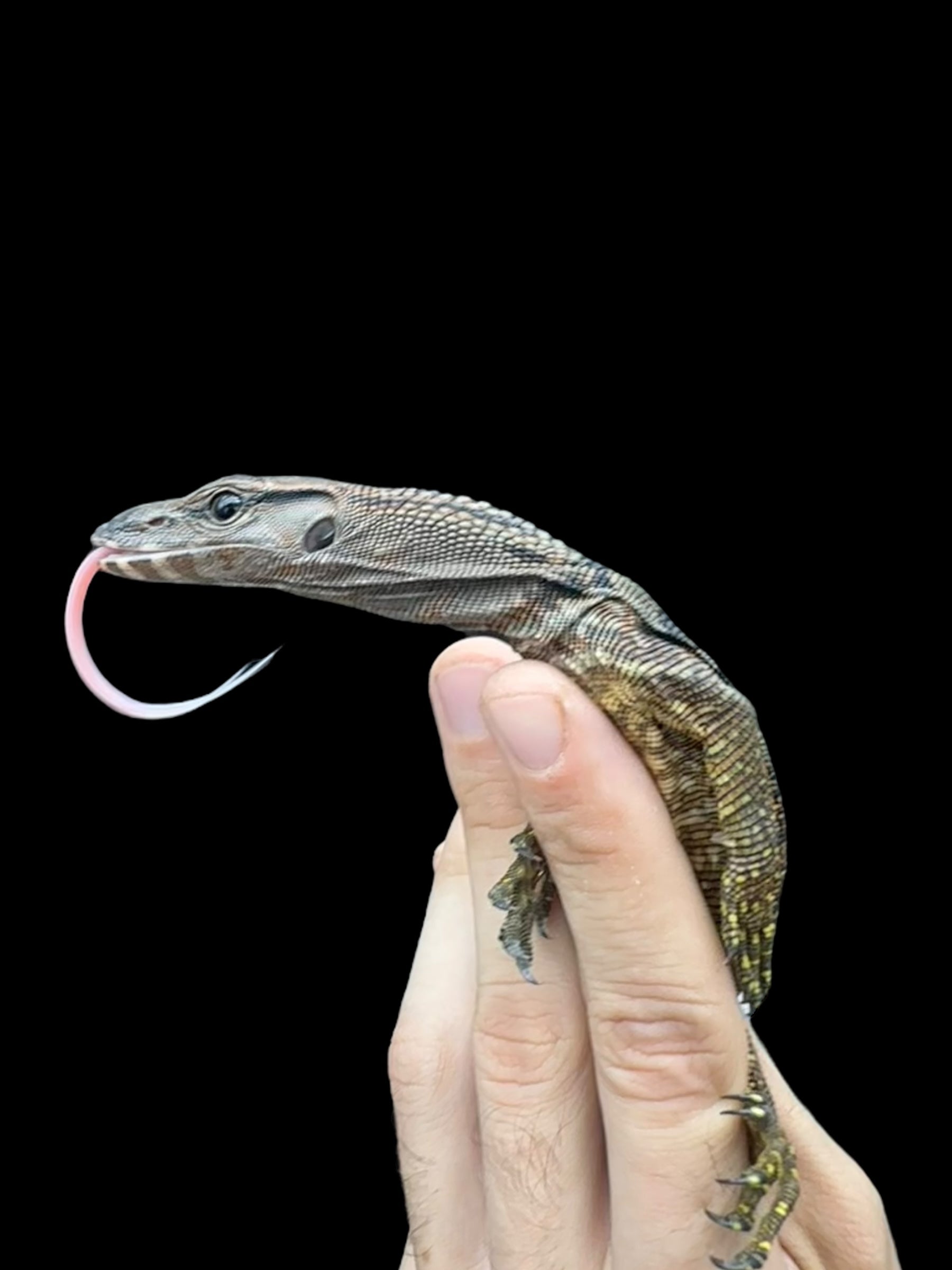
Black Roughneck Monitor (Varanus rudicollis)
Scientific Name: Varanus rudicollis
Common Name: Black Roughneck Monitor
Species Overview
Size: Adults typically reach 3–4 feet (0.9–1.2 m) in total length, with robust, muscular bodies and strong tails.
Appearance: The Black Roughneck Monitor has a dark, charcoal to black base colour, with subtle speckling or mottling across the body. Its distinctive rough, keeled scales, particularly around the neck and dorsal area, give the species its common name. The head is triangular with sharp, alert eyes, and the tail is long and powerful for balance and defense. Juveniles display lighter tones with more visible patterning, which darkens with age.
Distribution: Native to parts of Indonesia, particularly the Maluku Islands.
Habitat: Wild Black Roughneck Monitors inhabit tropical forests, mangroves, and dense lowland areas. They are semi-arboreal and often found near water sources. In captivity, they thrive in secure enclosures with climbing structures, basking areas, and hiding spots to mimic their natural forested habitat.
Behaviour: This species is diurnal and highly active. They are intelligent and curious, with a strong hunting instinct. Wild-caught individuals may be defensive, while captive-bred monitors can become more accustomed to human presence. They are strong climbers and swimmers.
Captive Care
Enclosure: Provide a secure enclosure at least 6 feet × 3 feet × 3 feet (1.8 × 0.9 × 0.9 m) for a single adult. Include climbing branches, logs, elevated platforms, water areas, and substrate for digging. Ensure hiding places and shaded areas are available to reduce stress.
Temperature & Humidity:
-
Basking area: 110–115°F (43–46°C)
-
Ambient temperature: 80–90°F (27–32°C)
-
Night temperatures: 75–80°F (24–27°C)
-
Maintain moderate to high humidity (60–80%) with occasional misting or water features.
Lighting: Provide strong full-spectrum lighting with high-output UVB (10–12%) to support metabolism and overall health. A natural day/night cycle of 12 hours is recommended.
Diet: Offer a varied carnivorous diet including rodents, insects, eggs, and occasional fish. Juveniles should be fed more frequently, while adults can be fed 2–3 times per week. Supplements with calcium and vitamins are recommended.
Behaviour in Captivity: Black Roughneck Monitors are active and curious. They require enrichment, climbing opportunities, and environmental complexity. Handling should be cautious, particularly with wild-caught individuals, as they are powerful and can deliver defensive bites.
Special Considerations: This monitor species is moderately large and strong, requiring secure enclosures and dedicated care. They are suitable for keepers with prior monitor experience.
Taxonomy Note
The Black Roughneck Monitor (Varanus rudicollis) belongs to the Varanidae family, closely related to other medium-sized monitors. They are known for their intelligence, strong climbing abilities, and semi-arboreal habits.
Genetics Note
There are no recognized morphs or selectively bred variants for the Black Roughneck Monitor. Natural variation is limited to minor differences in shade, speckling, and scale texture across its range.