


Photo Disclaimer
Description
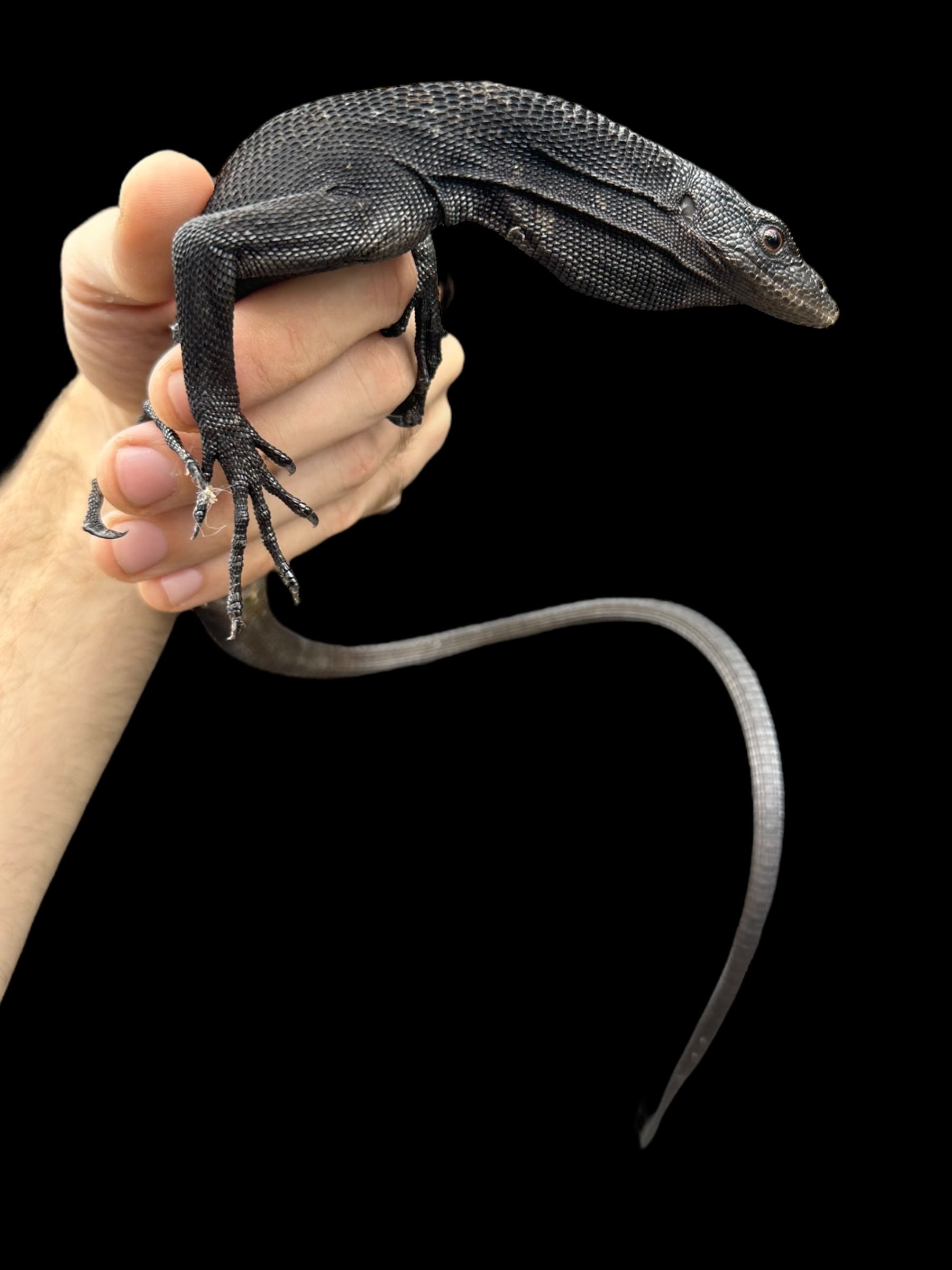
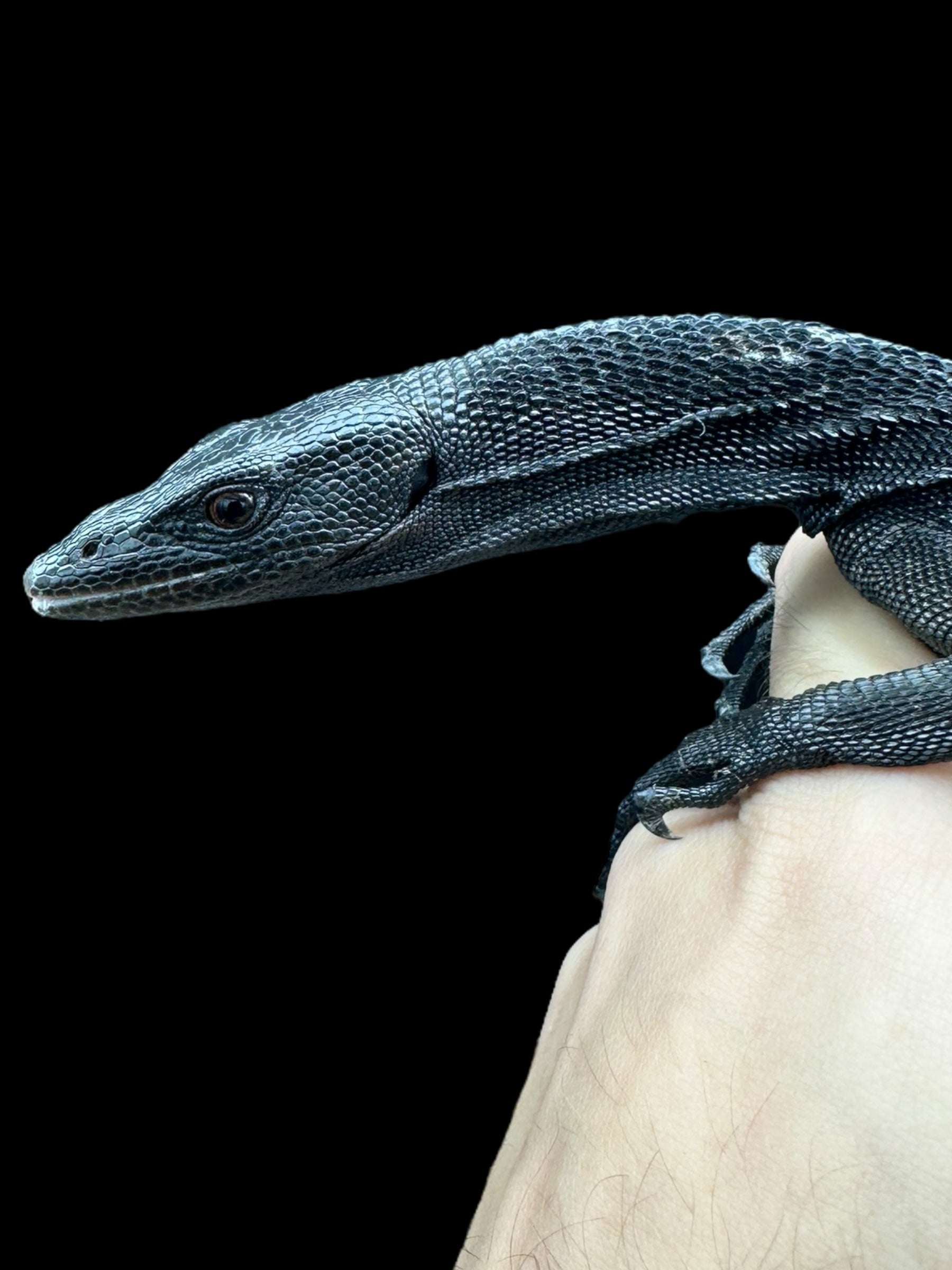
Black Tree Monitor (Varanus beccarii)
Scientific Name: Varanus beccarii
Common Name: Black Tree Monitor
Species Overview
Size: Adults typically reach 3–4 feet (0.9–1.2 m) in total length, with a slender, elongated body and prehensile tail adapted for arboreal life.
Appearance: The Black Tree Monitor is jet black with smooth scales and a long, muscular tail for climbing and balance. Its head is narrow with sharp eyes, and its body is highly streamlined for maneuvering through trees. Juveniles may have slightly lighter tones or subtle patterns that fade as they mature.
Distribution: Native to the Aru Islands, Indonesia.
Habitat: Wild Black Tree Monitors are fully arboreal, inhabiting dense tropical forests and mangrove areas. They are found in high tree canopies and are rarely seen on the ground. In captivity, they require tall, secure enclosures with climbing branches, vertical surfaces, and elevated hiding spots.
Behaviour: This species is diurnal and highly active. They are shy, intelligent, and excellent climbers. Wild-caught individuals may be defensive, while captive-bred animals can gradually accept handling. They are fast and agile, relying on climbing and jumping to navigate their environment.
Captive Care
Enclosure: Provide a vertically oriented, secure enclosure at least 4 feet × 3 feet × 6 feet (1.2 × 0.9 × 1.8 m) for a single adult. Include multiple climbing branches, vines, elevated platforms, and secure hiding areas placed high in the enclosure. A shallow water area can be provided for drinking and occasional soaking. Substrate should be loose but firm, such as a soil and coconut fibre mix, allowing for some natural digging behaviour at the base.
Temperature & Humidity:
-
Basking area: 95–105°F (35–40°C)
-
Ambient temperature: 80–90°F (27–32°C)
-
Night temperatures: 70–75°F (21–24°C)
-
Maintain high humidity of 70–90%, with daily misting to replicate rainforest conditions.
Lighting: Provide strong full-spectrum lighting with high-output UVB (10–12%) on a 12-hour cycle. UVB and heat gradients are critical for calcium metabolism and overall health.
Diet: Offer a varied carnivorous diet including insects, rodents, eggs, and small vertebrates. Juveniles require more frequent feedings, while adults can be fed every 2–3 days. Supplement with calcium and multivitamins.
Behaviour in Captivity: Black Tree Monitors are active, inquisitive, and agile climbers. They require a complex, enriched environment to remain healthy and display natural behaviours. Handling should be minimal and cautious, particularly with wild-caught specimens.
Special Considerations: This species is best suited for experienced keepers. They require tall, escape-proof enclosures, high humidity, and daily environmental enrichment. Aggression and defensive behaviours are common in stressed animals.
Taxonomy Note
The Black Tree Monitor (Varanus beccarii) belongs to the Varanidae family and is part of the tree monitor clade. They are known for their arboreal specialization, intelligence, and striking black coloration.
Genetics Note
There are no recognized morphs or selectively bred variants for the Black Tree Monitor. Natural variation is limited to minor differences in scale sheen and size between individuals.
Estimate shipping