

Photo Disclaimer
Description
Burmese Squat Frog
Scientific Name: Glyphoglossus guttulatus
Common Name: Burmese Squat Frog
Species Overview
Size: Adults typically reach 2–3 inches (5–8 cm) in length, with females slightly larger than males.
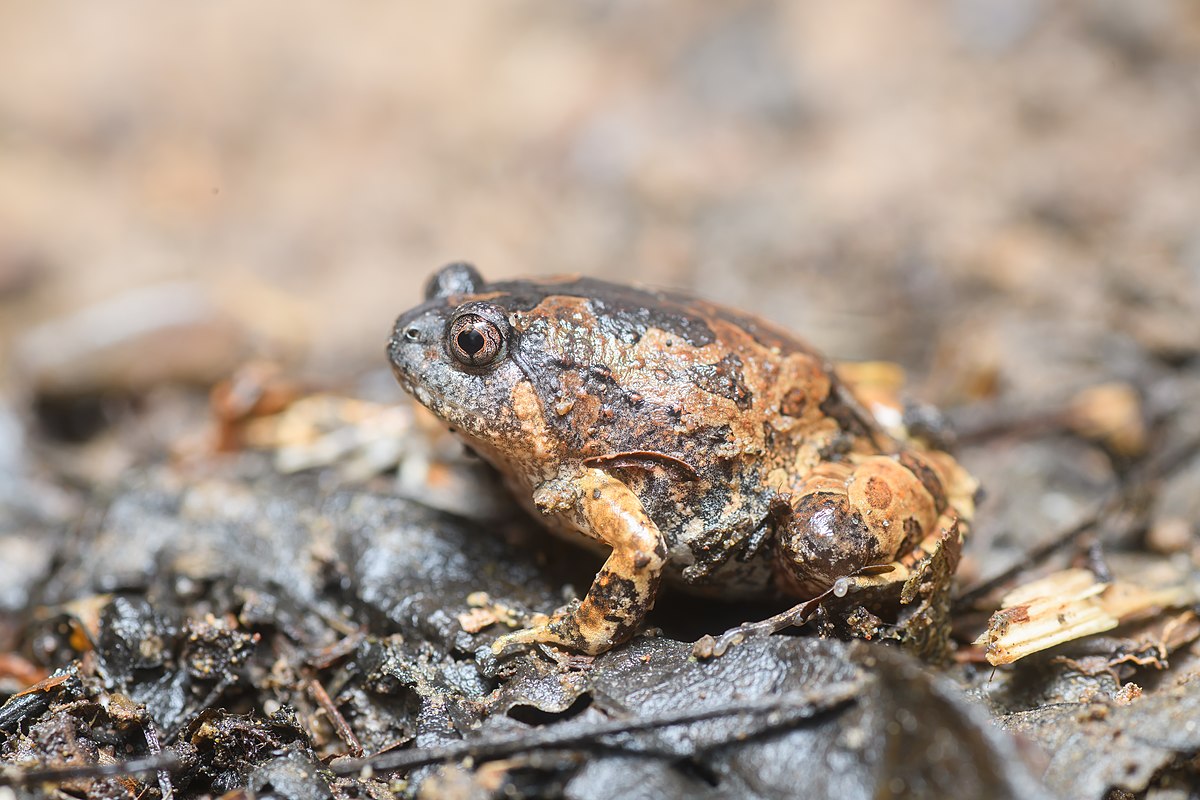
Appearance: Burmese Squat Frogs are small, robust, and rounded with a distinctive squat appearance. Coloration ranges from brown to gray, often with subtle darker mottling along the dorsum. Skin is smooth to slightly granular, with a waxy texture. They have short limbs and a broad head adapted for burrowing.
Distribution: Native to Myanmar, Thailand, and parts of Southeast Asia, inhabiting lowland forests, wetlands, and agricultural areas.
Habitat: Terrestrial and fossorial, spending much of their time buried in soft soil or leaf litter. They prefer moist environments and emerge primarily during the rainy season to feed and breed.
Behaviour: Ambush predator feeding on insects and small invertebrates. Generally sedentary and secretive, relying on burrowing for protection.
Captive Care
Enclosure: A single adult should be housed in a 12 × 12 × 12 inches (30 × 30 × 30 cm) enclosure with a deep substrate (3–4 inches / 8–10 cm) of soil or coco fibre for burrowing. Larger adults may benefit from an 18 × 18 × 12 inches (45 × 45 × 30 cm) enclosure for additional floor space. Include leaf litter, moss, and low hides for security.
Temperature and Humidity:
Warm area: 75–80°F (24–27°C)
Cool area: 70–74°F (21–23°C)
Humidity: 70–85%, maintained with regular misting and a damp substrate.
Lighting: Low-intensity lighting with a 12-hour light cycle is sufficient. Low-level UVB may be beneficial but is not essential.
Diet: Feed small insects such as crickets, roaches, and mealworms. Prey should be appropriately sized and gut-loaded when possible.
Behaviour in Captivity: Sedentary and largely buried. Emerging primarily for feeding. Handling should be minimal to reduce stress.
Special Considerations:
• Maintain high humidity with a damp substrate
• Provide dense cover and burrowing opportunities
• Avoid excessive handling
Taxonomy Note
Burmese Squat Frogs belong to the genus Glyphoglossus, part of the family Microhylidae, a group of small, fossorial frogs native to Southeast Asia. Members of this family are characterized by their robust bodies, short limbs, and burrowing adaptations. Glyphoglossus guttulatus is valued for its distinctive squat shape, cryptic coloration, and burrowing behavior.
Genetics Note
Naturally occurring species with no recognized captive-bred morphs.