

Photo Disclaimer
Description
Cane Toad
Scientific Name: Rhinella marina
Common Name: Cane Toad
Species Overview
Size: Adult Cane Toads are large, typically reaching 4 to 6 inches (10 to 15 cm), with exceptional individuals growing 7 inches (18 cm) or more. Females are generally larger and heavier-bodied than males.
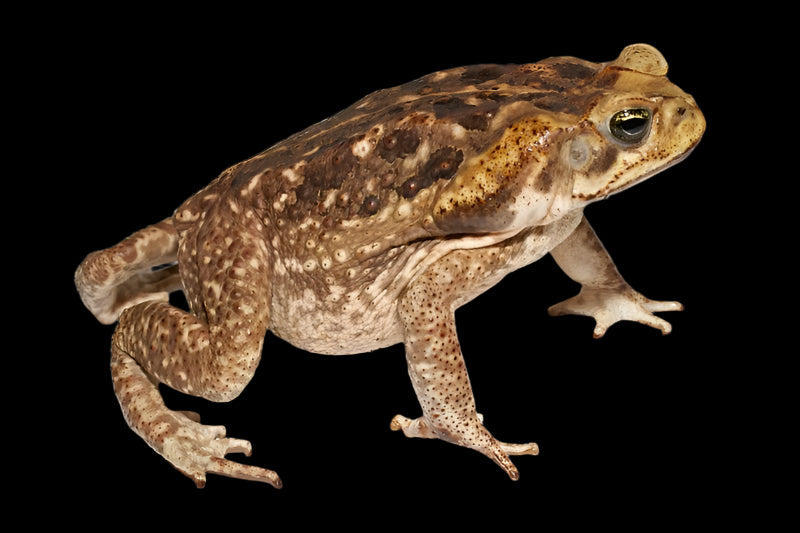
Appearance: The Cane Toad is powerfully built, with a broad, heavy frame and thick, warty skin. Colouration varies widely, ranging from tan and olive to brown or grey, often with irregular darker blotches. The parotoid glands are extremely large and elongated, extending far down the shoulders. The head is blocky with a pronounced ridge above each eye. The belly is pale and often marbled or lightly speckled. Juveniles tend to be darker and smoother, developing heavier texture with age.
Distribution: Native to Central and South America, including countries such as Brazil, Peru, Colombia, Venezuela, and French Guiana. Introduced populations now exist in Australia, Florida, Hawaii, and various Pacific islands.
Habitat: In the wild, Cane Toads occupy forests, grasslands, urban areas, agricultural zones, and wetlands. They adapt easily to disturbed environments and breed in almost any still freshwater body. In captivity, they require a large terrestrial enclosure with deep substrate, moderate humidity, and reliable access to clean water.
Behaviour: Primarily nocturnal, Cane Toads emerge after dusk to feed heavily. They are opportunistic predators with powerful feeding responses. They rely on freeze behaviour when threatened but can secrete potent toxins from their oversized parotoid glands. They are generally solitary and move with slow, heavy hops or deliberate walking.
Captive Care
Enclosure: Due to their size, a single adult requires a minimum enclosure of 36 × 18 × 18 inches (90 × 45 × 45 cm). Provide deep, slightly moist soil or coconut fibre substrate with leaf litter for burrowing opportunities. Include large cork slabs, rocks, logs, and dense plant cover for secure hiding. A shallow but spacious water dish should always be available. Because of their bulk and activity level, larger enclosures are strongly encouraged.
Temperature and Humidity:
Ambient temperature: 75 to 82°F (24 to 28°C)
Warm area: 84 to 88°F (29 to 31°C)
Night temperature: 70 to 74°F (21 to 23°C)
Humidity: 50 to 70%, with daily misting and partial drying through the day.
Lighting: Provide low-level UVB (2 to 5%), ensuring shaded areas are available. Bright lighting should be avoided due to their nocturnal and light-sensitive nature.
Diet: Cane Toads are voracious feeders and accept a wide range of prey including crickets, roaches, nightcrawlers, hornworms, silkworms, and other suitable insects. They may also consume pinky mice in the wild, but this is not recommended in captivity. Feed a varied diet and supplement with calcium and vitamins. Juveniles eat frequently, while adults should be fed on a controlled schedule to avoid obesity.
Behaviour in Captivity: Hardy and confident, Cane Toads are bold feeders and highly resilient. They hide during daylight hours and become active at night. Handling should be avoided due to their powerful defensive toxins and sensitive skin.
Genetics Note
There are no recognised morphs for the Cane Toad. Natural variation appears in dorsal colour, pattern density, and overall tone depending on locality, but these differences are not considered defined morphs.