

Photo Disclaimer
Description
West Indian Leopard Gecko (Eublepharis fuscus)
Scientific Name: Eublepharis fuscus
Common Name: West Indian Leopard Gecko
Species Overview
Size: Adults typically reach 8 to 10 inches (20 to 25 cm) in total length, making this one of the larger members of the Eublepharis genus.
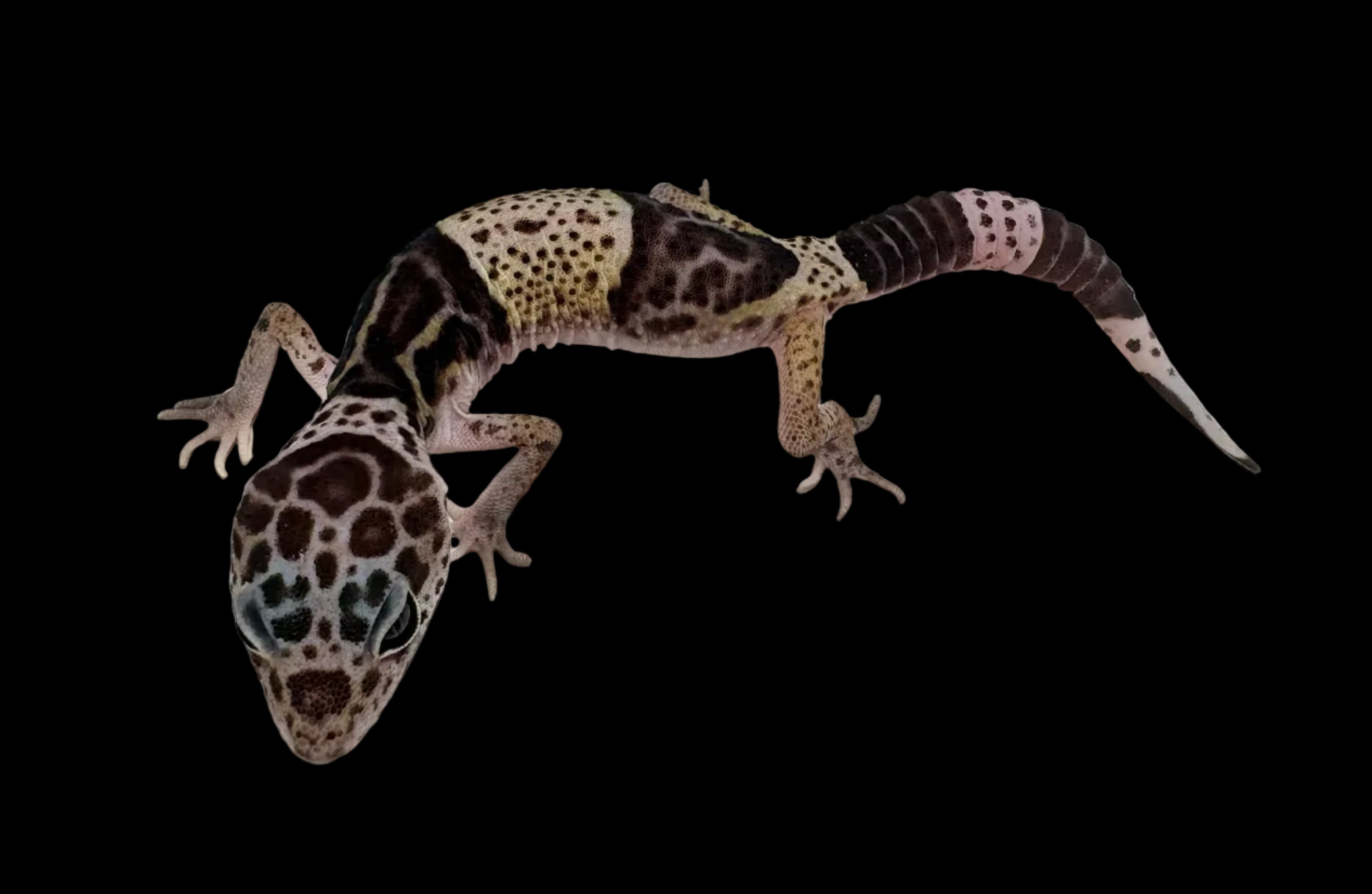
Appearance: The West Indian Leopard Gecko has a sturdy build with a broad head, muscular limbs, and a thick, fat-storing tail. Colouration tends to be earthy, ranging from greyish browns to rich tans with dark spots, blotches, or broken banding along the body. Unlike the more domesticated Leopard Gecko (E. macularius), E. fuscus often shows deeper colour tones and stronger pattern contrasts. Eyes are typically dark, expressive, and equipped with true eyelids, a defining trait of Eublepharis species.
Distribution: Native to western India, including Gujarat and surrounding states, where it occupies semi-arid to dry forest environments.
Habitat: In the wild, this species inhabits dry forests, scrublands, rocky hills, and arid plains. They shelter in burrows, under stones, or within crevices during the day. In captivity, they thrive in terrestrial setups with secure hides, moderate humidity, and varied ground structure.
Behaviour: West Indian Leopard Geckos are nocturnal and become active after dark, foraging steadily along the ground. They are generally shy when first acquired but adapt well with consistent husbandry. Compared to domesticated Leopard Geckos, they may be more cautious and sensitive to handling.
Captive Care
Enclosure: A terrestrial enclosure measuring at least 24 inches × 18 inches × 24 inches (60 × 45 × 60 cm) is recommended for an adult. Provide multiple hides, stacked rocks, cork flats, and low branches. A soil–sand or packed clay substrate supports natural burrowing behaviour.
Temperature & Humidity: Maintain a warm side of 88 to 92°F (31 to 33°C) with a cooler area between 75 and 80°F (24 to 27°C). Night temperatures can drop to 70 to 74°F (21 to 23°C). Humidity should remain moderate at 40 to 60%, with a humid hide offered for proper shedding.
Lighting: Provide low UVB (2 to 5%) for 12 hours daily. Although nocturnal, they benefit from gentle UV exposure and structured lighting cycles.
Diet: Offer a varied insect diet including crickets, roaches, mealworms, silkworms, and occasional waxworms or hornworms. Juveniles should be fed daily, while adults can be fed every 2 to 3 days. All prey should be gut-loaded and dusted with calcium and multivitamin supplements. A shallow water dish should always be available.
Behaviour in Captivity: Once acclimated, West Indian Leopard Geckos display steady nighttime activity and confident foraging behaviour. They appreciate secure hides and complex, naturalistic enclosures that provide cover and ground-level structure.
Special Considerations: Handling should be gentle and limited, as this species is more sensitive than domesticated Leopard Geckos. Ensure the enclosure remains dry and well ventilated to prevent respiratory issues.
Taxonomy Note
The West Indian Leopard Gecko belongs to the genus Eublepharis, a group of eyelid geckos native to South Asia and the Middle East. E. fuscus is closely related to E. macularius but remains a wild-type species with distinct behaviours, patterns, and environmental needs.
Genetics Note
There are no recognised morphs or selectively bred variants of the West Indian Leopard Gecko. Individuals exhibit natural variation in colour tone and pattern intensity, but no formal morphs exist within the pet trade.
Estimate shipping