

Photo Disclaimer
Description
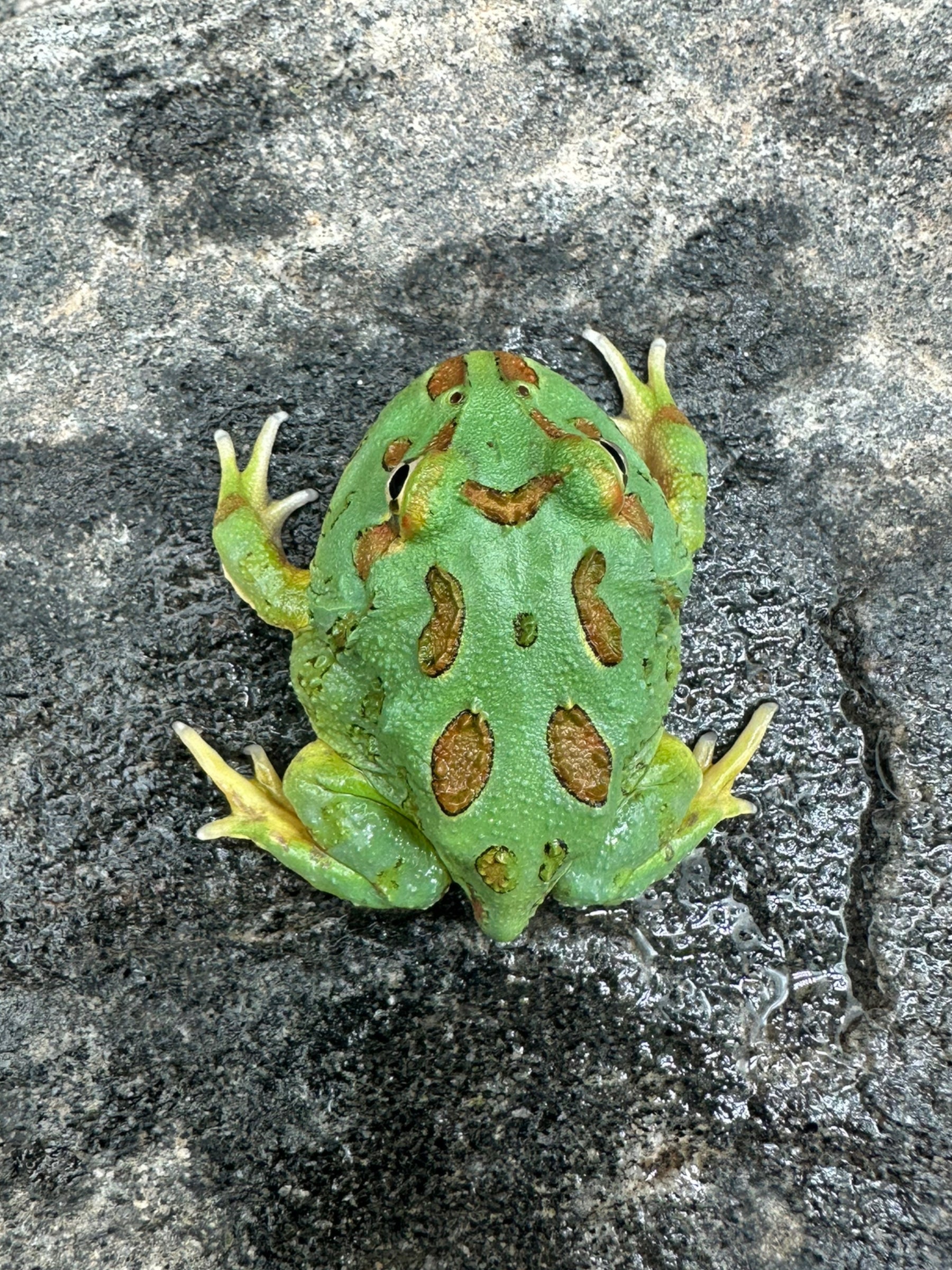
Pacman Frog (Blue Samurai)
Scientific Name: Ceratophrys cranwelli
Common Name: Pacman Frog, Blue Samurai Pacman Frog
Species Overview
Size: Adults typically reach 4–7 inches (10–18 cm), with females slightly larger and heavier-bodied than males.
Appearance: Blue Samurai Pacman Frogs display muted blue-grey to slate tones over a pale base, often with subtle darker markings along the body. They retain the broad, flattened head and large mouth characteristic of Ceratophrys species, with prominent cranial ridges (“horns”) above the eyes. Skin is smooth, thick, and slightly waxy.
Distribution: Native to northern Argentina, Paraguay, and southern Brazil, inhabiting grasslands, savannas, and forest edges.
Habitat: Terrestrial ambush predators inhabiting leaf-littered forest floors. They prefer moist, shaded areas and spend much of their time partially buried.
Behaviour: Sedentary sit-and-wait predator. Highly territorial and aggressive toward conspecifics and other amphibians.
Captive Care
Enclosure: A single adult should be housed in an 18 × 18 × 18 inches (45 × 45 × 45 cm) enclosure. Larger adults may benefit from a 24 × 18 × 18 inches (60 × 45 × 45 cm) enclosure for additional floor space. Provide a deep substrate of coco fibre or soil topped with leaf litter to allow burrowing. Include cork flats, low hides, and dense ground cover for security. A shallow water dish should be available for soaking and refreshed daily.
Temperature and Humidity:
Warm area: 80–85°F (27–29°C)
Cool area: 72–75°F (22–24°C)
Humidity: 65–80%, maintained with regular misting and a damp substrate without waterlogging.
Lighting: Low-intensity lighting with a 12-hour light cycle is sufficient. Low-level UVB may be beneficial but is not essential.
Diet: Feed a variety of appropriately sized insects such as crickets, roaches, and earthworms. Occasional pinky mice may be offered to adults. All prey should be gut-loaded and dusted with calcium; multivitamins provided periodically.
Behaviour in Captivity: Mostly sedentary and partially buried. Feeding is sudden and aggressive. Handling should be minimal to prevent stress and defensive biting.
Special Considerations:
• House singly—highly aggressive and cannibalistic
• Avoid overfeeding to prevent obesity
• Use feeding tongs to prevent bites
• Keep substrate clean and moist to prevent skin infections
Taxonomy Note
Pacman Frogs belong to the genus Ceratophrys, part of the family Ceratophryidae, a group of robust, terrestrial frogs known for their ambush predation strategy. Members of this family are native to South America and are characterized by broad, flattened heads, large mouths, and strong hind limbs adapted for sudden lunges on prey. Ceratophrys cranwelli is one of the better-known species in the family, valued for its distinctive cranial “horns” and wide gape used for ambush hunting.
Genetics Note
Blue Samurai (polygenic): This coloration develops through selective breeding, enhancing muted blue-grey to slate tones over a pale base. Expression varies among individuals and typically becomes more pronounced with maturity and proper husbandry.
Estimate shipping