

Photo Disclaimer
Description
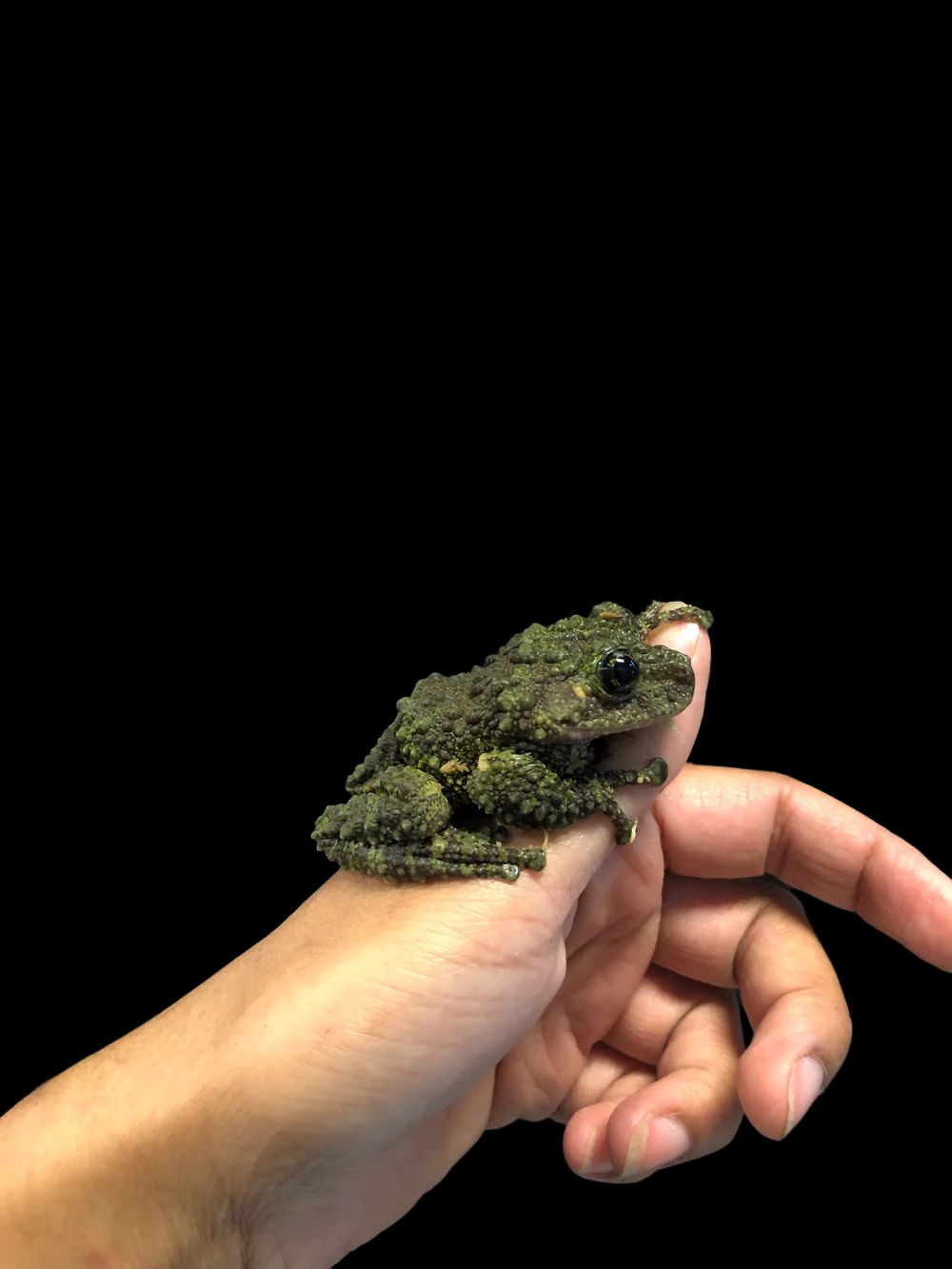
Vietnamese Mossy Frog
Scientific Name: Theloderma corticale
Common Name: Vietnamese Mossy Frog
Species Overview
Size: Adults typically reach 2.5 to 3.5 inches (6.5 to 9 cm), with females slightly larger.
Appearance: The Vietnamese Mossy Frog is one of the most iconic camouflaged amphibians in the world. Its skin is deeply textured with raised tubercles, ridges, and irregular lumpy patches that resemble wet moss or lichen-covered rock. Colouration ranges from deep green and olive to brown and black, often mottled in complex, moss-like patterns. Eyes are large and bright, usually red, copper, or gold, with horizontal pupils that stand out sharply against the rugged face. Limbs are strong with well-developed toe pads for gripping highly uneven surfaces.
Distribution: Native to northern Vietnam, especially montane forests with cool, moist microhabitats.
Habitat: Found near caves, dripping rock faces, saturated moss walls, forest seepages, and slow-moving water. This species depends on constant cool temperatures and oxygen-rich moisture in shaded environments.
Behaviour: Nocturnal, cryptic, and remarkably still during the day, these frogs blend perfectly into mossy surfaces. When disturbed, they may freeze, flatten, or jump into water and sink to escape predators. At night they become more active, exploring ledges and textured surfaces.
Captive Care
Enclosure: A single adult or small group thrives in an 18 × 18 × 24 inches (45 × 45 × 60 cm) enclosure, while larger groups benefit from a 24 × 18 × 24 inches (60 × 45 × 60 cm) setup. The most effective husbandry uses a filtered-water-base system: create a false bottom or drainage layer with a clean, filtered water reservoir below. Install a small internal or sponge filter to maintain oxygen-rich, moving water. Above the reservoir, provide elevated cork rounds, mossy bark slabs, textured rock panels, and ledges where frogs can rest above open water. Add small pockets of sphagnum or leaf litter only on elevated platforms. Integrate drip walls, rain bars, or seepage-style features to replicate their natural dripping environment and maintain constant cool moisture.
Temperature and Humidity:
Ambient temperature: 65 to 72°F (18 to 22°C)
Warm area: up to 74°F (23°C)
Night temperature: 60 to 68°F (15 to 20°C)
Humidity: 80 to 100%, with consistent moisture and strong airflow.
Lighting: Provide low UVB (around 2%) with dim, diffused lighting. Avoid intense or direct illumination.
Diet: Offer small insects such as crickets, small roaches, isopods, black soldier fly larvae, earthworm segments, fruit flies, and springtails. Supplement all prey with calcium and multivitamins.
Behaviour in Captivity: Vietnamese Mossy Frogs are hardy when kept cool, moist, and well-ventilated. They spend much of the day motionless, blending perfectly with décor, and become more active at night. They tolerate observation well but do not tolerate frequent handling.
Special Considerations:
• Handle only when unavoidable, using wet, powder-free gloves or a soft, damp net—they are sensitive and can leap unexpectedly.
• Maintain cool temperatures; overheating is the most common cause of decline.
• Ensure water is filtered and oxygenated—stagnant water leads to rapid health issues.
• Provide abundant textured surfaces for natural camouflage and resting.
• Avoid oversaturated surfaces; rely on dripping moisture rather than standing wet substrate.
• Use only dechlorinated or RO water for misting and filtration.
• Seal enclosure gaps securely.
Taxonomy Note
Theloderma corticale belongs to the family Rhacophoridae and represents one of the most extreme examples of camouflage in amphibians. It is closely related to other mossy frogs such as T. vietnamense and T. bicolor, sharing similar ecological preferences for cool, dripping microhabitats.
Genetics Note
There are no recognised morphs for Theloderma corticale. Natural variation occurs in texture density, colour depth, and mottling patterns, but none represent defined genetic morphs.
Estimate shipping