

Photo Disclaimer
Description
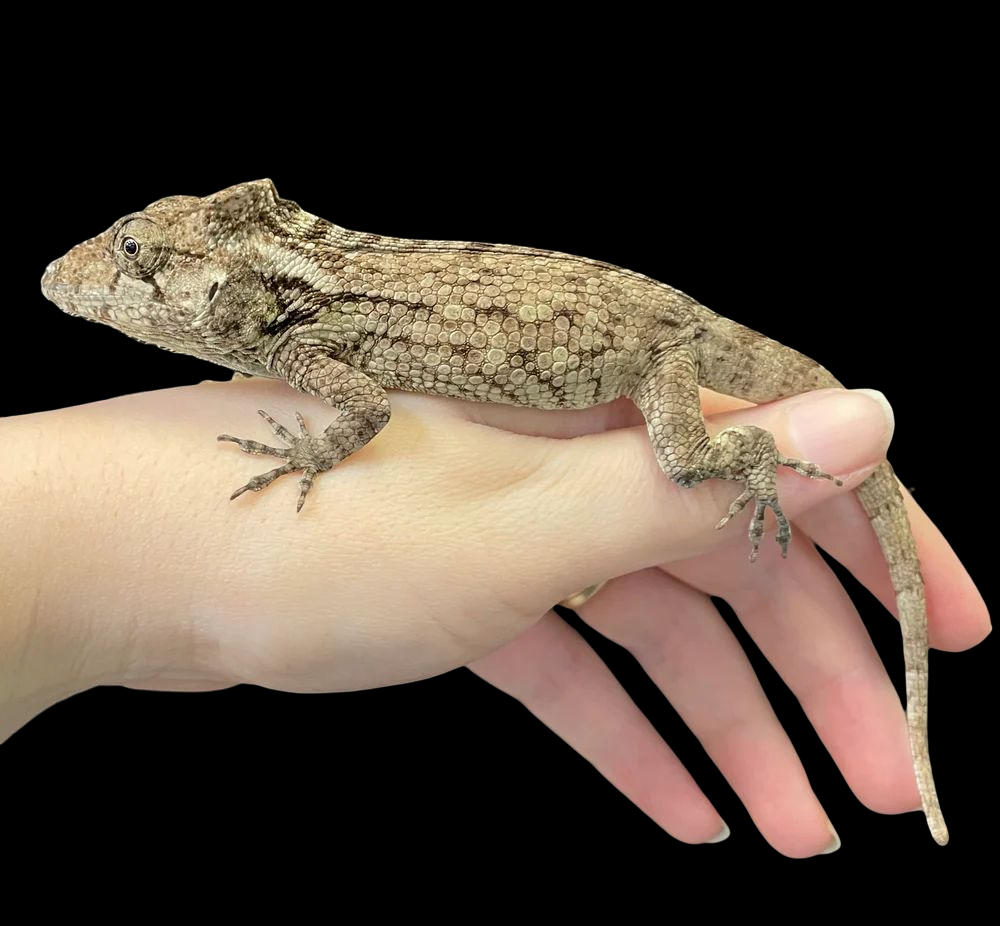
Cuban False Chameleon (Anolis barbatus)
Scientific Name: Anolis barbatus
Common Name: Cuban False Chameleon, Bearded Anole
Species Overview
Size: Adults typically reach 10–12 inches (25–30 cm) in total length, with a sturdy body and proportionally large head.
Appearance: Cuban False Chameleons are named for their chameleon-like features, including independently mobile eyes and a robust, angular skull. Their coloration is typically muted, ranging from grey to brown to olive, helping them blend into bark and branch surfaces. A triangular “beard” of enlarged, spiky scales extends beneath the jaw, particularly noticeable in males. Their overall appearance is rugged and cryptic, with granular scales and a heavy-bodied build that sets them apart from typical slender anoles.
Distribution: Endemic to Cuba, especially central and eastern regions.
Habitat: This species inhabits semi-deciduous forests, scrublands, and limestone-rich areas with abundant vertical surfaces for climbing. They prefer shaded or filtered-light environments on large tree trunks or rocky formations.
Behaviour: Cuban False Chameleons are diurnal, slow-moving, and rely heavily on camouflage. Unlike many anoles, they rarely display rapid colour changes. They are primarily insectivorous but are notable snail specialists, using powerful jaws to crush hard-shelled prey. They are solitary and territorial but less reactive and more deliberate in their movements than typical anoles.
Captive Care
Enclosure: Provide a vertically oriented enclosure at least 24 inches × 18 inches × 36 inches (60 × 45 × 90 cm) for an adult. Include thick branches, cork flats, textured wood, and elevated hides. A naturalistic environment with sturdy climbing structures is ideal, as they spend most of their time perched off the ground.
Temperature and Humidity:
Basking area: 90–95°F (32–35°C)
Ambient temperature: 75–82°F (24–28°C)
Night temperatures: 70–75°F (21–24°C)
Maintain humidity between 60–80%, with daily misting and adequate drying cycles to prevent stagnation.
Lighting: Provide full-spectrum lighting with moderate UVB (5–10%) on a 12-hour cycle. They benefit from strong but diffused lighting to mimic their shaded natural habitat.
Diet: Offer a varied insect diet including roaches, crickets, silkworms, black soldier fly larvae, and occasional waxworms. Snails (captive-safe) can be offered as enrichment and mimic natural feeding behaviour. Provide regular calcium and multivitamin supplementation. Juveniles should be fed daily; adults every 1–2 days.
Behaviour in Captivity: Cuban False Chameleons are calm, deliberate, and often tolerant of nearby activity. They display natural perching behaviour and slow, cautious movement when provided with ample elevated surfaces. Handling should still be minimal to avoid stress.
Special Considerations: This species benefits from sturdy climbing decor that allows for secure grip and stable vantage points. Hydration is important, as they drink from water droplets following misting. Ensure adequate ventilation to balance humidity and air flow.
Taxonomy Note
The Cuban False Chameleon belongs to the family Dactyloidae and is part of the Chamaeleolis group within Anolis, a lineage known for slow movement, heavy heads, specialised jaws, and cryptic camouflage. These anoles fill an ecological niche similar to that of chameleons, despite being only distantly related.
Genetics Note
There are no recognized morphs for the Cuban False Chameleon. Natural variation includes differences in beard scale prominence, dorsal mottling intensity, and overall grey–brown colour tones. These reflect individual and locality-based diversity rather than selective breeding.