


Photo Disclaimer
Description
Egyptian Uromastyx
Scientific Name: Uromastyx aegyptia
Common Name: Egyptian Uromastyx, Egyptian Spiny-tailed Lizard
Species Overview
Size: Adults typically reach 24–36 inches (60–90 cm) in total length, making them one of the largest Uromastyx species. They are heavy-bodied with thick limbs and impressive mass once fully grown.
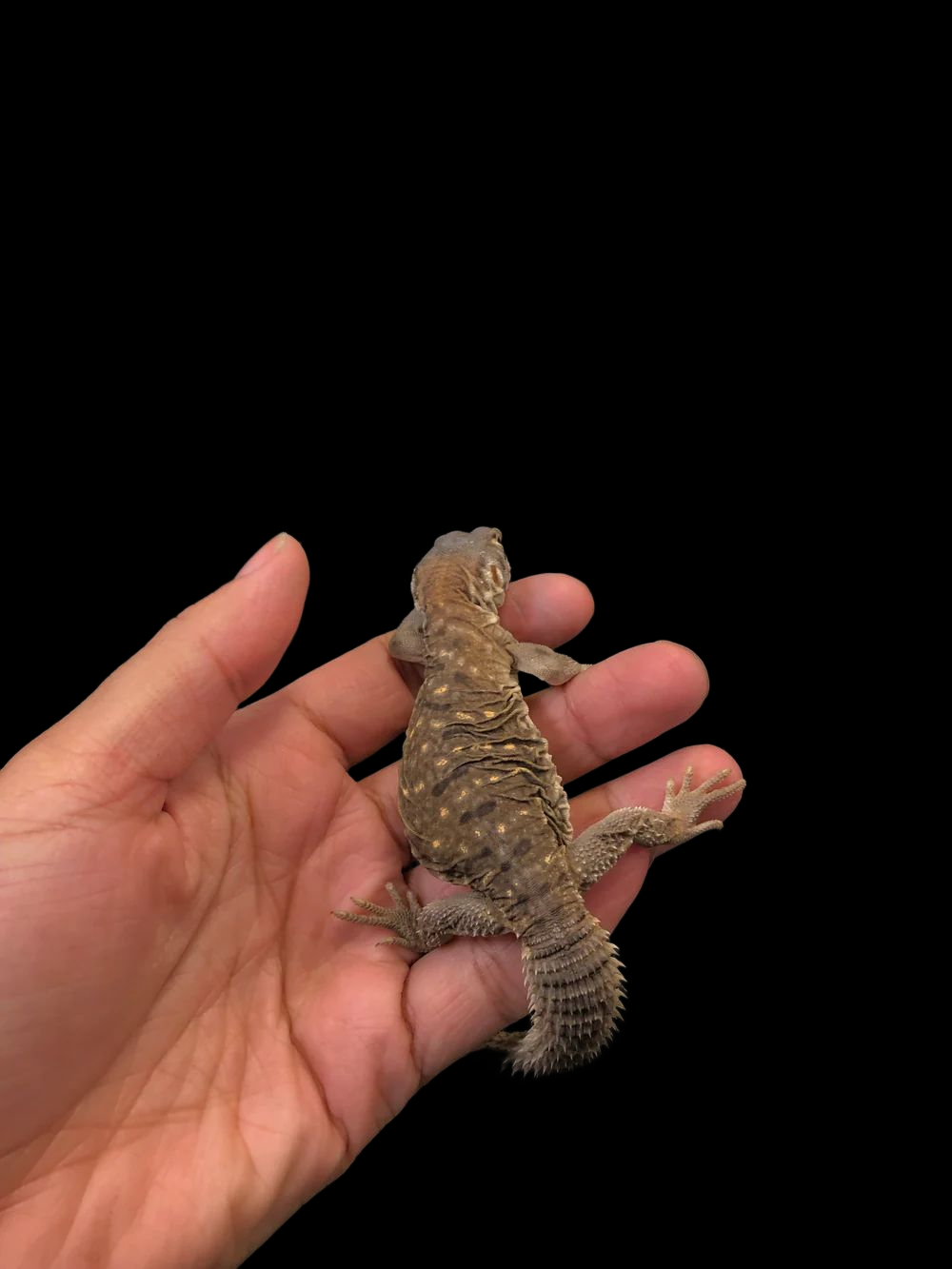
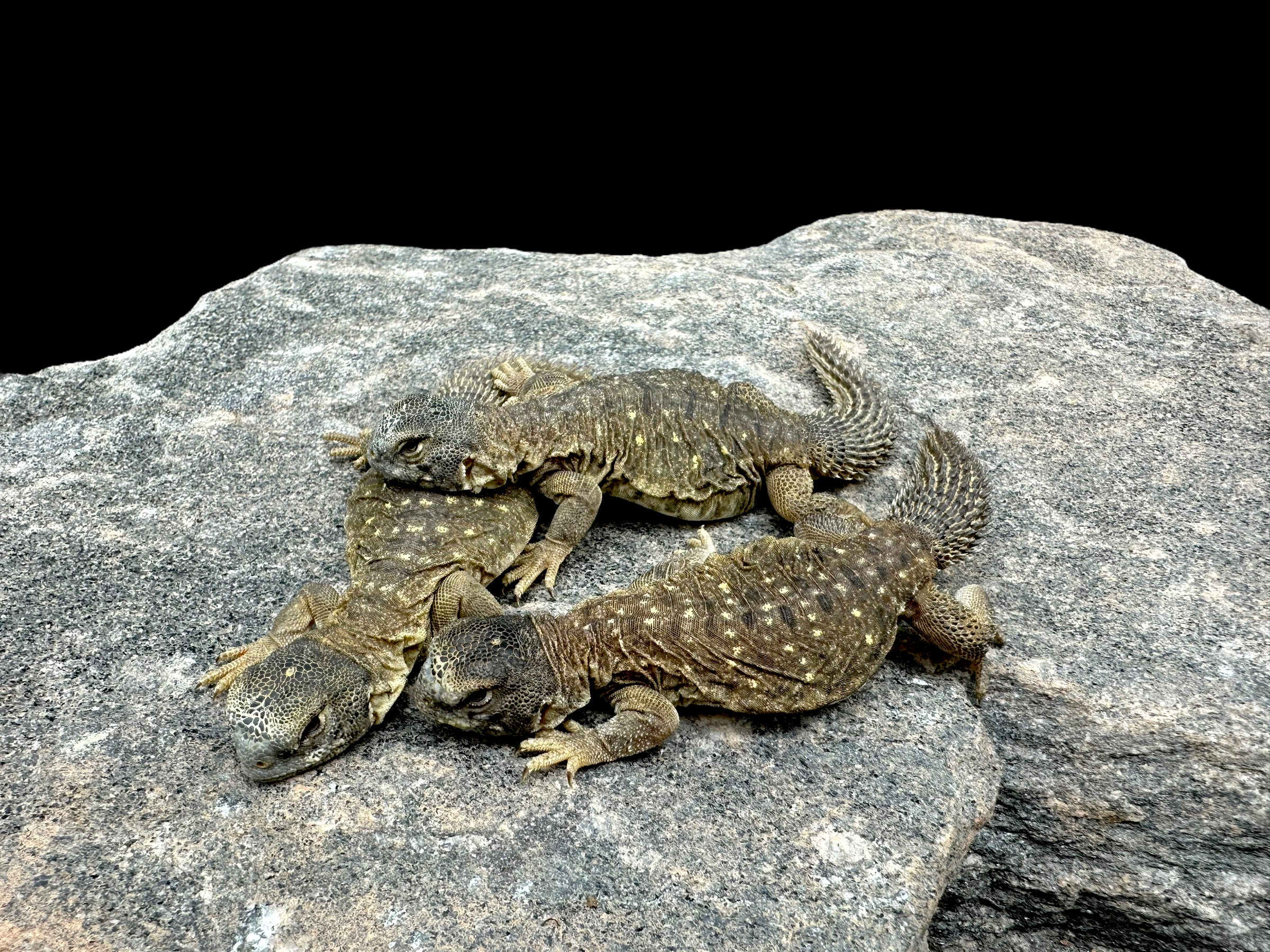
Appearance: Egyptian Uromastyx are robust, muscular lizards with earthy tones ranging from sandy beige to olive, tan, and grey. Their thick, spiny tails are ringed with hardened scales used for defence. Patterning can include subtle mottling, broken banding, or faint reticulation across the back and flanks. Males may exhibit more intense yellow, orange, or washed-out tonal highlights during breeding season, while females remain more uniform. Their sturdy build, deep head, and calm posture give them a powerful, ancient appearance.
Distribution: Native to Egypt, Israel, Jordan, Saudi Arabia, Iraq, Iran, and surrounding Middle Eastern regions.
Habitat: Egyptian Uromastyx inhabit hot, arid deserts, rocky plateaus, and sandy flats. They are skilled burrowers, creating deep tunnels to escape extreme heat. They bask intensely but retreat underground during the hottest hours.
Behaviour: This species is diurnal, herbivorous, and exceptionally heat-tolerant. They bask in extremely high temperatures and rely on burrows to regulate body heat. Egyptian Uromastyx are territorial but usually calm. Their natural diet includes desert plants, flowers, seeds, and occasionally insects during youth. Adults become almost entirely vegetarian.
Captive Care
Enclosure: Provide a large terrestrial enclosure at least 6 feet × 3 feet × 2 feet (1.8 × 0.9 × 0.6 m) for an adult. Offer deep substrate for digging, such as a sandy–soil mixture (dry on top with some moisture retained in deeper layers), along with rock shelves, basking platforms, and secure hides. Open horizontal space is crucial.
Temperature and Humidity:
Basking area: 115–130°F (46–54°C)
Ambient temperature: 90–100°F (32–38°C)
Night temperatures: 70–75°F (21–24°C)
Humidity should remain exceptionally low, ideally 10–30%. Provide a dry environment with excellent ventilation.
Lighting: Provide extremely strong full-spectrum lighting with very high UVB (12% or equivalent). Egyptian Uromastyx require intense light to mimic desert sun exposure and maintain proper calcium metabolism. Bright, warm basking zones are essential.
Diet: Offer a strictly herbivorous diet for adults, including dark leafy greens (collard, mustard, dandelion), chopped vegetables, flowers (hibiscus, squash blossoms), lentils, and occasional seeds. Juveniles may eat insects occasionally, but this should be phased out as they mature. Supplement with calcium, and use multivitamins sparingly.
Behaviour in Captivity: Egyptian Uromastyx become calm and confident with consistent care. They are active baskers and enjoy exploring horizontal space. They rarely tolerate frequent handling and may tail-swat or puff up when threatened, but many individuals settle well in captivity. Proper heat levels are essential for digestion and activity.
Special Considerations:
• Avoid high humidity to prevent respiratory and skin issues.
• Their powerful digging behaviour requires deep substrate and secured décor.
• They thrive best in large, well-ventilated enclosures with intense lighting.
• Overfeeding protein can lead to serious health issues.
Taxonomy Note
The Egyptian Uromastyx belongs to the family Agamidae and the genus Uromastyx, a group of highly specialized desert lizards adapted to extreme heat and herbivory. Uromastyx aegyptia is among the largest species and often regarded as one of the most impressive and prehistoric in appearance.
Genetics Note
There are no recognized morphs for the Egyptian Uromastyx. Natural variation occurs in dorsal colour tone, tail spine thickness, and the presence or absence of subtle yellow or orange accents. These differences reflect locality-based and individual genetics, not selective breeding.