

Photo Disclaimer
Description
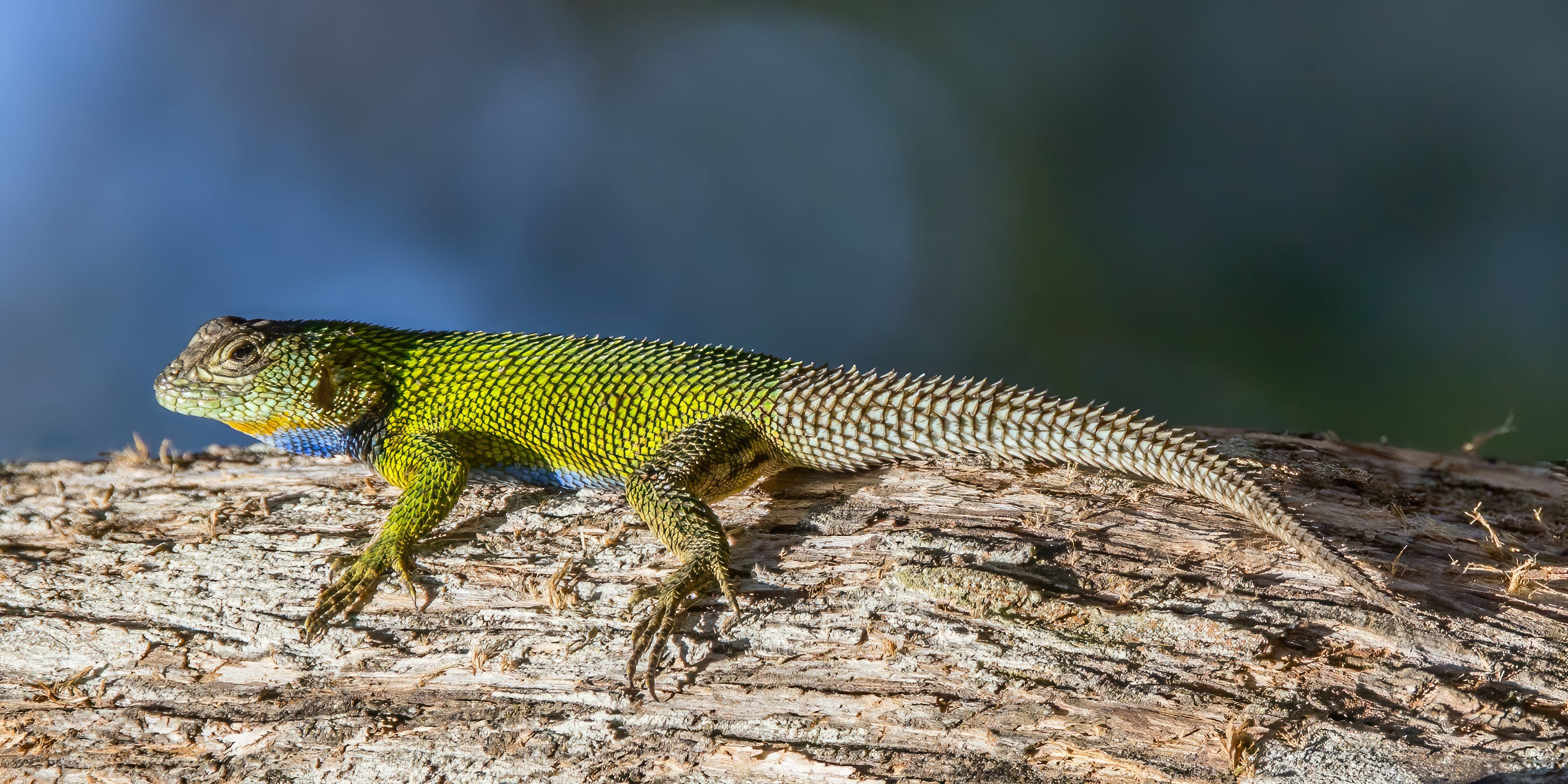
Emerald Swift (Sceloporus malachiticus)
Scientific Name: Sceloporus malachiticus
Common Name: Emerald Swift, Green Spiny Lizard
Species Overview
Size: Adults typically reach 6–10 inches (15–25 cm) in total length, with males generally larger and more vividly coloured than females.
Appearance: Emerald Swifts are striking lizards known for their bright emerald-green coloration, which is especially intense in adult males. Males often display turquoise, blue, or yellow highlights along the flanks, with darker speckling or subtle patterning across the back. Females are usually brown or olive with lighter mottling and may show hints of green. Their bodies are covered in rough, keeled scales, giving them a textured, spiny appearance. They have robust limbs, expressive eyes, and agile movements characteristic of the spiny lizard group.
Distribution: Native to Central America, including Costa Rica, Honduras, Nicaragua, and Panama.
Habitat: Emerald Swifts inhabit montane forests, highland woodlands, and cool, moist cloud forest regions. They are semi-arboreal and often found on tree trunks, mossy rocks, or sunlit clearings at mid to high elevations.
Behaviour: This species is diurnal, fast-moving, and territorial. Males perform push-up displays, dewlap extensions, and rapid colour intensification during dominance or courtship behaviour. They feed primarily on insects but may also consume small spiders and other invertebrates. Emerald Swifts prefer cooler temperatures than many typical tropical lizards.
Captive Care
Enclosure: Provide a semi-arboreal enclosure at least 24 inches × 18 inches × 24 inches (60 × 45 × 60 cm) for a single adult or a pair. Include climbing branches, cork bark, rock ledges, and dense foliage. A naturalistic, planted enclosure works exceptionally well due to their preference for cool, humid environments.
Temperature and Humidity:
Basking area: 90–95°F (32–35°C)
Ambient temperature: 72–82°F (22–28°C)
Night temperatures: 65–72°F (18–22°C)
Humidity should remain around 60–80%, supported by daily misting and moisture-retentive substrate. Ensure good airflow to prevent stagnant conditions.
Lighting: Provide strong full-spectrum lighting with moderate UVB (5–10%). Bright, diffused lighting encourages basking and enhances their colouration.
Diet: Offer a varied insectivorous diet including crickets, roach nymphs, black soldier fly larvae, small mealworms, silkworms, and occasional waxworms. Supplement with calcium frequently and multivitamins weekly. Juveniles should be fed daily; adults every 1–2 days.
Behaviour in Captivity: Emerald Swifts are active and display-oriented. They enjoy climbing, basking, and performing territorial body movements. While visually striking, they are typically too quick and skittish for regular handling. They thrive when housed in naturalistic enclosures with stable environmental conditions.
Special Considerations:
• Provide cooler microclimates, as this species does not tolerate excessively warm enclosures.
• Secure vertical climbing décor is essential.
• Handling should be minimal due to their flighty, delicate nature.
• Males are territorial and should not be housed together.
Taxonomy Note
The Emerald Swift belongs to the family Phrynosomatidae, a diverse group of North and Central American spiny lizards. Sceloporus malachiticus is one of the most vividly coloured species in the genus, well adapted to cooler, high-elevation habitats.
Genetics Note
There are no recognized morphs for the Emerald Swift. Natural variation includes differences in green intensity, blue flank highlights, and dorsal spotting. These variations arise from individual and locality-based genetic diversity rather than selective breeding.