

Photo Disclaimer
Description
Emerald Tree Skink
Scientific Name: Lamprolepis smaragdina
Common Name: Emerald Tree Skink, Green Tree Skink
Species Overview
Size: Adults typically reach 8–10 inches (20–25 cm) in total length, with the tail making up more than half their length. They are slim, lightweight, and highly agile.
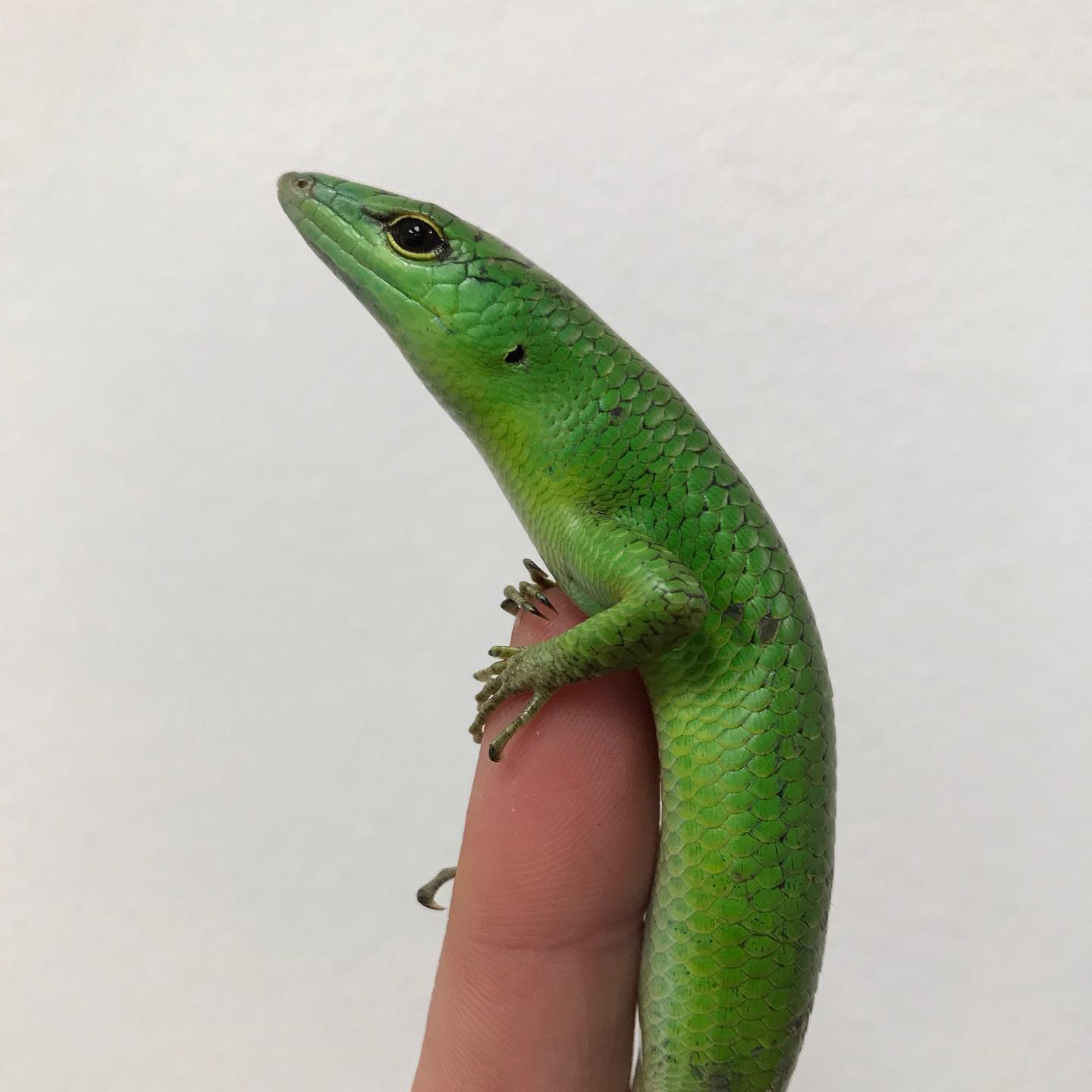
Appearance: Emerald Tree Skinks are known for their vivid green coloration, which can range from bright emerald to yellow-green or even turquoise tones depending on locality and individual genetics. Some specimens show scattered darker speckling or faint lateral striping. Their bodies are slender with smooth, shiny scales, long limbs, and a tapering tail well suited for arboreal movement. Juveniles may appear brown or duller green, gaining brighter colour as they mature.
Distribution: Widespread across Southeast Asia and Oceania, including the Philippines, Indonesia, Papua New Guinea, and the Solomon Islands.
Habitat: This species inhabits tropical rainforests, mangroves, coconut plantations, gardens, and forest edges. They are strongly arboreal and often found on tree trunks, shrubs, and foliage exposed to dappled sunlight.
Behaviour: Emerald Tree Skinks are diurnal, fast, and highly active. They are social compared to many lizards and can often be observed basking or interacting within small loose groups in the wild. Their diet consists of insects, spiders, small invertebrates, and occasional fruit. When threatened, they flee upward into foliage, relying on speed and jumping ability.
Captive Care
Enclosure: Provide a vertically oriented enclosure at least 24 inches × 18 inches × 24 inches (60 × 45 × 60 cm) for a single adult or small group. Include numerous climbing branches, bamboo poles, cork rounds, and dense live or artificial plants. Vertical and diagonal perches are essential for natural behaviour.
Temperature and Humidity:
Basking area: 90–95°F (32–35°C)
Ambient temperature: 78–85°F (26–29°C)
Night temperatures: 70–75°F (21–24°C)
Maintain humidity at 60–80% with daily misting. Provide well-ventilated but moist microhabitats.
Lighting: Provide strong full-spectrum lighting with moderate UVB (5–10%). Bright lighting encourages natural activity and supports healthy colouration.
Diet: Offer a varied insect diet including crickets, roach nymphs, black soldier fly larvae, small mealworms, silkworms, and occasional soft fruit (mango, papaya, berries). Supplement insects with calcium frequently and multivitamins weekly. Juveniles require daily feeding; adults may be fed every 1–2 days.
Behaviour in Captivity: Emerald Tree Skinks are extremely active and curious. They display natural climbing, jumping, and exploratory behaviours when provided with ample vertical space. They generally do not tolerate much handling but become confident display animals with consistent care. They may thrive in small groups if ample space and visual barriers are present.
Special Considerations:
• Ensure secure enclosure doors — they are quick escape artists.
• Provide varied perches to encourage natural movement.
• Live plants help stabilize humidity and give visual security.
• Handling should be minimal due to their speed and stress sensitivity.
Taxonomy Note
The Emerald Tree Skink belongs to the family Scincidae, known for smooth-scaled, fast-moving lizards. Lamprolepis smaragdina is among the most arboreal skinks, adapted for life in dense tropical foliage with strong climbing ability and bright, leaf-mimicking coloration.
Genetics Note
There are no recognized morphs for the Emerald Tree Skink. Natural variation occurs in green shade intensity, pattern speckling, and hints of blue or yellow highlights. These differences result from locality-based and individual genetics rather than selective breeding.