

Photo Disclaimer
Description
European Legless Lizard
Scientific Name: Pseudopus apodus
Common Name: European Legless Lizard, Sheltopusik, Glass Lizard
Species Overview
Size: Adults typically reach 3–4 feet (0.9–1.2 m) in total length, making them one of the largest legless lizards in the world.
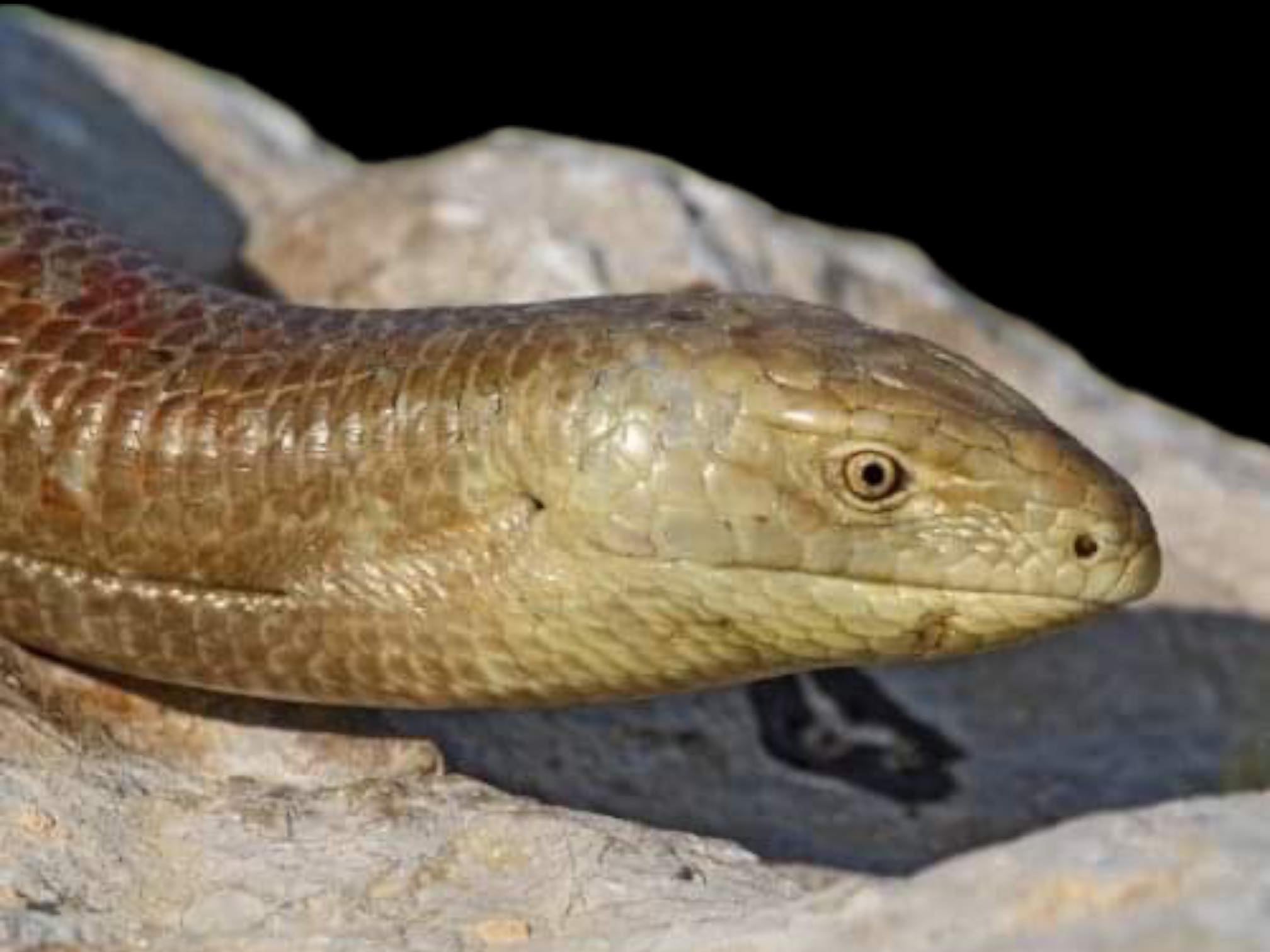
Appearance: European Legless Lizards resemble snakes but differ in several key features, including eyelids, visible ear openings, and a stiff, muscular body with subtle vestigial limb remnants beneath the skin. Their coloration ranges from tan to brown, olive, or grey, often with faint speckling or gentle striping. Juveniles may show bolder lateral patterns that fade as they mature. Their heads are broad with expressive eyes, and their long tails can break easily as a defensive mechanism.
Distribution: Found throughout southeastern Europe, the Balkans, Turkey, the Caucasus region, and parts of the Middle East.
Habitat: This species lives in grasslands, scrubland, rocky slopes, agricultural edges, and open woodlands. They favour places with loose soil for burrowing and plenty of cover, such as stone piles and fallen branches.
Behaviour: European Legless Lizards are diurnal, alert, and both surface-active and fossorial. They feed on insects, snails, slugs, eggs, and occasional small vertebrates. When startled, they may vibrate their tail, hiss, or quickly retreat underground. Despite their size, they move with surprising speed on the surface.
Captive Care
Enclosure: Provide a terrestrial enclosure at least 4 feet × 2 feet × 2 feet (120 × 60 × 60 cm) for an adult. Include deep substrate such as a soil–sand mixture to allow burrowing, along with bark slabs, cork tubes, rocks, and stable hides. Offer both open exploration space and dense cover.
Temperature and Humidity:
Basking area: 90–95°F (32–35°C)
Ambient temperature: 75–85°F (24–29°C)
Night temperatures: 65–72°F (18–22°C)
Maintain humidity between 40–60%, with slightly higher moisture retained in the deeper substrate layers. Ensure good ventilation.
Lighting: Provide full-spectrum lighting with moderate UVB (5–10%). Bright lighting encourages surface basking and supports healthy skeletal development.
Diet: Offer an omnivorous diet including crickets, roach nymphs, black soldier fly larvae, mealworms, snails, slugs, eggs, and occasional pinky mice or lean meats. Fruits and vegetables can be given sparingly. Supplement food with calcium frequently and multivitamins weekly.
Behaviour in Captivity: European Legless Lizards are both curious and shy. They benefit from naturalistic enclosures with deep substrate for burrowing and several hides. They may explore openly but generally do not enjoy frequent handling. Their tails are delicate and should be protected from accidental injury.
Special Considerations:
• Tail autotomy is a risk, and regrowth is incomplete.
• Provide deep, soft substrate to allow natural burrowing.
• Avoid frequent handling to reduce stress and tail damage.
• Ensure all décor is secure and cannot collapse on tunnelling animals.
Taxonomy Note
The European Legless Lizard is part of the Anguidae family, which includes glass lizards and alligator lizards. Pseudopus apodus is the largest species of legless lizard and is superbly adapted to terrestrial and fossorial life.
Genetics Note
There are no recognized morphs for the European Legless Lizard. Natural variation occurs in brown or grey colour tones, dorsal pattern visibility, and remnants of juvenile striping. These differences reflect locality-based and individual genetic variation rather than selective breeding.