


Photo Disclaimer
Description
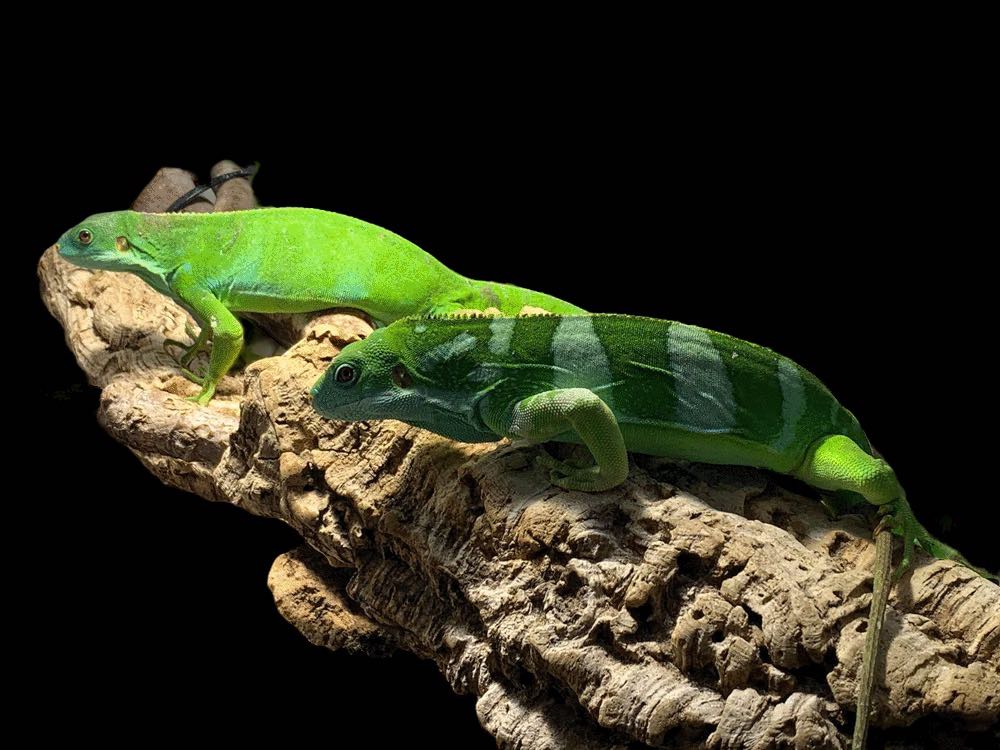
Fiji Iguana
Scientific Name: Brachylophus fasciatus (commonly referenced for the Fiji Banded Iguana)
Common Name: Fiji Iguana, Fiji Banded Iguana
Species Overview
Size: Adults typically reach 20–24 inches (50–60 cm) in total length, with more than half comprised of the tail. Males are slightly larger and more brightly coloured than females.
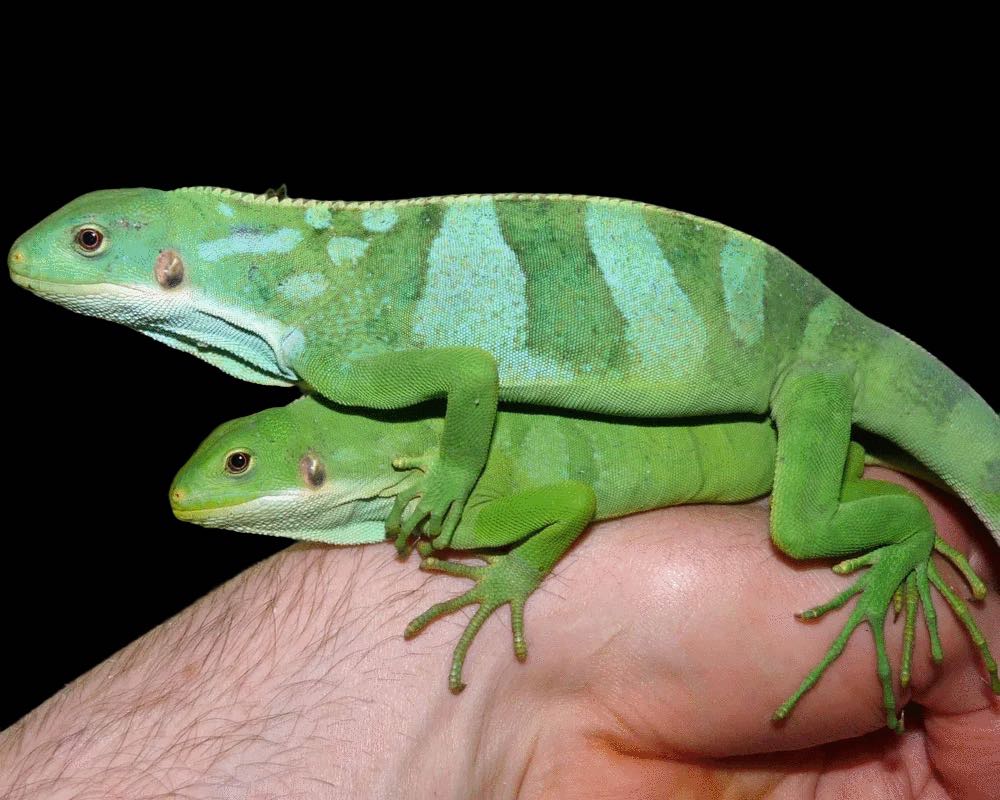
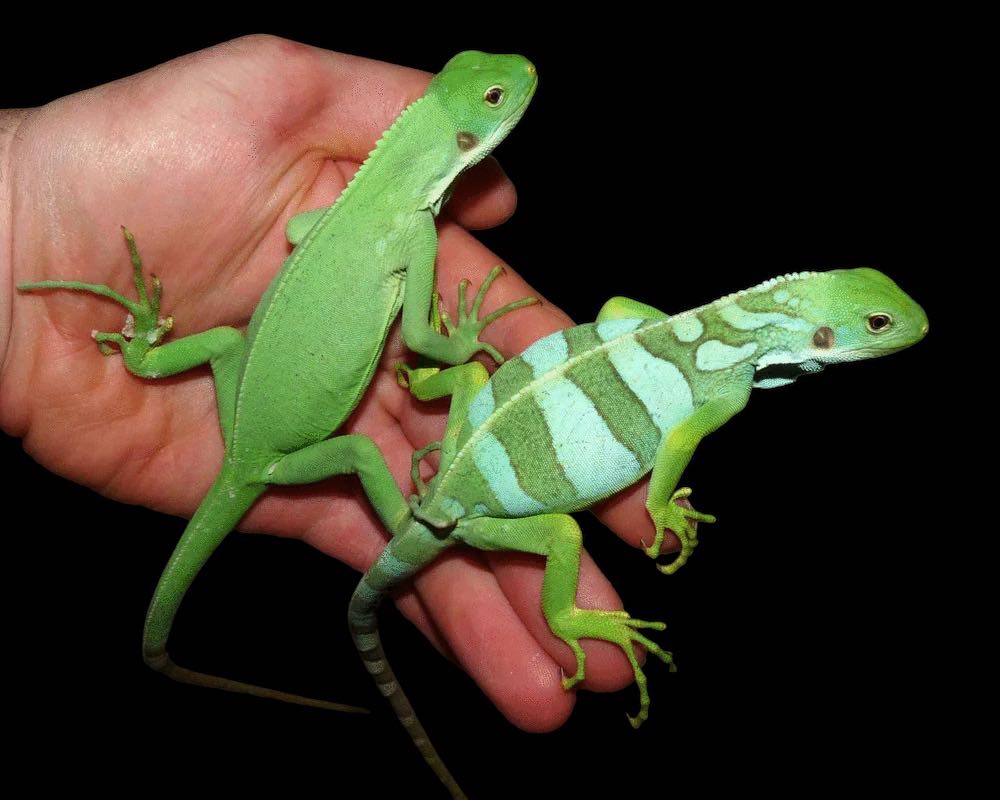
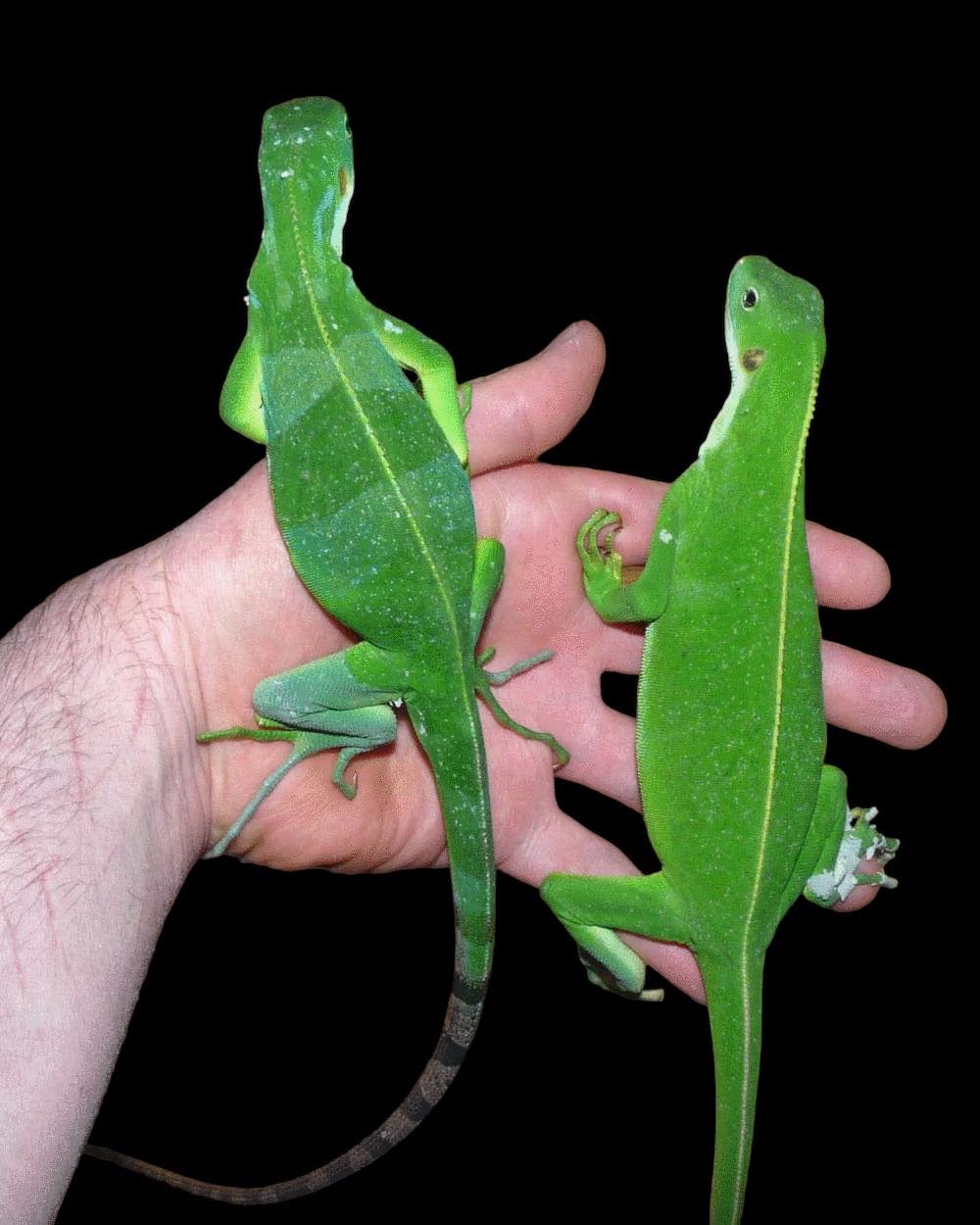
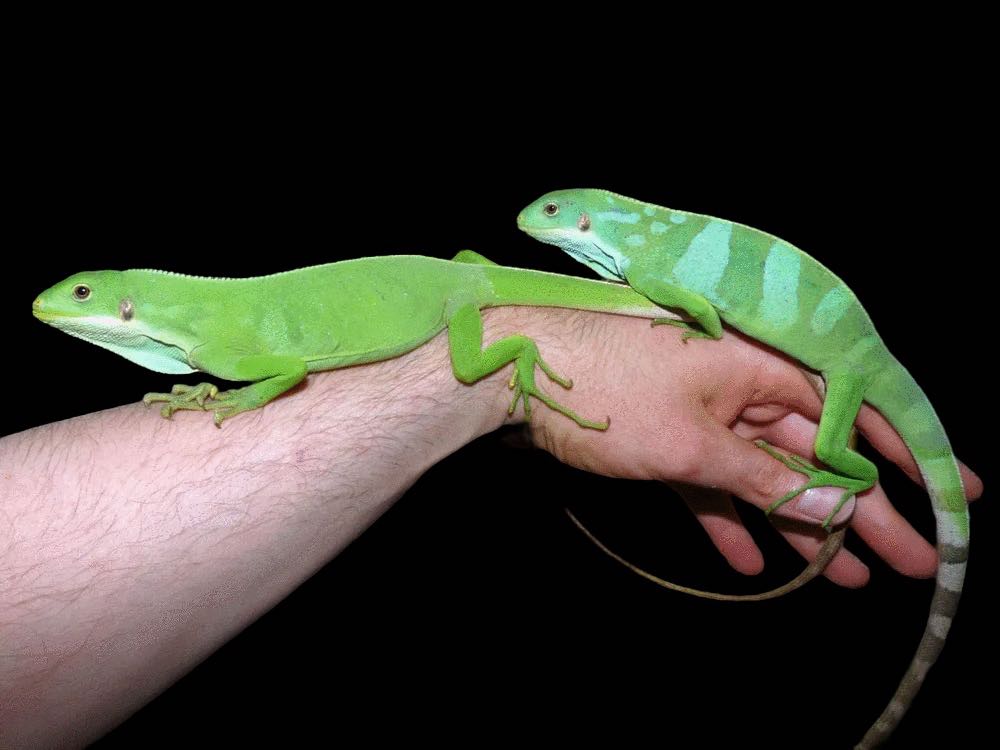
Appearance: Fiji Iguanas are among the world’s most striking arboreal iguanids. Males display vibrant emerald-green bodies with bold turquoise or white vertical bands along the flanks. Females are usually solid green but may show faint banding or speckling. Both sexes have a slender build, smooth granular scales, and a modest nuchal crest. Their eyes are expressive, and their long limbs and toes are adapted for agile climbing. Colour may intensify with basking, excitement, or territorial display.
Distribution: Native to several islands in Fiji, including Ovalau, Gau, and other smaller islands within the archipelago.
Habitat: Fiji Iguanas inhabit tropical dry forests, coastal woodlands, shrublands, and forest edges. They spend much of their time in trees and dense vegetation, utilizing shaded perches and sunlit branches for thermoregulation.
Behaviour: This species is diurnal, arboreal, and territorial. Males defend breeding territories through body posturing, head-bobbing, and intense colour display. They feed primarily on leaves, flowers, buds, and fruit, with occasional insect consumption. They are alert but generally calm when undisturbed.
Captive Care
Enclosure: Provide a vertically oriented enclosure at least 36 inches × 24 inches × 36 inches (90 × 60 × 90 cm) for an adult, though larger is strongly recommended. Include sturdy branches, cork rounds, live plants, and multiple elevated basking and hiding areas. A naturalistic setup with dense foliage promotes security and reduces stress.
Temperature and Humidity:
Basking area: 90–95°F (32–35°C)
Ambient temperature: 78–85°F (26–29°C)
Night temperatures: 70–75°F (21–24°C)
Humidity should remain 60–80%, with morning and evening misting supporting hydration and shedding.
Lighting: Provide strong full-spectrum lighting with high UVB (10–12%), as Fiji Iguanas rely heavily on UV exposure to maintain calcium metabolism and vibrant colouration. A 12-hour lighting cycle is appropriate.
Diet: Offer a primarily herbivorous diet of dark leafy greens (collard, mustard, turnip, dandelion), hibiscus leaves and flowers, squash, shredded vegetables, and occasional fruit. Insects such as roaches or crickets may be offered sparingly, especially for juveniles. Use calcium supplements regularly and multivitamins weekly.
Behaviour in Captivity: Fiji Iguanas are active climbers that thrive in enclosures offering both shaded retreats and sun-like basking zones. They become confident with consistent routine but should not be handled excessively. They may exhibit territorial behaviour, particularly males during breeding season.
Special Considerations:
• Larger enclosures significantly improve welfare and reduce stress.
• They require high-quality UVB and consistent humidity.
• This species is protected and regulated internationally; only captive-bred individuals should be kept.
• Handling should be gentle and minimal.
Taxonomy Note
The Fiji Iguana belongs to the family Iguanidae and the genus Brachylophus, a unique group of South Pacific iguanas believed to descend from ancient iguanid dispersal events from the Americas. Their limited geographic range and vivid coloration make them one of the most distinctive island iguanas.
Genetics Note
There are no recognized morphs for the Fiji Iguana. Natural variation occurs in band brightness, green hue, and degree of turquoise or white striping in males. Females may also show subtle pattern differences. These traits represent natural genetic diversity across islands and do not reflect selective breeding.