


Photo Disclaimer
Description
Fire Skink (Lepidothyris fernandi)
Scientific Name: Lepidothyris fernandi
Common Name: Fire Skink, Fernand's Skink
Species Overview
Size: Adults typically reach 12–15 inches (30–38 cm) in total length, with a stout body and smooth, glossy scales.
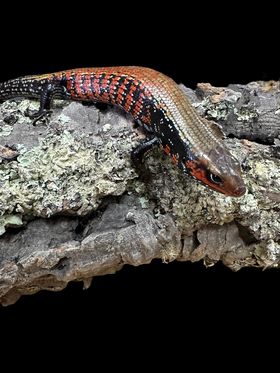
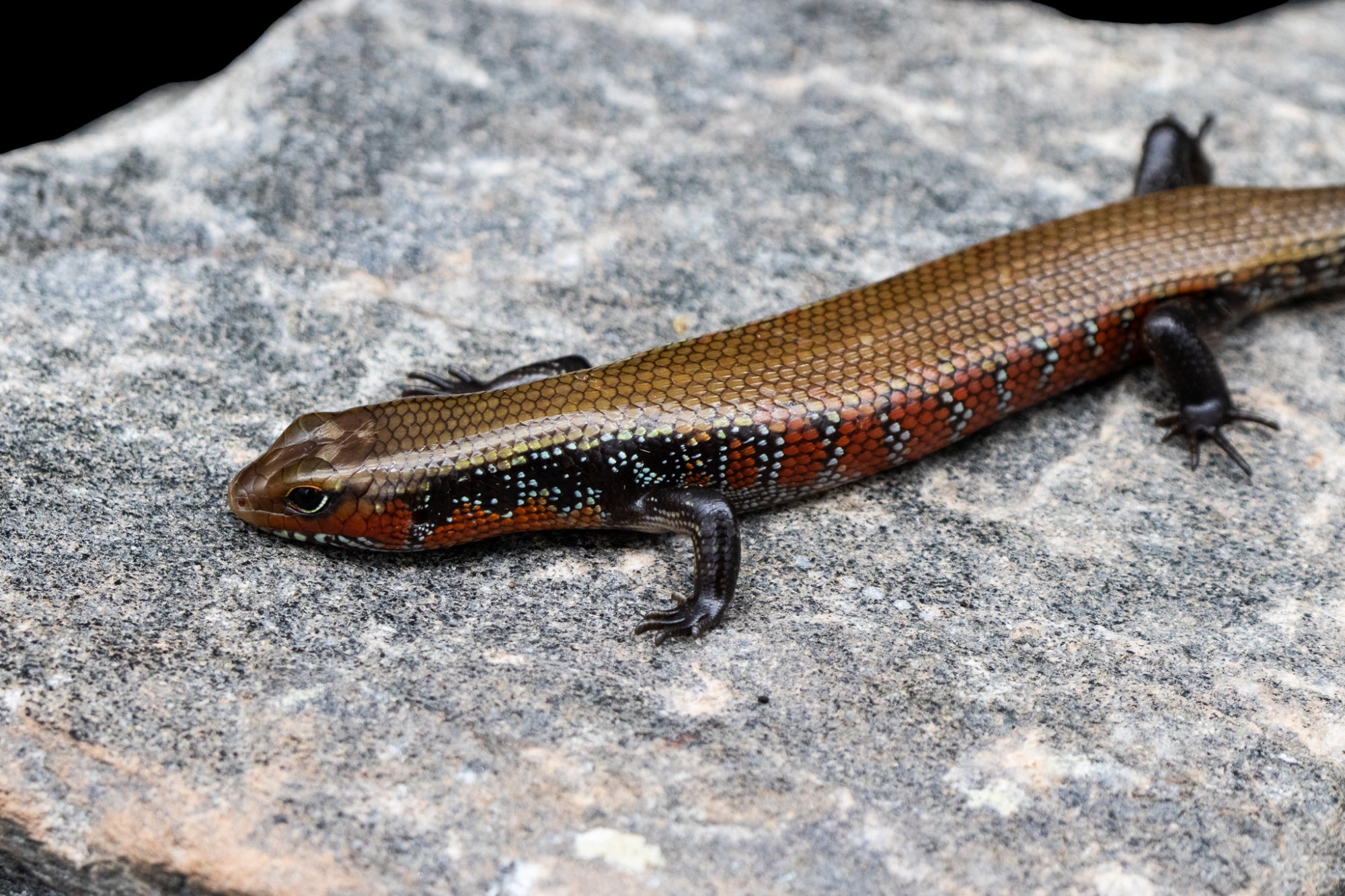
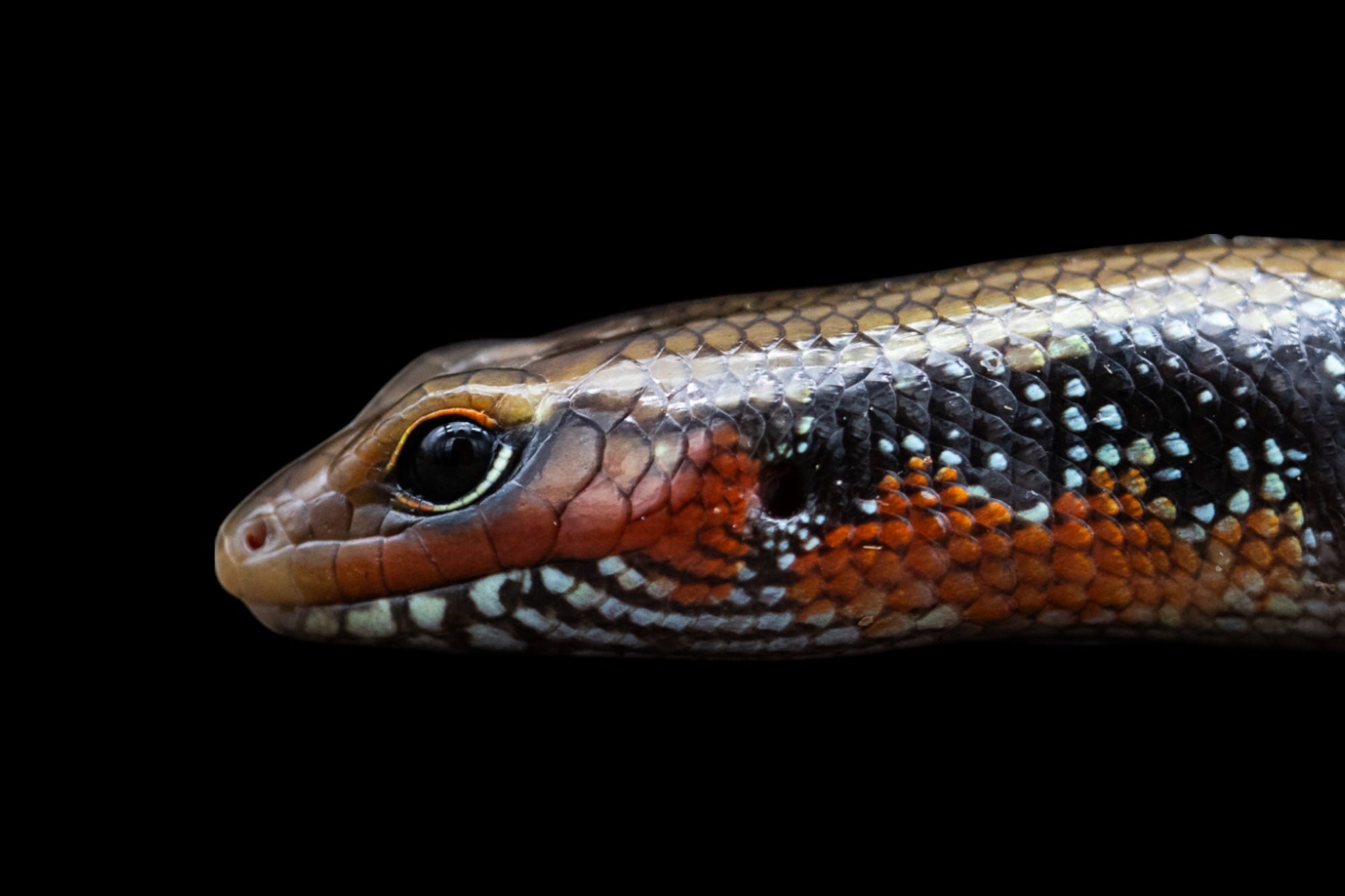
Appearance: Fire Skinks are among the most colourful African skinks, displaying vivid red, orange, and yellow lateral stripes bordered by deep black and white spotting. Their backs are typically bronze or golden, with a metallic sheen that becomes more apparent under bright lighting. The head is angular yet sleek, with expressive eyes and a gradual taper to the muzzle. Their limbs are strong and well developed, and the tail is long and smooth.
Distribution: Native to West and Central Africa, including Nigeria, Cameroon, Gabon, and surrounding regions.
Habitat: Fire Skinks inhabit tropical forest floors, moist woodland regions, and areas with dense leaf litter. They are secretive and spend much of their time burrowing or hiding under logs, debris, or foliage.
Behaviour: This species is diurnal but spends a significant portion of the day undercover or within substrate. They are fast, alert, and often shy. Their diet consists of insects, worms, and small invertebrates. Fire Skinks rarely climb and prefer ground-level environments with plenty of cover.
Captive Care
Enclosure: Provide a terrestrial enclosure at least 36 inches × 18 inches × 18 inches (90 × 45 × 45 cm) for an adult. Use a deep substrate such as soil–sand mix or coco fibre, kept dry on top but able to retain mild moisture in deeper layers. Include logs, cork bark, leaf litter, moss pockets, and multiple hiding areas.
Temperature and Humidity:
Basking area: 95–100°F (35–38°C)
Ambient temperature: 80–85°F (27–29°C)
Night temperatures: 70–75°F (21–24°C)
Maintain humidity around 60–80%, with occasional misting to support shedding and hydration while allowing surface drying cycles.
Lighting: Provide full-spectrum lighting with moderate UVB (5–10%). Bright lighting enhances their natural colours and supports calcium metabolism.
Diet: Offer a varied insectivorous diet including crickets, roach nymphs, mealworms, black soldier fly larvae, earthworms, waxworms (sparingly), and silkworms. Juveniles should be fed daily; adults every 2–3 days. Supplement feeders with calcium frequently and multivitamins weekly.
Behaviour in Captivity: Fire Skinks are shy by nature but become confident display animals when given deep substrate and plenty of hiding opportunities. They may tolerate brief, gentle handling once settled. When comfortable, they show active foraging, basking, and exploratory behaviour.
Special Considerations:
• Deep, enriched substrate is essential for natural burrowing.
• Provide both humid hiding zones and drier surface areas.
• Avoid handling too often, as they may stress easily.
• Ensure décor is stable to prevent collapse during burrowing.
Taxonomy Note
The Fire Skink belongs to the family Scincidae, a diverse group of smooth-scaled lizards found worldwide. Lepidothyris fernandi is one of the most vibrantly coloured African skinks and is valued in captivity for its striking appearance and hardy nature.
Genetics Note
There are no recognized morphs for the Fire Skink. Natural variation includes differences in red saturation, black spotting density, and dorsal bronze tone. These variations represent natural individual and locality-based genetic diversity, not selective breeding.