


Photo Disclaimer
Description
Flying Gecko
Scientific Name: Ptychozoon kuhli
Common Name: Flying Gecko, Kuhl’s Flying Gecko
Species Overview
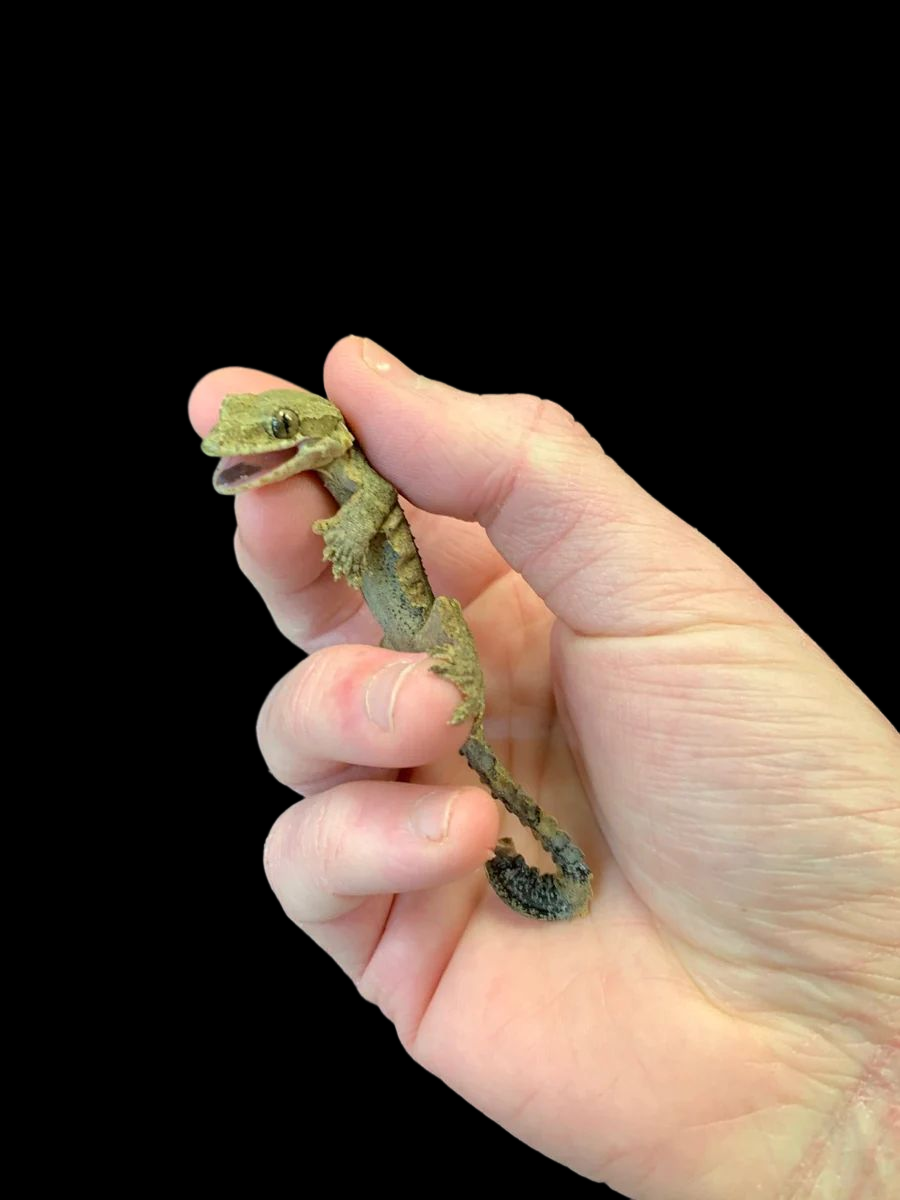
Size: Adults typically reach 6–8 inches (15–20 cm) in total length, including the tail. They are medium-sized, slender geckos with broad, flattened bodies and extensive skin flaps that enable gliding and camouflage.
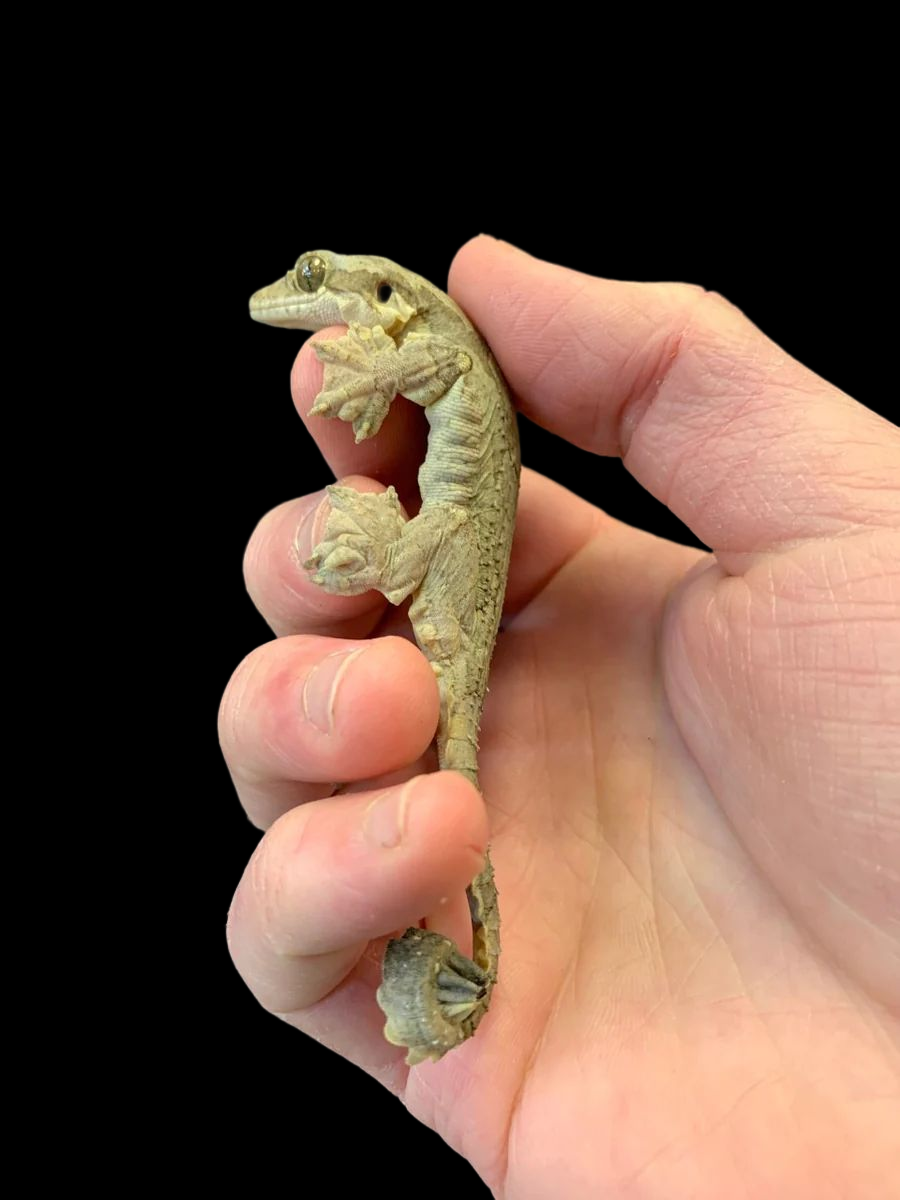
Appearance: The Flying Gecko is one of the most remarkable arboreal species, evolved for both camouflage and controlled gliding. Its body, limbs, and tail feature broad flaps of skin, allowing it to blend seamlessly with tree bark and glide short distances between branches. The base colour is mottled grey, brown, and tan, often with intricate patterning that perfectly mimics rough bark or lichen. Their eyes are large and lidless with vertical pupils, providing excellent night vision. The tail is flattened and leaf-like, aiding in steering during glides.
Distribution: Found throughout Southeast Asia, including Thailand, Malaysia, Indonesia, and surrounding regions, where it inhabits tropical forests.
Habitat: In the wild, Flying Geckos live high in humid, tropical rainforests, clinging to tree trunks and branches. They rely heavily on camouflage for protection and descend only occasionally to lower surfaces. In captivity, they require tall, humid enclosures with abundant climbing surfaces and foliage.
Behaviour: These geckos are nocturnal, arboreal, and highly specialized for gliding and climbing. When threatened, they may leap from one branch to another, spreading their skin flaps to slow descent and steer midair. They are shy, quick, and best suited as display animals rather than handled pets. With proper environmental enrichment, they become active and display natural gliding and climbing behaviours.
Captive Care
Enclosure: Provide a tall, vertically oriented enclosure measuring at least 18 inches × 18 inches × 24 inches (45 × 45 × 60 cm) for an adult pair. Use cork bark, driftwood, and broad vertical branches to simulate tree trunks. Dense plant cover—live or artificial—offers essential security and helps maintain humidity.
Temperature & Humidity: Maintain daytime temperatures between 78–86°F (25–30°C) with a small basking area near 90°F (32°C). Nighttime temperatures can drop to 70–74°F (21–23°C). Humidity should remain between 70–90%, with frequent misting to allow drinking and proper shedding.
Lighting: Provide low to moderate UVB (2–5%) and a 12-hour light cycle. Bright lighting for the enclosure is beneficial, even though the geckos are nocturnal, as it helps maintain natural rhythms and supports plant growth in bioactive setups.
Diet: Offer a diet of small to medium insects such as crickets, roaches, silkworms, and the occasional moth. Feed 3–4 times weekly, ensuring all prey is dusted with calcium and multivitamin supplements.
Behaviour in Captivity: Flying Geckos are secretive during the day but become lively and exploratory after dark. They may cling flat to surfaces, nearly invisible due to their camouflage. With stable humidity, warmth, and ample cover, they thrive as a captivating display species.
Special Considerations: Avoid handling, as their delicate skin flaps and tails can tear easily. Ensure tight-fitting lids, as these geckos are skilled climbers and capable of gliding short distances if startled. Consistent humidity is key to preventing dehydration and shedding issues.
Taxonomy Note
The Flying Gecko (Ptychozoon kuhli) belongs to the family Gekkonidae and is part of a genus of gliding geckos distributed across Southeast Asia. Ptychozoon species are uniquely adapted for gliding, featuring flaps of skin along the limbs, tail, and body. P. kuhli is the most widespread and commonly encountered member of the group, with stable taxonomy and well-documented natural history.
Genetics Note
There are currently no recognized morphs or selectively bred variations of the Flying Gecko (Ptychozoon kuhli) in captivity. Natural variation in colour and pattern is influenced by locality and environmental adaptation rather than genetics.