
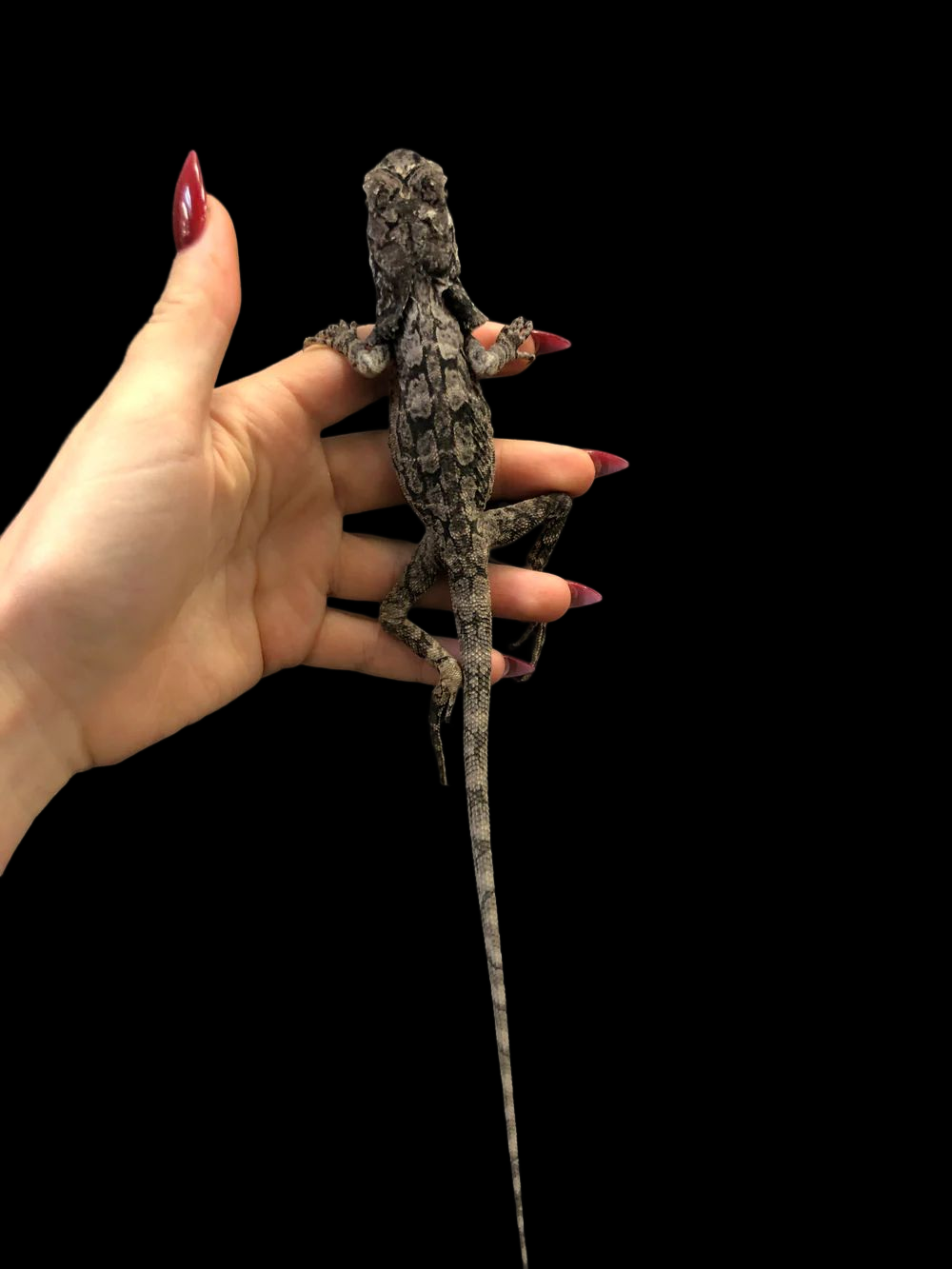
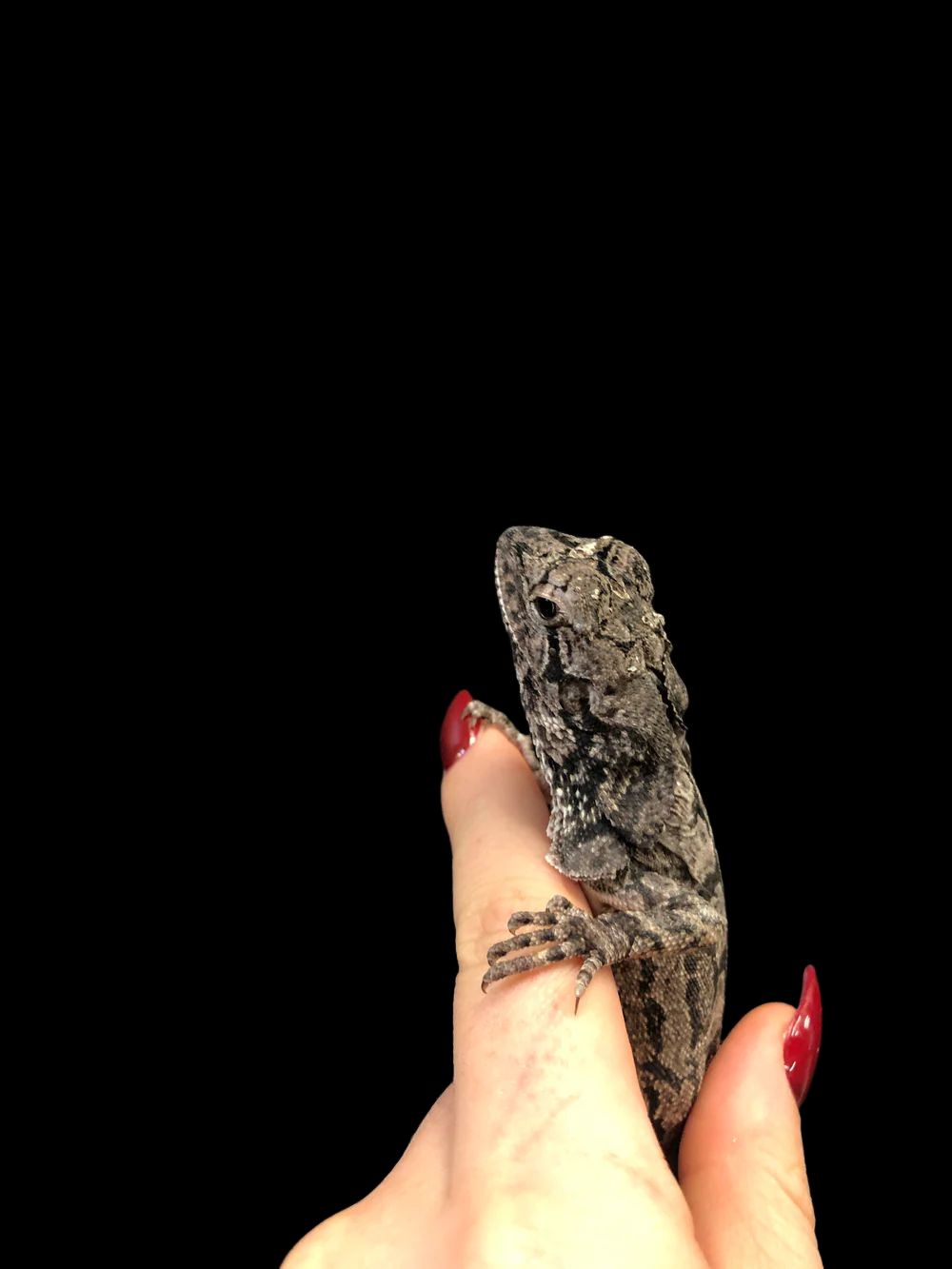
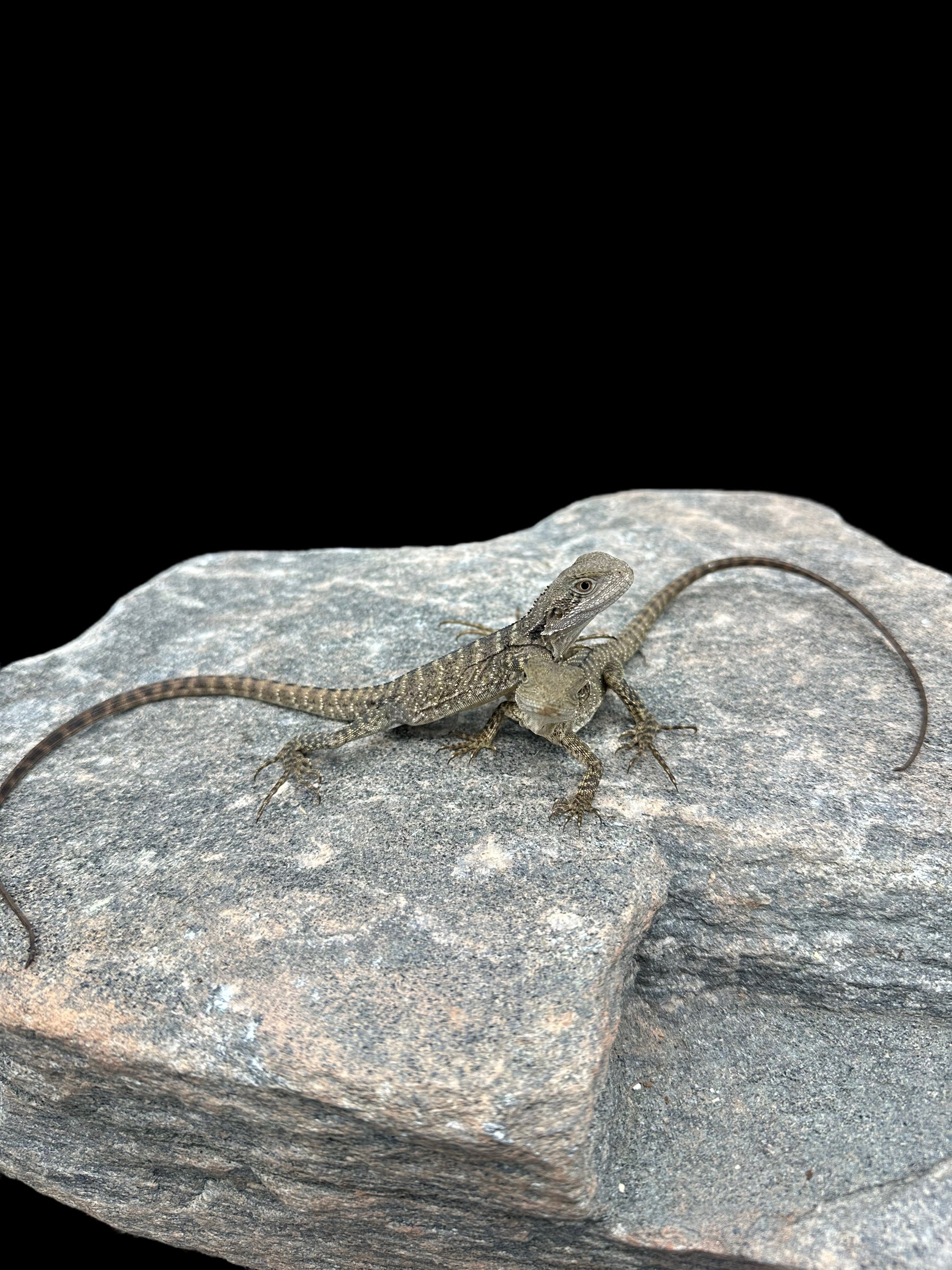
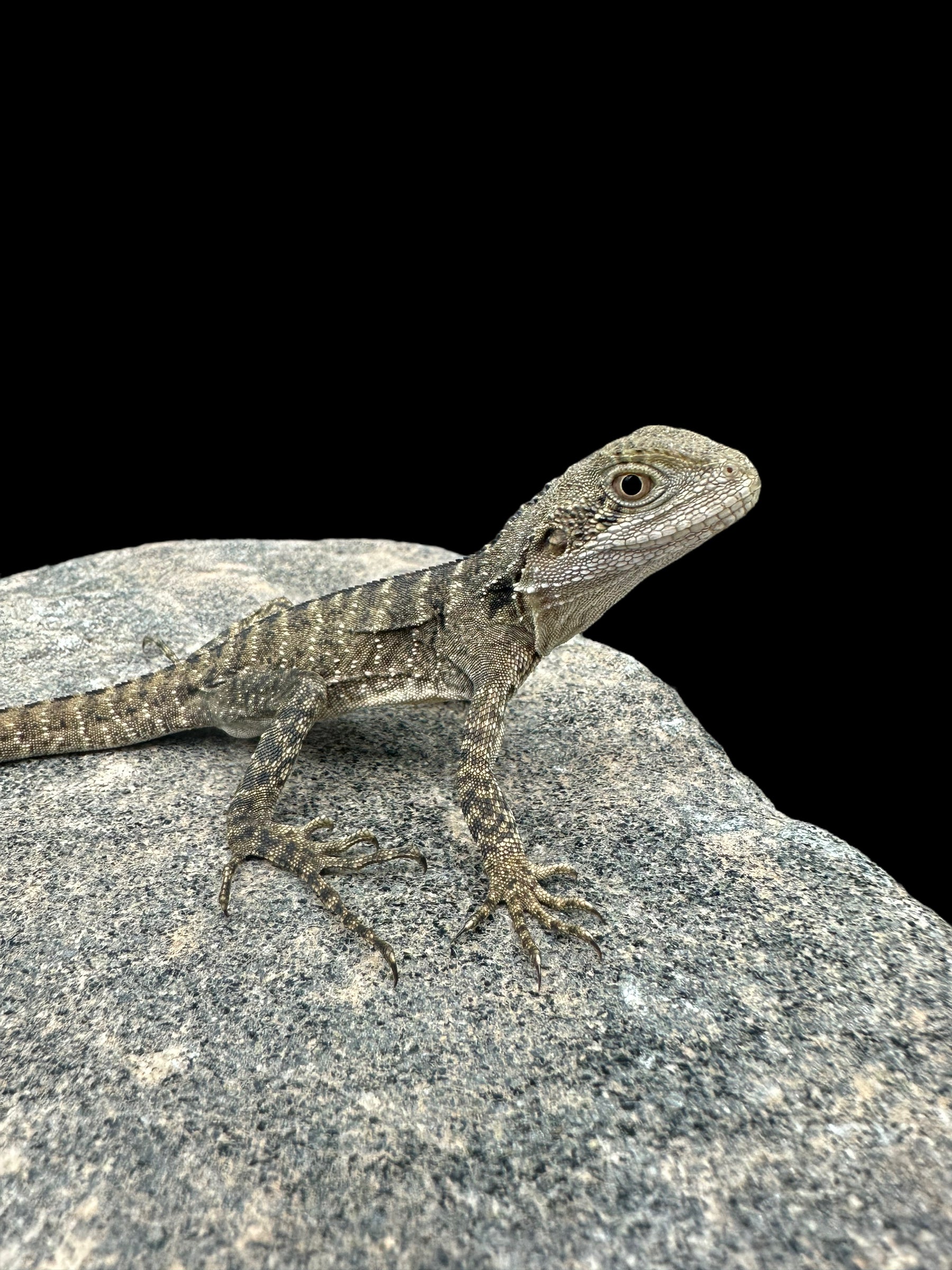


Photo Disclaimer
Description
Australian Frilled Dragon
Scientific Name: Chlamydosaurus kingii
Common Name: Australian Frilled Dragon
Species Overview
Size: Adults typically reach 24 to 36 inches (61 to 91 cm) in total length, with much of the length contributed by the long tail. Males are generally larger and more ornamented.
Appearance: The Australian Frilled Dragon is famous for its large, expandable neck frill—a brightly coloured, semicircular membrane that dramatically flares outward when the lizard is startled or displaying. Base colour varies from grey and brown to reddish or yellowish tones depending on locality. The body is slender but muscular, with long limbs, sharp claws, and a long whip-like tail. When extended, the frill often shows vivid orange, yellow, or red patterns that contrast strongly with the lizard’s natural camouflage.
Distribution: Native to northern Australia and southern New Guinea, particularly across savannas, open woodlands, and dry tropical forests.
Habitat: Frilled Dragons inhabit warm, open forests and savanna regions where they spend much of their time in trees. They are semi-arboreal and prefer elevated perches from which they can bask and survey their surroundings. In the wild, they retreat higher into trees when startled.
Behaviour: This species is diurnal, active, and alert. The iconic frill display is used for defence, communication, and territorial signalling. When not displaying, they rely heavily on camouflage. They are generally fast-moving and can run bipedally when fleeing. With consistent care they may become tolerant of keepers, but handling should still be limited.
Captive Care
Enclosure: A large, vertically oriented enclosure is essential. Minimum recommended size is 48 inches × 24 inches × 48 inches (120 × 60 × 120 cm) for a single adult, though larger is strongly preferred. Provide sturdy branches, elevated basking platforms, cork slabs, and dense foliage for climbing and hiding.
Temperature & Humidity:
-
Basking spot: 110 to 120°F (43 to 49°C)
-
Ambient daytime temperatures: 85 to 95°F (29 to 35°C)
-
Night temperatures: 75 to 80°F (24 to 27°C)
Humidity should sit between 40 and 60%, with brief increases during misting. Good ventilation is important to prevent respiratory issues.
Lighting: Provide strong full-spectrum lighting and high-output UVB (10–14%) for 12 hours daily. Frilled Dragons require bright light and intense heat to support their active, arboreal lifestyle.
Diet: Offer a varied insect-based diet including crickets, roaches, grasshoppers, silkworms, hornworms, and black soldier fly larvae. Adults may also accept occasional pinkies, small amounts of egg, or soft fruits. Juveniles require daily feeding; adults every 2–3 days. Supplement all prey with calcium and multivitamins.
Behaviour in Captivity: With ample space and climbing structure, Frilled Dragons display natural behaviours such as basking high, hunting insects, and occasionally flaring their frill. They are curious, alert, and active during the day.
Special Considerations: This species requires large enclosures, high heat, and strong UVB to thrive. They are sensitive to chronic stress, and repeated handling or poor enclosure design may lead to defensive displays or hiding behaviour. Secure vertical climbing spaces are crucial.
Taxonomy Note
The Australian Frilled Dragon belongs to the genus Chlamydosaurus, which contains only one recognised species. Its remarkable frill display makes it one of the most iconic lizards of Australia’s tropical north.
Genetics Note
There are no recognised morphs or genetically distinct captive lines for the Australian Frilled Dragon. Natural variation exists between localities, particularly in frill coloration and body tone, but these differences are not considered formal morphs.