


Photo Disclaimer
Description
Masked Tree Frog
Scientific Name: Smilisca phaeota
Common Name: Masked Tree Frog, Masked Laughing Frog
Species Overview
Size: Adults typically reach 2 to 3 inches (5 to 7.5 cm), with females slightly larger.
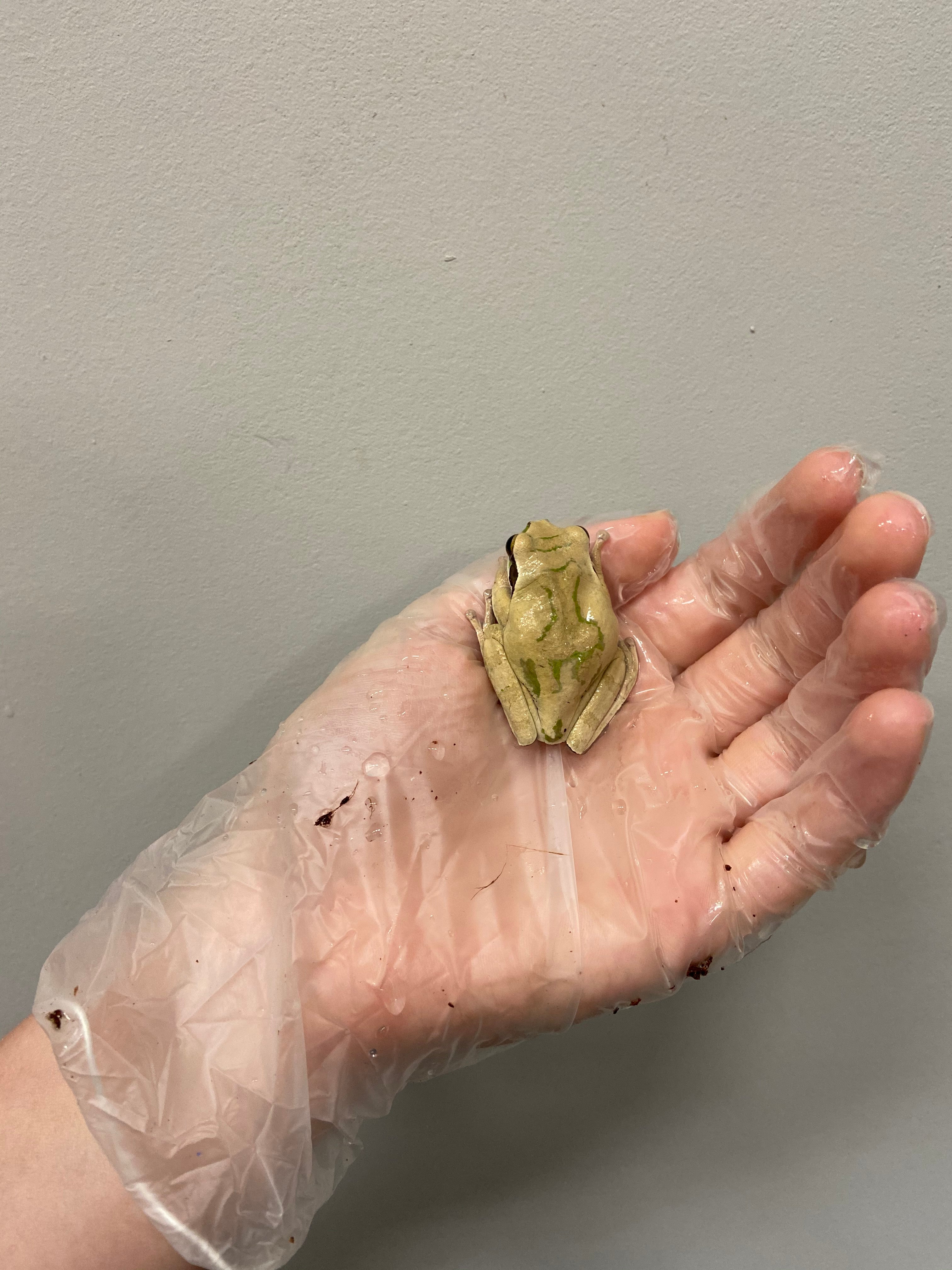
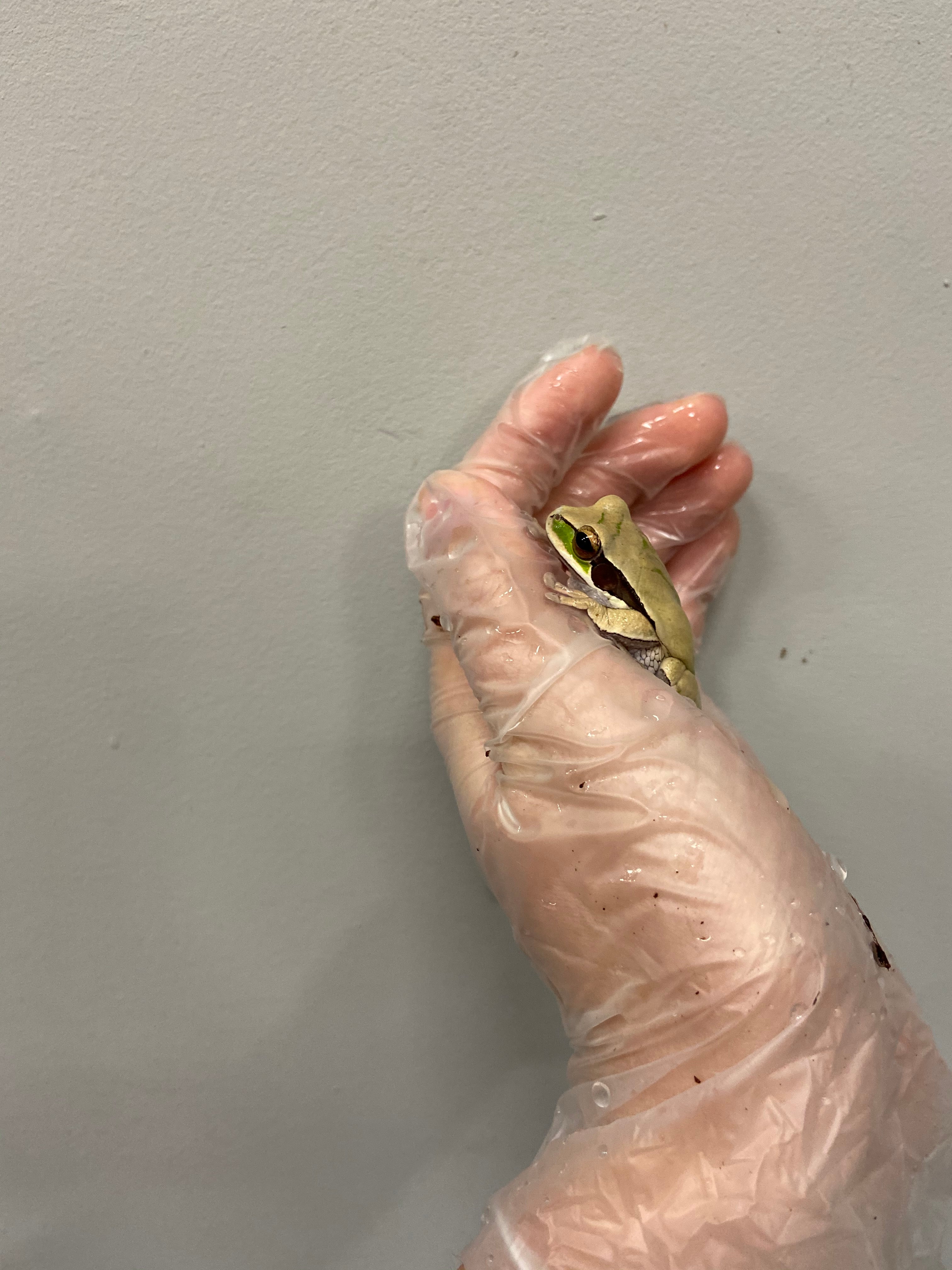
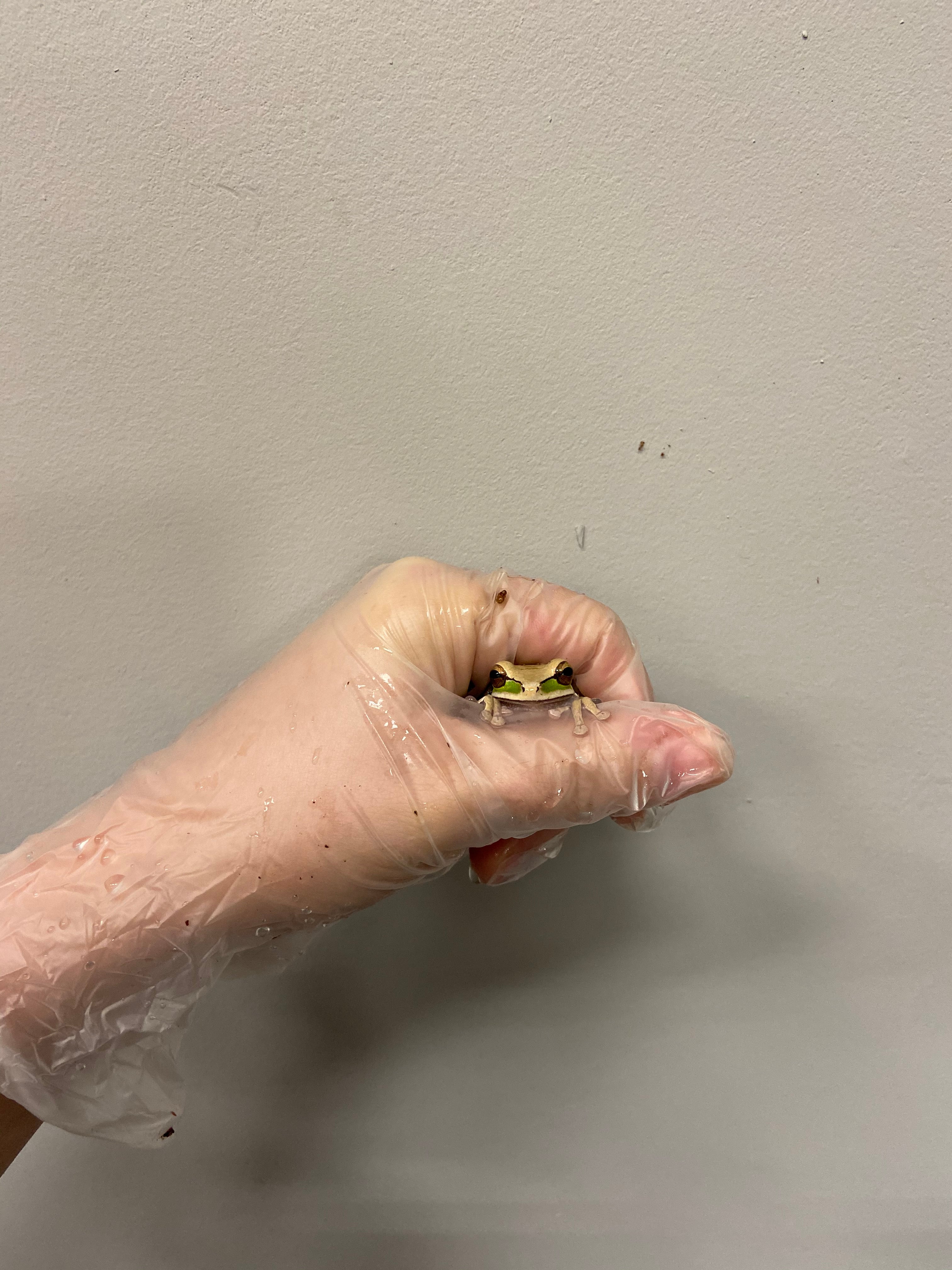
Appearance: The Masked Tree Frog is named for the distinctive dark band that runs across each eye and extends backward like a “mask.” Base coloration ranges from tan, brown, or olive to pale green, often with subtle mottling or faint dorsal striping. The underside is pale, and the skin is smooth to finely granular. Eyes are large with golden irises and horizontal pupils. Limbs are strong and well suited to climbing, with broad toe pads and occasional faint banding.
Distribution: Found throughout Central America, including Honduras, Nicaragua, Costa Rica, Panama, and parts of Colombia.
Habitat: Wild individuals inhabit humid lowland and mid-elevation rainforests, forest edges, mangroves, and occasionally human-modified environments near water. They are commonly found perched on vegetation above ponds, wetlands, or temporary pools used for breeding.
Behaviour: Primarily nocturnal and vocal, these frogs are bold and active at night. Males produce loud, chuckling calls, especially during the rainy season. They are agile climbers and may descend to the ground to forage. During the day, they hide in foliage or sheltered crevices.
Captive Care
Enclosure: A single adult or small group thrives in an 18 × 18 × 24 inches (45 × 45 × 60 cm) enclosure, while larger groups benefit from a 24 × 18 × 24 inches (60 × 45 × 60 cm) setup. Provide sturdy vertical branches, cork flats, reeds, and dense foliage for climbing and cover. Use a moisture-retentive substrate such as coco fibre, soil blends, or sphagnum mixes to maintain humidity without oversaturation. Include a shallow water basin for soaking.
Temperature and Humidity:
Ambient temperature: 74 to 80°F (23 to 27°C)
Warm area: around 82 to 84°F (28 to 29°C)
Night temperature: 68 to 72°F (20 to 22°C)
Humidity: 60 to 90%, supported by regular misting and good ventilation.
Lighting: Provide low to moderate UVB (2 to 5%) with diffused, bright lighting.
Diet: Offer small to medium insects such as crickets, roaches, black soldier fly larvae, fruit flies (for juveniles), and occasional waxworms. Supplement prey with calcium and multivitamins.
Behaviour in Captivity: Masked Tree Frogs adapt well and become active, bold feeders at night. They appreciate leaf cover and tall perches. Their calls can be loud, especially when humidity rises. Handling should be kept to a minimum due to their permeable skin.
Special Considerations:
• Handle only when necessary, using wet, powder-free gloves or a soft, damp net.
• Provide strong ventilation to prevent stagnant, overly humid air.
• Use only dechlorinated water for misting and soaking.
• Avoid oversaturated substrate; moderate moisture cycles are ideal.
• Secure enclosure openings—they are agile climbers and capable of sudden leaps.
• Expect vocal behaviour, particularly from males during humid or rainy conditions.
Taxonomy Note
Smilisca phaeota belongs to the family Hylidae and is part of a group commonly known as laughing tree frogs due to their distinctive calls. It is closely related to other Smilisca species but is easily identified by the prominent mask marking across its eyes.
Genetics Note
There are no recognised morphs for Smilisca phaeota. Natural variation occurs in mask thickness, dorsal coloration, and spotting, but none represent defined genetic morphs.
Estimate shipping