

Photo Disclaimer
Description
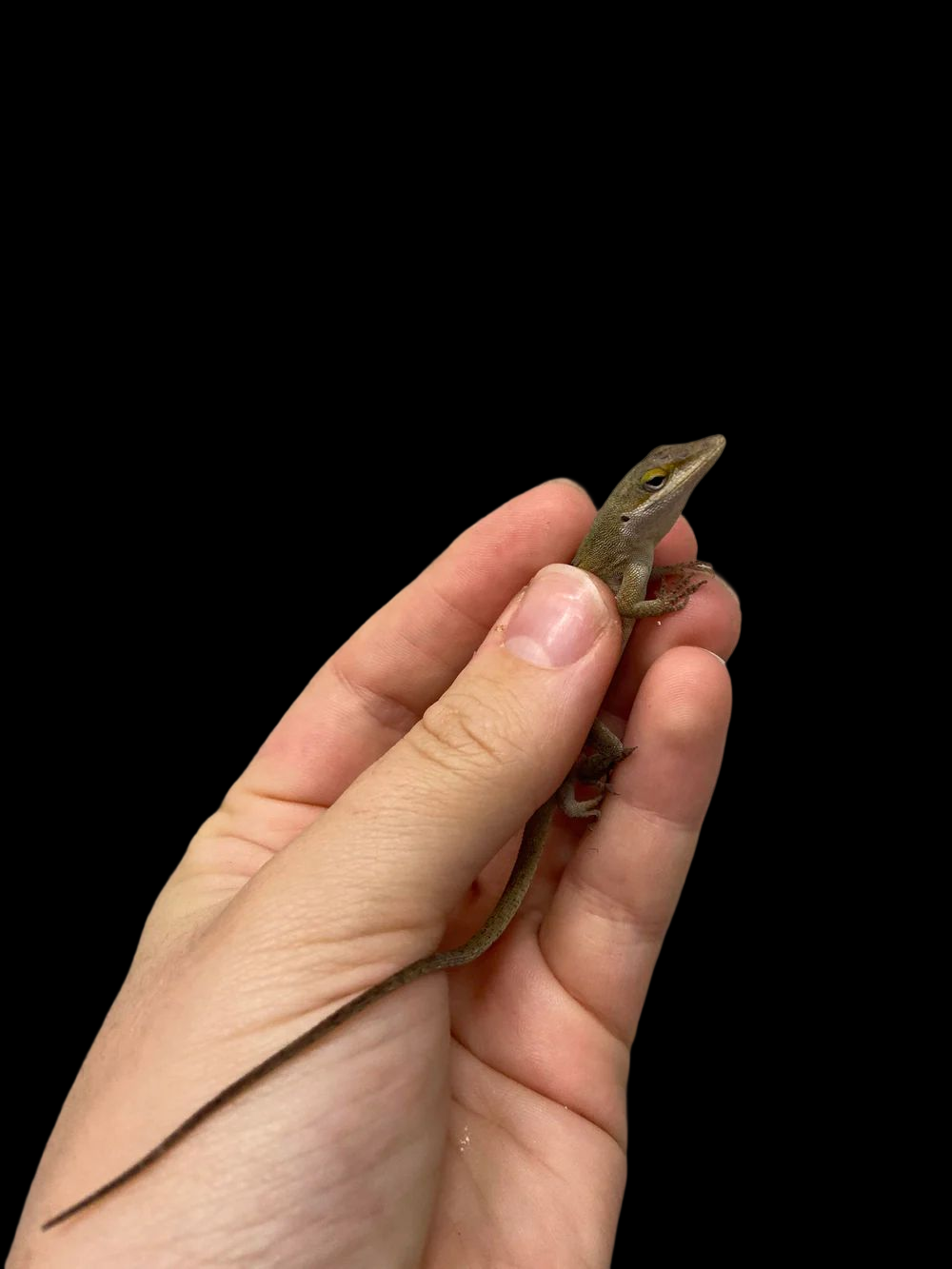
Green Anole (Anolis carolinensis)
Scientific Name: Anolis carolinensis
Common Name: Green Anole, Carolina Anole
Species Overview
Size: Adults typically reach 5–8 inches (13–20 cm) in total length, with males being larger and more robust than females.
Appearance: Green Anoles are slender, arboreal lizards capable of shifting from bright green to brown depending on temperature, mood, and environmental conditions. Males have a prominent pink to red dewlap used for display, while females often retain a faint dorsal stripe. Their bodies are built for climbing, with long limbs and adhesive toe pads. When basking or excited, individuals may intensify their green or reveal subtle bluish tones around the head.
Distribution: Native to the southeastern United States, including Florida, Georgia, the Carolinas, Alabama, Mississippi, Louisiana, and eastern Texas, with introduced populations elsewhere.
Habitat: This species inhabits warm, humid environments such as forests, swamps, gardens, and shrublands. They live primarily in low to mid-level vegetation and require ample structure for climbing.
Behaviour: Green Anoles are diurnal, territorial, and visually expressive. Males use head-bobbing, push-ups, and dewlap flares to communicate dominance. They feed on insects and small invertebrates and rely on agility and camouflage for safety. They are fast, alert, and responsive to environmental changes.
Captive Care
Enclosure: Provide a vertically oriented enclosure at least 18 inches × 18 inches × 24 inches (45 × 45 × 60 cm) for a single or pair. Include tall branches, vines, cork bark, and dense foliage. Elevated basking perches and visual cover are essential.
Temperature and Humidity:
Basking area: 90–95°F (32–35°C)
Ambient temperature: 75–85°F (24–29°C)
Night temperatures: 68–72°F (20–22°C)
Maintain humidity at 60–80%, with daily misting and strong ventilation.
Lighting: Provide bright full-spectrum lighting with moderate UVB (5–10%). Good lighting supports colour expression, feeding response, and calcium metabolism.
Diet: Feed small insects such as crickets, roach nymphs, fruit flies, black soldier fly larvae, and small mealworms. Juveniles should be fed daily, while adults can be fed every 1–2 days. Use calcium and multivitamin supplements regularly.
Behaviour in Captivity: Green Anoles thrive in planted enclosures with vertical space and hiding spots. They are skittish and not suited for frequent handling, but they become confident display animals with stable conditions. Males should be housed alone to avoid conflict.
Special Considerations:
• Provide varied branch diameters to encourage natural climbing.
• Avoid overcrowding, as competition stresses the animals.
• Maintain consistent humidity for proper shedding and hydration.
• Ensure the enclosure is secure and well ventilated.
Taxonomy Note
The Green Anole belongs to the family Dactyloidae, a group of visually oriented lizards known for dewlap signalling and colour variation. Anolis carolinensis is one of the most recognizable anoles and the only species native to the United States.
Genetics Note
There are no formally recognized morphs for the Green Anole. Natural variation within the species includes differences in green intensity, occasional bluish head tones, and the presence or absence of a dorsal stripe in females. These differences occur naturally across populations and do not represent established morph lines.
Estimate shipping