


Photo Disclaimer
Description
Smith’s Green Eyed Gecko (Gekko smithii)
Scientific Name: Gekko smithii
Common Name: Smith’s Green Eyed Gecko
Species Overview
Size: Adults typically reach 8 to 11 inches (20 to 28 cm) in total length, making this one of the larger members of the Gekko genus.
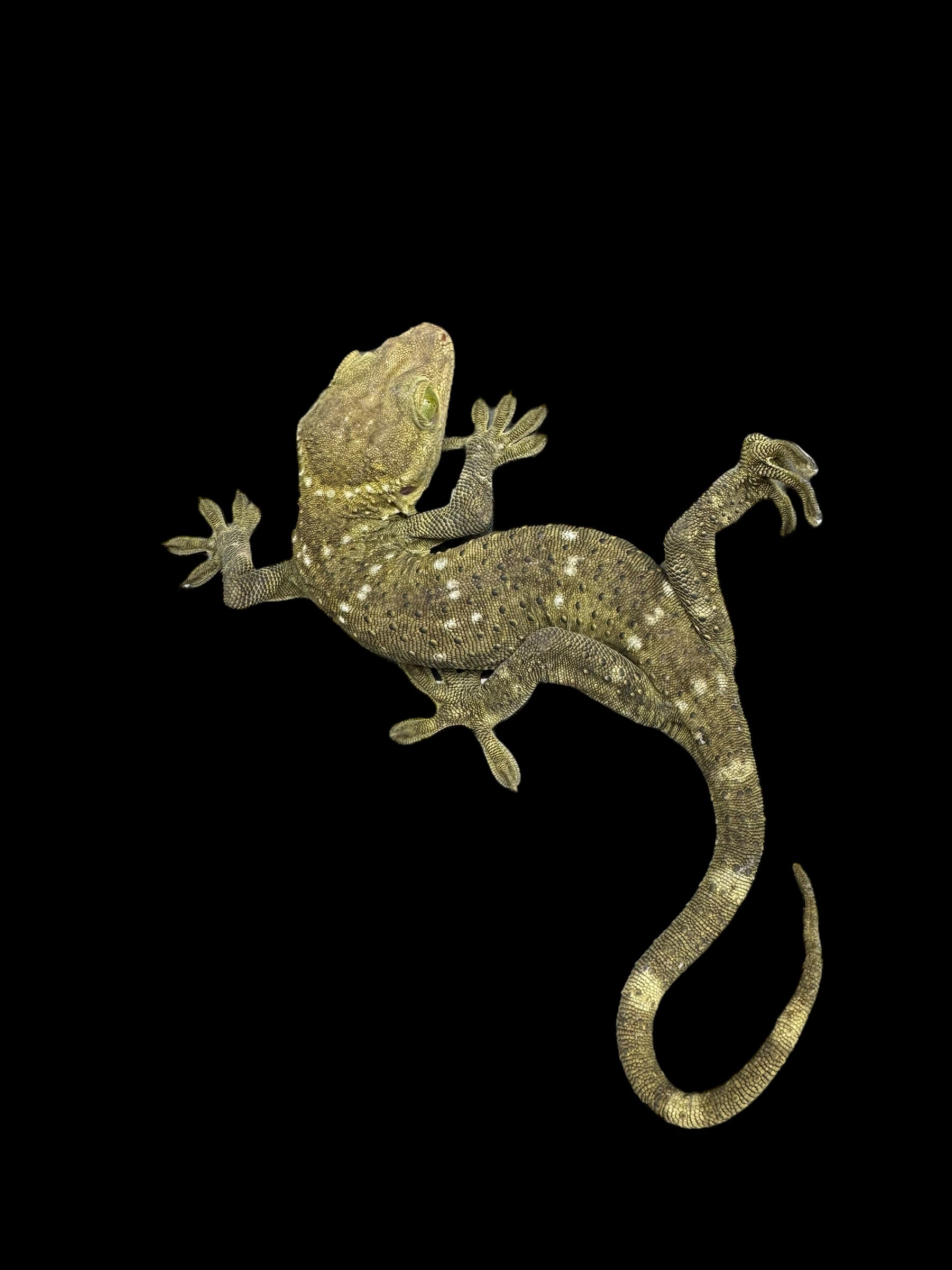
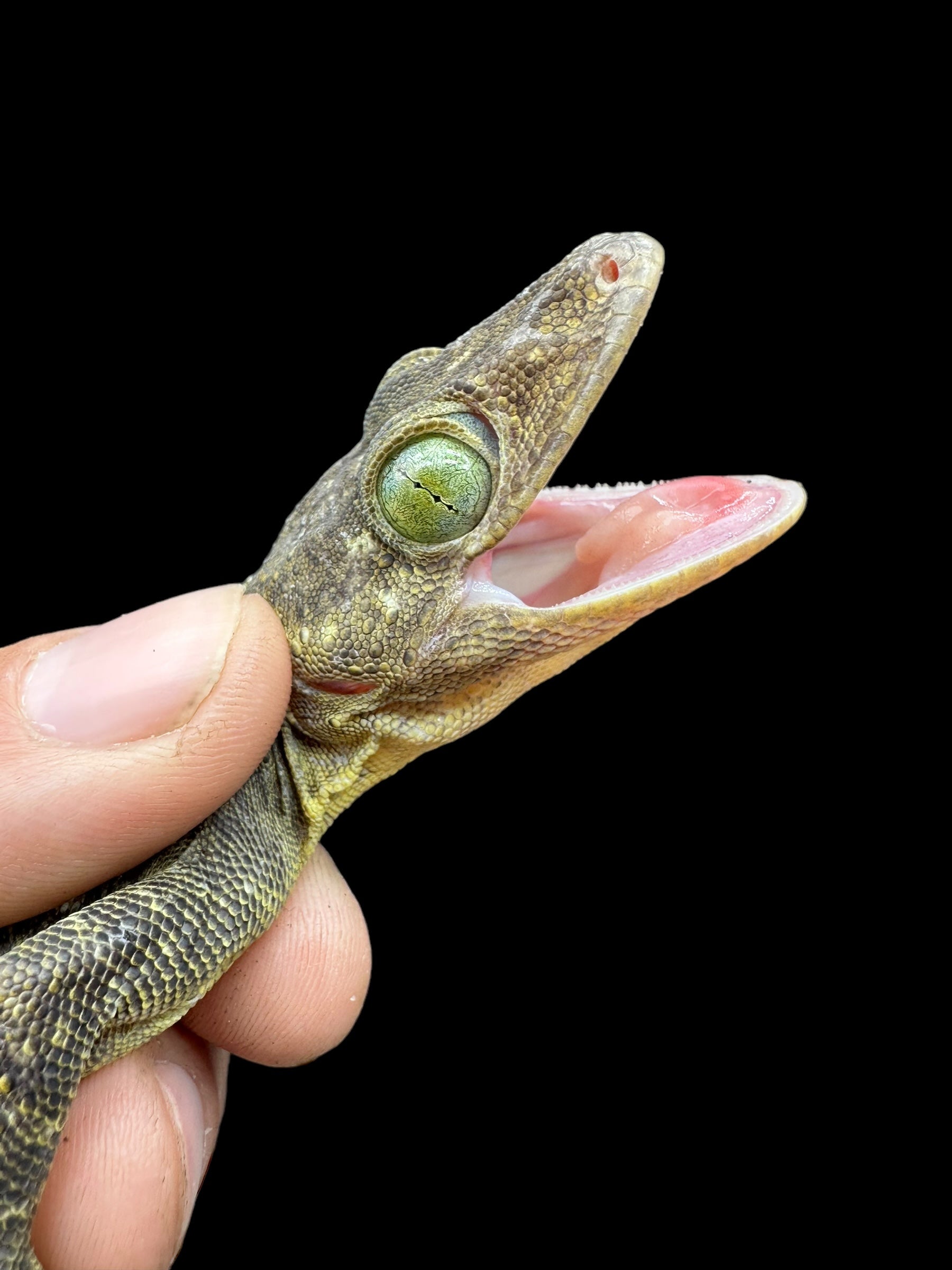
Appearance: Smith’s Green Eyed Gecko is named for its distinctive green-tinted eyes, which stand out sharply against its mottled skin. Colouration ranges from greys and browns to earthy tans with irregular blotches or diffuse banding that provides excellent camouflage in forest environments. The head is broad with well-developed eyes, and the body is muscular with a strong tail used for balance and climbing. Their toes feature wide adhesive pads typical of Gekko species, allowing them to cling securely to bark and vertical surfaces.
Distribution: Native to Southeast Asia, including Indonesia and surrounding regions where it occupies humid, forested habitats.
Habitat: In the wild, Gekko smithii inhabits tropical rainforests, tree trunks, large branches, and shaded rock formations. They spend much of their time elevated off the ground, sheltering in hollows or dense vegetation. In captivity, they thrive in tall, densely furnished enclosures with ample climbing surfaces and high humidity.
Behaviour: Smith’s Green Eyed Geckos are primarily nocturnal and become active and alert after dark. They are strong climbers, agile movers, and can be territorial. Due to their size and speed, they are best appreciated as display animals rather than handled pets.
Captive Care
Enclosure: A vertically oriented enclosure measuring 24 inches × 18 inches × 24 inches (60 × 45 × 60 cm) is recommended for an adult. Include cork bark rounds, large branches, sturdy vines, and dense foliage. A soil or bioactive substrate helps maintain humidity and supports naturalistic setups.
Temperature & Humidity: Maintain daytime temperatures of 78 to 86°F (25 to 30°C) with a warmer basking area up to 90°F (32°C). Night temperatures can drop to 72 to 75°F (22 to 24°C). Humidity should remain high at 60 to 80%, with regular misting to provide hydration opportunities and maintain environmental moisture.
Lighting: Provide bright lighting with low to moderate UVB (2 to 5%) for 12 hours daily. While nocturnal, access to UVB is beneficial for long-term bone health and natural behaviour cycles.
Diet: Offer a wide range of insects including crickets, roaches, silkworms, hornworms, and mealworms, along with occasional treats like large moths. Some individuals may accept fruit-based gecko diets as supplements. Juveniles should be fed daily, while adults can be fed every 2 to 3 days. All prey should be gut-loaded and dusted with calcium and multivitamins. Provide fresh water daily.
Behaviour in Captivity: Once acclimated, these geckos are active nighttime hunters and make striking display animals. They utilise vertical space extensively and appreciate enclosures that provide height and complex climbing structures.
Special Considerations: Their size, speed, and strength mean they require secure enclosures with tight-fitting doors. Handling should be kept minimal. Males should not be housed together due to strong territorial instincts.
Taxonomy Note
Smith’s Green Eyed Gecko belongs to the genus Gekko, a diverse group of large to medium-sized arboreal geckos distributed across Southeast Asia. Members of this genus are known for their strong adhesive toe pads, nocturnal activity, and often impressive size.
Genetics Note
There are no recognised morphs or selectively bred variants of the Smith’s Green Eyed Gecko. Captive examples display natural variation in colour tone and patterning, but no formal morphs exist within the pet trade.