

Photo Disclaimer
Description
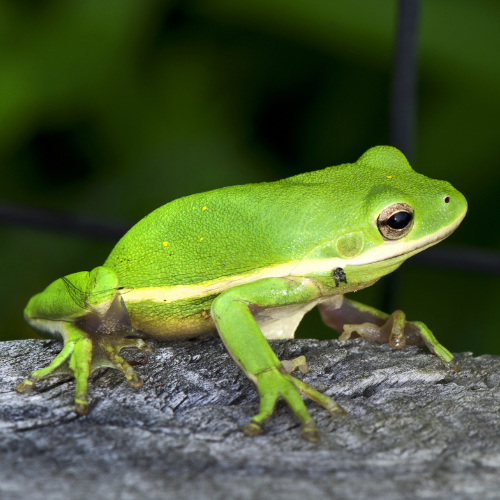
Green Tree Frog
Scientific Name: Hyla cinerea
Common Name: Green Tree Frog
Species Overview
Size: Adults typically reach 1.75 to 2.5 inches (4.5 to 6.5 cm), with females slightly larger.
Appearance: The Green Tree Frog is a slender, smooth-skinned species known for its vibrant green coloration, which may shift to yellowish or brown depending on temperature and mood. Most individuals display a clear white or yellow lateral stripe along each side, often bordered with darker pigment. The belly is pale, and the limbs are long and graceful with well-developed toe pads for climbing. Eyes are golden with horizontal pupils, giving the frog a bright, alert expression.
Distribution: Native to the southeastern United States, including Florida, Georgia, the Carolinas, Alabama, Mississippi, Louisiana, Arkansas, and eastern Texas.
Habitat: Found in wetlands, cypress swamps, marshes, forest edges, and vegetated ponds. They favor areas with abundant reeds, grasses, and shrubs near slow-moving or standing water.
Behaviour: Primarily nocturnal, Green Tree Frogs are agile climbers and active foragers. Males produce loud, repetitive calls during breeding season. They are shy during the day but become bold and energetic at night.
Captive Care
Enclosure: A single adult or small group thrives in an 18 × 18 × 24 inches (45 × 45 × 60 cm) enclosure, while larger groups benefit from a 24 × 18 × 24 inches (60 × 45 × 60 cm) setup. Provide vertical climbing structures such as reeds, branches, and cork flats, along with dense foliage. Use a moisture-retentive substrate such as coco fibre, soil blends, or sphagnum mixes to maintain humidity while allowing moderate drying cycles. Include a shallow water basin for hydration.
Temperature and Humidity:
Ambient temperature: 74 to 80°F (23 to 27°C)
Warm area: 82 to 84°F (28 to 29°C)
Night temperature: 68 to 72°F (20 to 22°C)
Humidity: 60 to 80%, maintained through regular misting and strong ventilation.
Lighting: Provide low to moderate UVB (2 to 5%) with bright, diffused lighting.
Diet: Offer small to medium insects such as crickets, roaches, black soldier fly larvae, fruit flies (for juveniles), and occasional waxworms. Supplement prey with calcium and multivitamins.
Behaviour in Captivity: Green Tree Frogs adapt easily and thrive in planted terrariums with abundant leaf cover. They are active, vocal at night, and generally hardy. Handling should be minimized due to their permeable skin.
Special Considerations:
• Handle only if necessary, using wet, powder-free gloves or a soft, damp net.
• Provide strong ventilation—this species does best with humidity that rises and falls naturally.
• Use only dechlorinated water for misting and hydration.
• Avoid oversaturation of substrate; moderate moisture cycles are ideal.
• Ensure secure enclosure access, as these frogs are agile jumpers.
Taxonomy Note
Hyla cinerea belongs to the family Hylidae and is one of the most recognisable North American tree frogs. It is closely related to the Bird Voice Tree Frog (Dryophytes avivoca) and Squirrel Tree Frog (Dryophytes squirella), though distinguished by its prominent lateral stripe and bright green coloration.
Genetics Note
There are no recognised morphs for Hyla cinerea. Natural variation occurs in shade of green, stripe clarity, and speckling, but none represent defined genetic morphs.
Estimate shipping