


Photo Disclaimer
Description
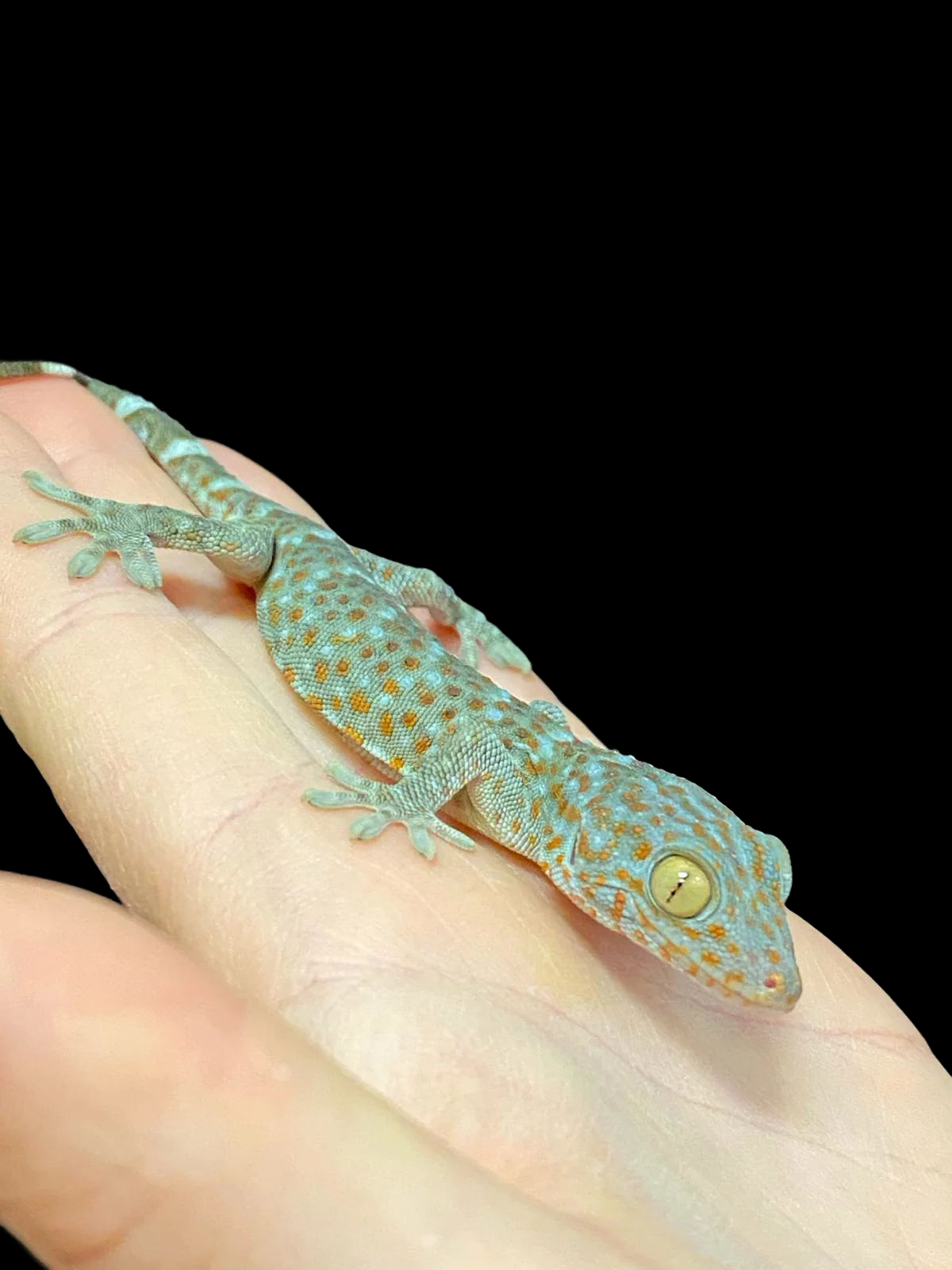
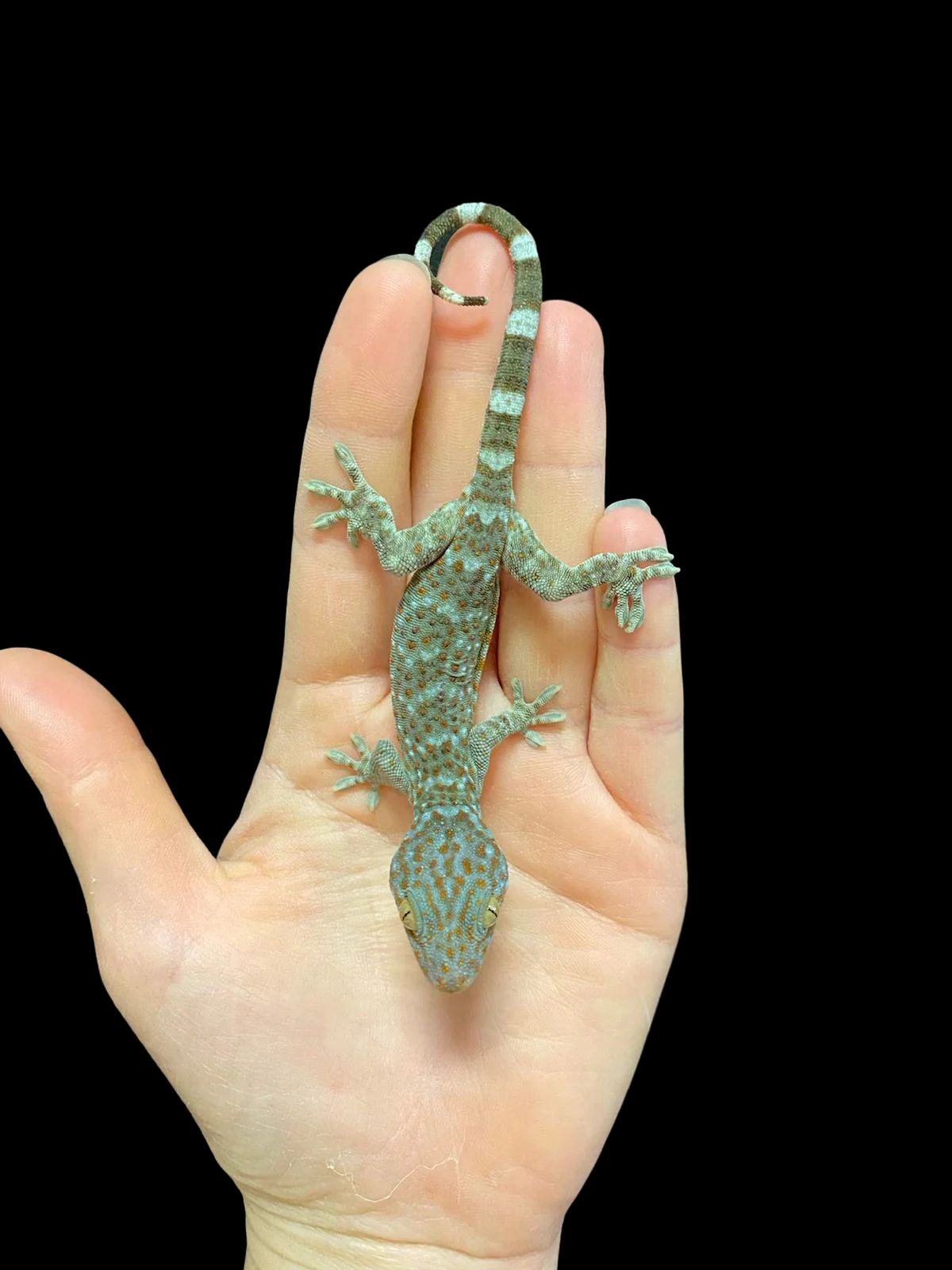
Tokay Gecko (Het Granite)
Scientific Name: Gekko gecko
Common Name: Tokay Gecko (Het Granite)
Species Overview
Size: Adults typically reach 10 to 14 inches (25 to 36 cm) in total length, with males generally more robust and heavier-bodied.
Appearance: Het Granite Tokays display the typical wild-type Tokay look: blue-grey to slate body coloration with orange or rust-coloured spotting. However, many het individuals show slight reduction in contrast, more mottling, or softer spotting compared to standard wild-type Tokays. These subtle differences vary by line and are not guaranteed, as the visual Granite trait itself does not appear in heterozygous form. Structurally, they retain the classic Tokay features: large copper eyes, coarse granular scales, and a powerful, muscular build.
Distribution: The species is native to Southeast Asia, but Het Granite Tokays are exclusively captive-bred.
Habitat: Wild Tokays occupy tropical forests, cliffs, large trees, and human structures. In captivity, Het Granite Tokays thrive in tall enclosures with vertical climbing surfaces and secure hiding options.
Behaviour: Tokay Geckos are nocturnal, territorial, vocal, and bold. They display strong defensive behaviour and should be handled minimally. The Patternless trait does not influence temperament.
Captive Care
Enclosure: A vertically oriented enclosure measuring at least 24 inches × 18 inches × 24 inches (60 × 45 × 60 cm) is recommended. Provide cork rounds, sturdy branches, vines, and dense planting to create climbing pathways and visual security. A soil-based or bioactive substrate helps maintain humidity.
Temperature & Humidity: Maintain daytime temperatures of 80 to 88°F (27 to 31°C) with a warm basking area around 90°F (32°C). Night temperatures may drop to 72 to 75°F (22 to 24°C). Humidity should remain 60 to 80%, with regular misting and good ventilation.
Lighting: Provide moderate to high UVB (5 to 7%) for 12 hours daily. Tokays benefit significantly from UV exposure despite nocturnal tendencies.
Diet: Feed crickets, roaches, silkworms, hornworms, mealworms, and occasional large moths. Some keepers offer a rare pinkie mouse to fully grown adults. Juveniles should be fed daily; adults every 2 to 3 days. All insects must be gut-loaded and dusted with calcium and multivitamins. Supply fresh water daily.
Behaviour in Captivity: Tokay Geckos are strong climbers and active nighttime hunters. They thrive in secure, tall enclosures with complex structure that supports natural behaviours.
Special Considerations: Tokays possess strong bites and territorial instincts. Handling should be limited. Secure, escape-proof enclosures are essential.
Taxonomy Note
The Tokay Gecko belongs to the genus Gekko, a group of large arboreal geckos native to Southeast Asia. Known for their power, striking appearance, and loud calls, Tokays are among the most iconic gecko species.
Genetics Note
Het Granite:
“Het Granite” indicates that the gecko is heterozygous for the Granite trait.
This means the animal carries one copy of the suspected-recessive Granite gene but does not visually express the Granite morph.
Current breeder consensus strongly suggests that Granite behaves as a recessive trait, though full genetic mapping is still developing. When two het animals are paired, some offspring may visually express Granite, while others may be het or normal.
Tokay Line-Bred Colours and Patterns:
Tokays also have numerous polygenic, line-bred traits that can appear within het carriers, including:
-
High Green / Emerald
-
High Red
-
Blue-Head
-
Pastel
-
Powder
-
Bold Pattern
-
Reduced Spotting
-
Jungle Pattern
-
Calico (rare)
These traits do not interfere with the recessive Granite gene but can enhance overall visual appearance.
Estimate shipping