

Photo Disclaimer
Description
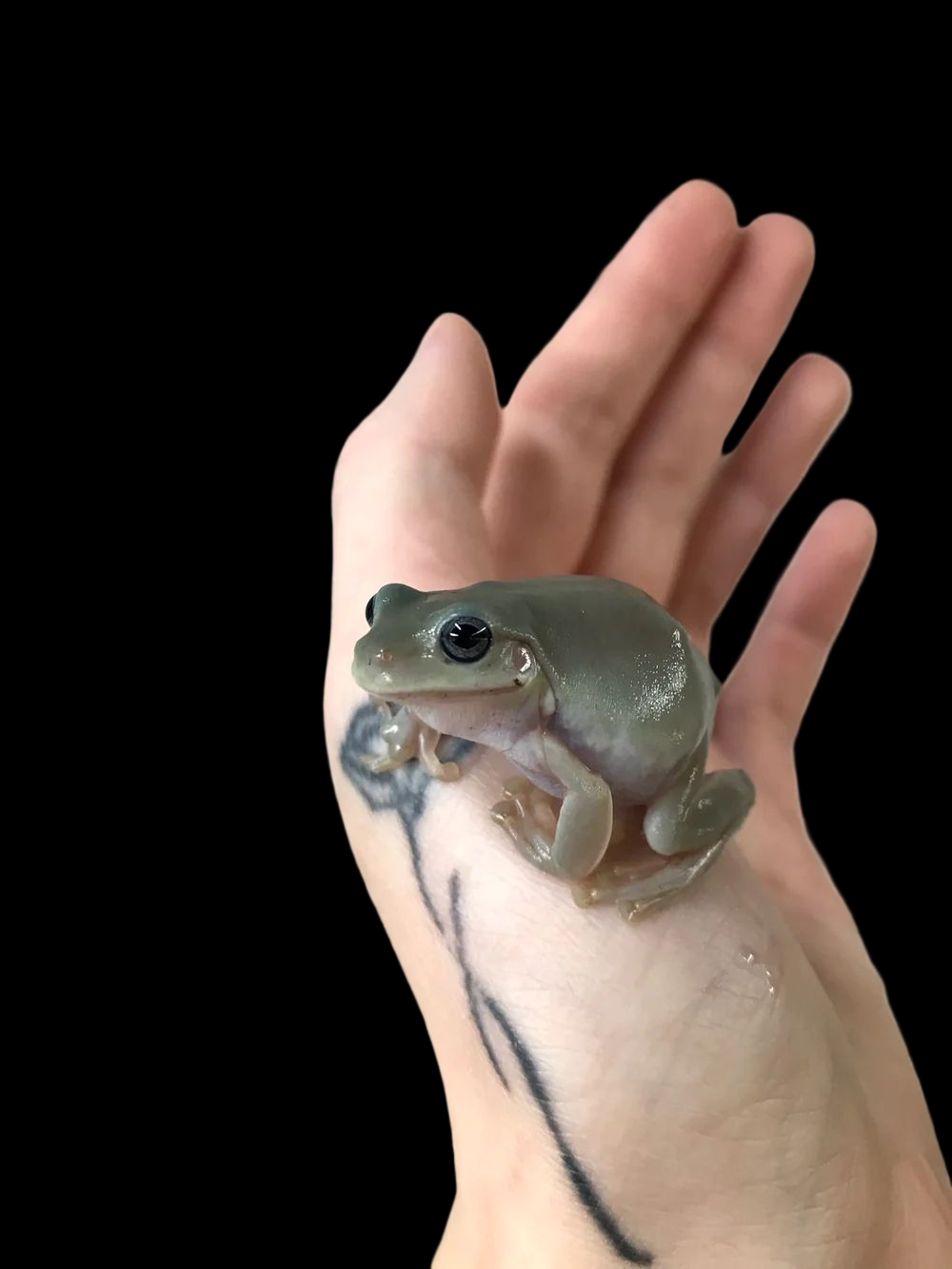
White’s Tree Frog (Honey)
Scientific Name: Ranoidea caerulea
Common Name: White’s Tree Frog, Honey White’s Tree Frog
Species Overview
Size: Adults typically reach 3 to 4.5 inches (7.5 to 11.5 cm), with females slightly larger.
Appearance: The Honey White’s Tree Frog is a selectively bred colour form of the classic White’s Tree Frog. Instead of the typical green or blue-green tones, Honey individuals display warm amber, caramel, or golden hues across the dorsum. Some show uniform honey tones, while others have subtle cream highlights or faint mottling. The skin is thick, smooth, and slightly waxy, a hallmark of the species. The body is rounded and heavy-set, with strong limbs and large toe pads suited for climbing. Eyes are golden with horizontal pupils, contributing to the frog’s expressive, characteristic look.
Distribution: While the wild species occurs in Australia, Indonesia, and Papua New Guinea, the Honey colour form is exclusively captive-bred and does not occur naturally in the wild.
Habitat: In nature, White’s Tree Frogs inhabit forests, woodland edges, scrublands, river corridors, and even human dwellings. They prefer warm climates with access to moisture and sheltered daytime retreats such as tree hollows or shaded vegetation.
Behaviour: Calm, hardy, and generally tolerant of human presence, White’s Tree Frogs are nocturnal, becoming active and exploratory at night. They are strong climbers and bold feeders. Known for their laid-back nature, they often perch in visible spots and may vocalise during humid evenings.
Captive Care
Enclosure: A single adult or small group thrives in an 18 × 18 × 24 inches (45 × 45 × 60 cm) enclosure, while larger groups benefit from a 24 × 18 × 24 inches (60 × 45 × 60 cm) setup. Provide sturdy branches, cork rounds, vines, and broad leaves for climbing and resting. Use a moisture-retentive but well-drained substrate such as coco fibre, soil blends, or sphagnum mixes to support moderate humidity. Include a large, shallow water basin for soaking, as this species readily uses standing water.
Temperature and Humidity:
Ambient temperature: 75 to 82°F (24 to 28°C)
Warm area: 84 to 86°F (29 to 30°C)
Night temperature: 70 to 74°F (21 to 23°C)
Humidity: 50 to 80%, maintained with regular misting and strong airflow.
Lighting: Provide low to moderate UVB (2 to 5%) with bright, diffused lighting. The Honey colour tends to look more vivid under naturalistic full-spectrum lighting.
Diet: Offer medium to large insects such as crickets, roaches, black soldier fly larvae, silkworms, hornworms, and occasional waxworms. Supplement prey with calcium and multivitamins.
Behaviour in Captivity: Honey White’s Tree Frogs are hardy and well suited to captive life. They are active at night, climbing and feeding readily. They rarely hide for long periods and often rest in visible, elevated positions. Although they tolerate gentle interaction better than most frogs, handling should still be minimal due to their sensitive skin.
Special Considerations:
• Handle only with wet, powder-free gloves to avoid damaging their delicate skin.
• Provide strong airflow; this species is prone to respiratory issues if kept in stagnant humidity.
• Use only dechlorinated or RO water for misting and for their soaking dish.
• Avoid oversaturated substrate—this species prefers humidity that rises and falls naturally.
• Ensure climbing surfaces are sturdy and secure; adults can become heavy-bodied.
• Monitor weight regularly, as this species is prone to obesity.
Taxonomy Note
Ranoidea caerulea belongs to the family Pelodryadidae, which includes several well-known Australasian tree frogs. The species is closely related to the Australian Green Tree Frog and shares the group’s durability, climbing physiology, and adaptable nature.
Genetics Note
Honey (line-bred trait):
This selectively bred colour trait enhances golden, amber, and caramel pigmentation while reducing the species’ typical green-blue tones. Honey individuals display warm-spectrum colours ranging from soft butterscotch to deep honey. This is not tied to a single identified gene but is instead a line-bred, visually expressed trait resulting from multigenerational selection for reduced blue-green pigment production.