

Photo Disclaimer
Description
Corn Snake (Hypo)
Scientific Name: Pantherophis guttatus
Common Name: Corn Snake
Species Overview
Size: Adults typically reach 3–5 feet (0.9–1.5 m) in length, with a slender, well-defined body and smooth, glossy scales.
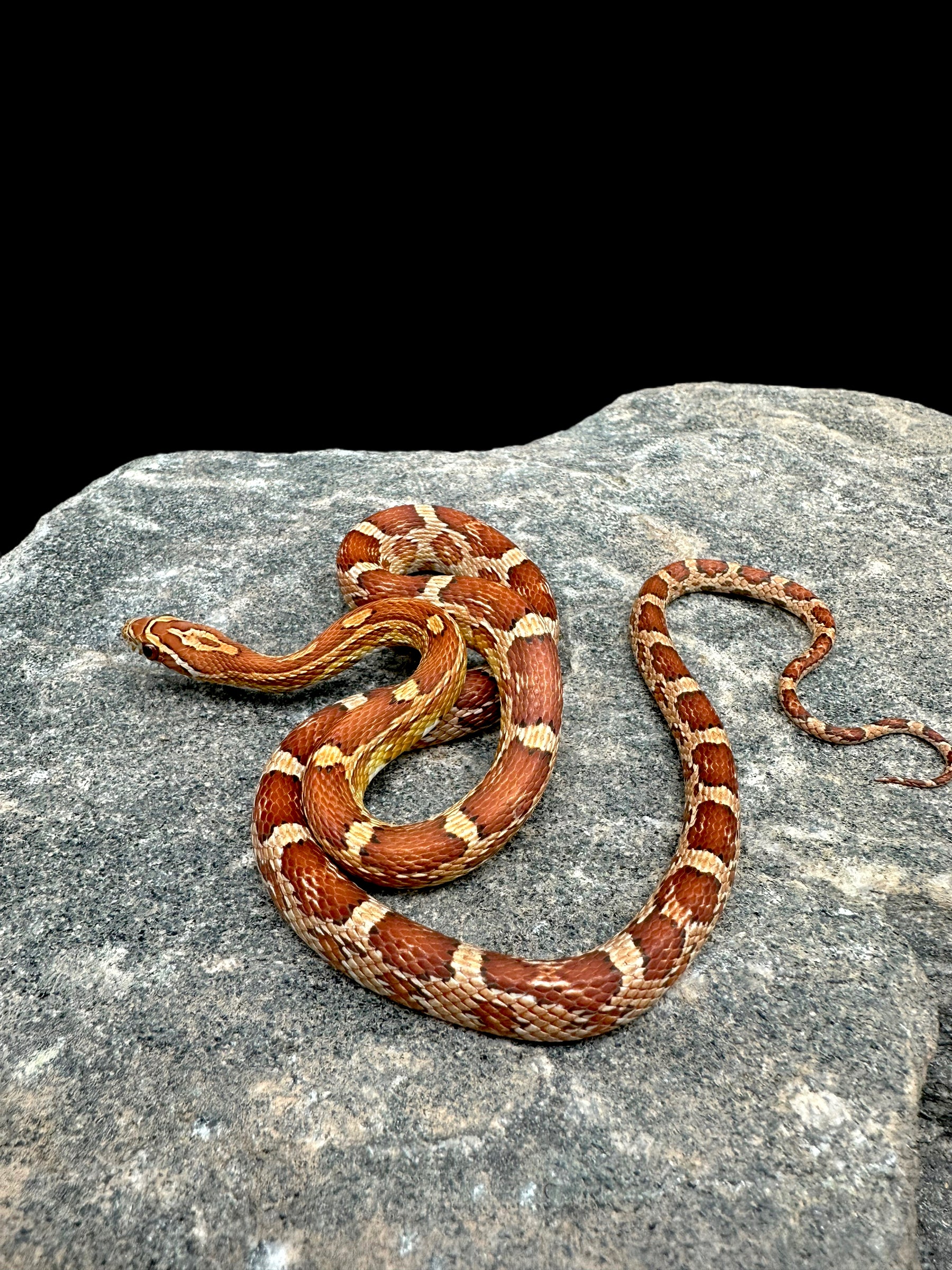
Appearance: The Hypo Corn Snake, short for Hypomelanistic Corn Snake, displays bright, vibrant coloration with significantly reduced black pigment. This Corn Snake features bold orange to red saddles outlined in soft gray, brown, or tan, set over a lighter background of peach, yellow, or cream. The eyes are typically ruby to copper-colored rather than black, contributing to the morph’s warm and inviting appearance. The reduction of melanin gives the pattern a cleaner, softer contrast without diminishing color intensity, producing an overall sunlit glow. The Hypo Corn Snake is one of the most foundational morphs in modern breeding—simple in genetics, yet stunning in presentation.
Distribution: A selectively bred morph of the Corn Snake (P. guttatus), derived from individuals exhibiting reduced black pigmentation.
Habitat: Wild Corn Snakes inhabit pine forests, grasslands, and agricultural regions across the southeastern United States. In captivity, they thrive in naturalistic terrariums that allow for burrowing, climbing, and exploration.
Behaviour: Calm, alert, and confident. Corn Snakes are crepuscular, most active at dawn and dusk. The Hypo Corn Snake retains the species’ gentle nature and strong feeding response, making it one of the most reliable and beginner-friendly morphs available.
Captive Care
Enclosure: A naturalistic 40-gallon terrarium (36” × 18” × 18”) or larger is ideal for adults. A soil-based or bioactive substrate layered with leaf litter encourages natural burrowing behavior. Include multiple hides, cork flats, climbing branches, and live or artificial plants for enrichment and cover.
Temperature & Humidity: Maintain a daytime gradient of 75–82°F (24–28°C) with a basking area of 86–88°F (30–31°C). Allow nighttime drops to 70°F (21°C). Keep humidity between 40–60%, with a humid hide provided during shedding.
Diet: Offer frozen-thawed rodents every 7–10 days for juveniles and every 10–14 days for adults. Prey should be approximately 1.25× the width of the snake’s mid-body.
Behaviour in Captivity: Calm, steady, and easy to handle. Corn Snakes adapt exceptionally well to naturalistic setups and routine care. The Hypo Corn Snake’s clean pattern and bright coloration make it a popular display animal and an excellent genetic base for future breeding projects.
Special Considerations: The degree of black pigment reduction can vary slightly among lineages; some individuals may retain subtle traces around the saddle edges or eyes, while others appear nearly devoid of dark tones.
Genetics Note
Hypomelanistic (Recessive)
Reduces black pigment across the body, eyes, and pattern edges, producing brighter, warmer coloration and a more vivid appearance.
Genetic Combination Summary
The Hypo Corn Snake expresses a single visible recessive trait:
-
Hypomelanistic = Reduces black pigment, resulting in brighter reds, oranges, and yellows
This gene creates a Corn Snake with warm, radiant coloration and soft contrast—enhancing nearly any combination it’s bred into. The Hypo Corn Snake is one of the most versatile and essential morphs in modern Corn Snake genetics, often serving as the foundation for countless designer varieties such as Honey, Hypo Motley, and Hypo Pewter.
Estimate shipping