

Photo Disclaimer
Description
Kenyan Zebra Skink (Trachylepis dichroma)
Scientific Name: Trachylepis dichroma
Common Name: Kenyan Zebra Skink
Species Overview
Size: Adults typically reach 6 to 8 inches (15 to 20 cm) in total length, with a streamlined body and a long, tapered tail.
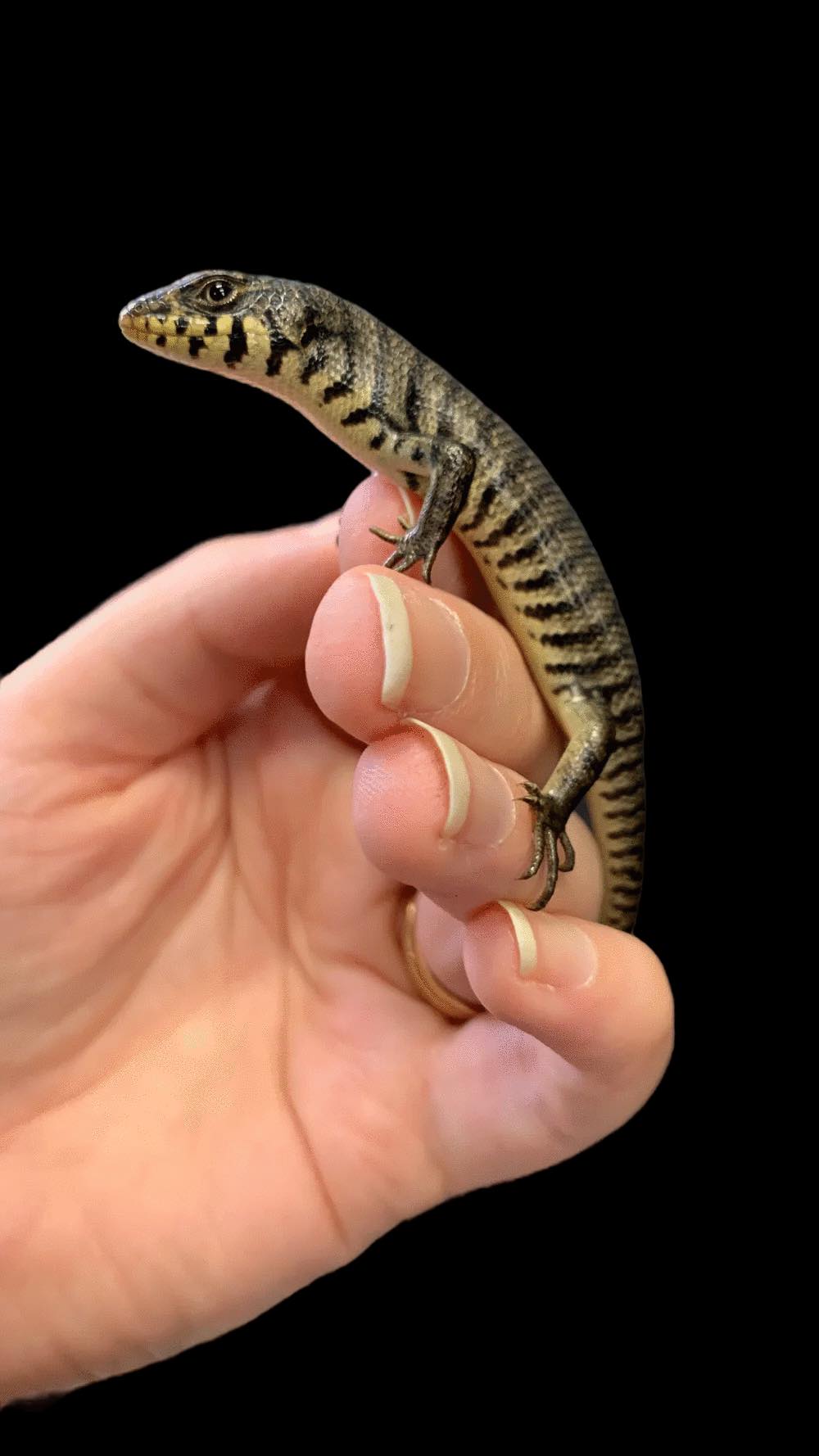
Appearance: Kenyan Zebra Skinks display alternating dark brown or black bands with lighter cream, tan, or golden striping. Some individuals show a subtle iridescent sheen under strong lighting. Their scales are smooth and glossy, and they possess a slender head with alert eyes. The tail is long and lightly banded, aiding in balance and speed.
Distribution: This species is native to East Africa, primarily Kenya, with populations in neighbouring regions with similar climates.
Habitat: They inhabit dry savannas, open scrubland, and rocky grasslands. Kenyan Zebra Skinks prefer areas with warm basking sites, loose soil, scattered rocks, and dense vegetation that offers shade and quick escape routes.
Behaviour: These skinks are diurnal, fast, and highly cautious. They bask openly before retreating quickly into cover. Their natural diet consists of insects and other small invertebrates. They may live solitarily or in loose proximity-based groups depending on habitat structure.
Captive Care
Enclosure: Provide a terrestrial enclosure at least 24 inches × 18 inches × 18 inches (60 × 45 × 45 cm) for a pair or small group. Include rocks, cork flats, driftwood, and secure low hides. Open floor space supports their darting, active behaviour, while visual barriers help reduce stress.
Temperature and Humidity:
Basking area: 95 to 105°F (35 to 40°C)
Warm side: 85 to 90°F (29 to 32°C)
Cool side: 75 to 80°F (24 to 27°C)
Night temperatures: 68 to 72°F (20 to 22°C)
Humidity should stay between 30 and 50 percent.
Lighting: Provide full-spectrum lighting and high-output UVB (10 percent or desert-strength). Bright lighting encourages natural basking behaviour and enhances colour contrast.
Diet: Feed a varied insectivorous diet: crickets, roaches, black soldier fly larvae, mealworms, silkworms, and small locusts. Regular calcium supplementation and occasional multivitamins are recommended. Some individuals accept bits of fruit or vegetation.
Behaviour in Captivity: Kenyan Zebra Skinks are quick and skittish. They thrive in display-style enclosures with ample hiding options. Minimal handling is recommended to avoid stress. With proper habitat design, they exhibit active hunting, basking, and exploratory behaviours.
Special Considerations:
• Ensure a secure lid — they are agile and quick.
• Avoid high humidity to prevent respiratory issues.
• Anchor all décor firmly to prevent collapse during burrowing or rapid movement.
• Offer multiple hides to support natural thermoregulation and security.
Taxonomy Note
The Kenyan Zebra Skink belongs to the genus Trachylepis, a widespread African group known for glossy scales, high activity levels, and alert behaviour. Trachylepis dichroma is particularly recognizable for its bold striped pattern.
Genetics Note
No morphs are currently recognized for this species. Natural variation includes differences in stripe clarity, band contrast, tail patterning, and subtle shifts in overall colour tone.
Estimate shipping