

Photo Disclaimer
Description
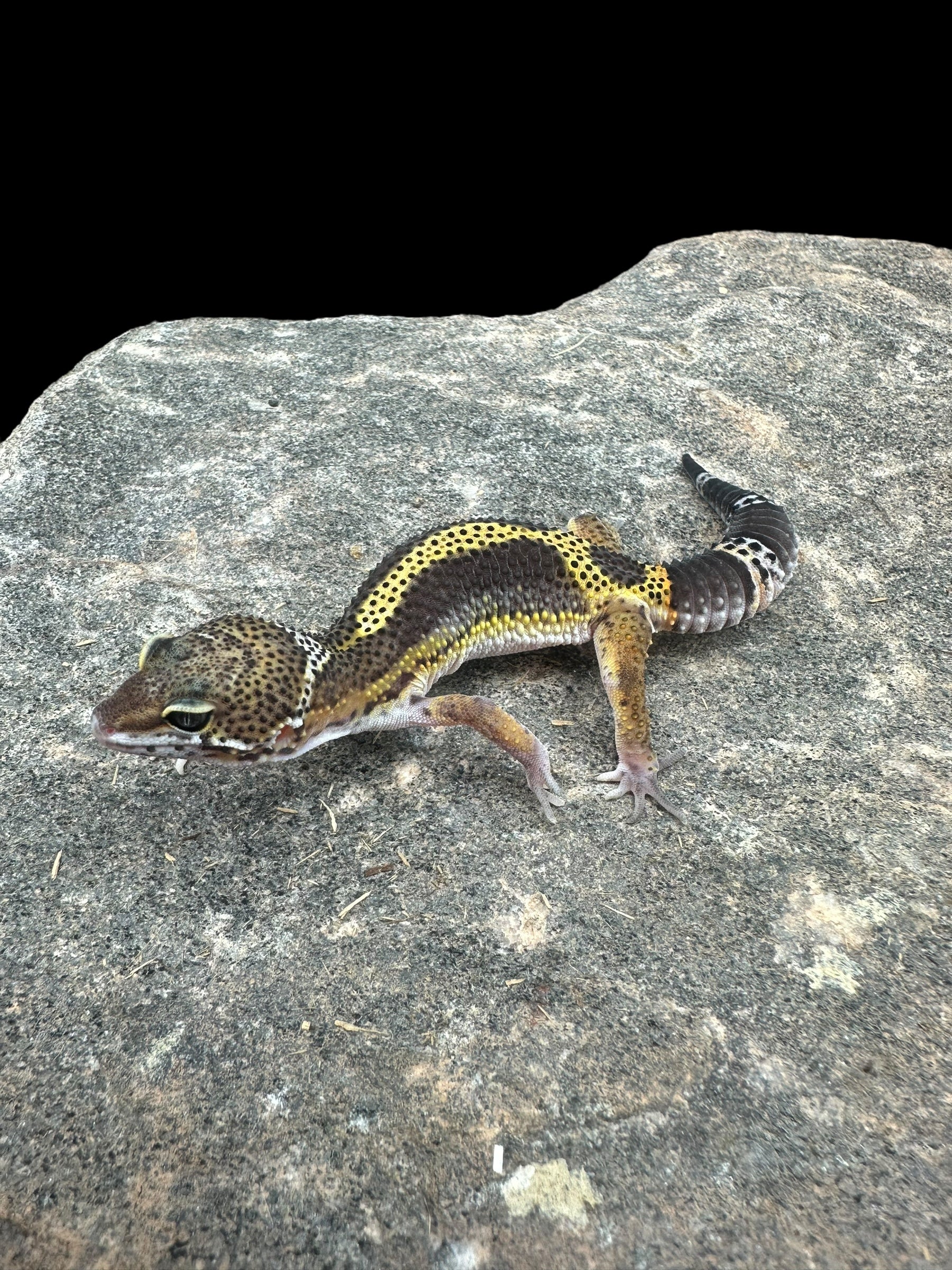
Leopard Gecko (Black Night Cross Het Rainwater Poss Eclipse)
Scientific Name: Eublepharis macularius
Common Name: Leopard Gecko (Black Night Cross Het Rainwater Poss Eclipse)
Species Overview
Size: Adult Leopard Geckos typically reach 8–10 inches (20–25 cm). They are medium-sized, sturdy lizards well adapted to dry, rocky environments.
Appearance: This gecko combines the dark, dramatic look of Black Night lineage with the influence of other genetics carried but not visually expressed. Black Night lines are known for producing deep charcoal to near-black body tones with greatly reduced spotting. As a cross, this animal will display enhanced darkness and contrast, but may not reach full Black Night intensity. Being het Rainwater and possible Eclipse does not affect outward appearance but may subtly influence colour tone or eye clarity. Overall, this gecko presents a bold, moody coloration with smooth beaded scales and a sleek, refined look.
Distribution: The species originates from arid regions of Pakistan, Afghanistan, northwestern India, and Iran.
Habitat: In the wild, Leopard Geckos inhabit dry, rocky deserts and semi-arid grasslands. They shelter in burrows and crevices during the heat of the day and emerge at night to hunt.
Behaviour: Leopard Geckos are nocturnal, calm, and interactive. They adjust well to routine care and are generally tolerant of handling once accustomed to their environment. Their curious nature and steady temperament make them reliable and engaging reptiles.
Captive Care
Enclosure: A single adult should be housed in a terrestrial enclosure measuring at least 24 inches × 18 inches × 12 inches (60 × 45 × 30 cm). Provide warm, cool, and humid hides and use a sandy soil or clay-based substrate that supports burrowing behaviour.
Temperature & Humidity: Maintain a warm side of 88–92°F (31–33°C) and a cool side around 75–80°F (24–27°C). Nighttime temperatures may drop to 70–74°F (21–23°C). Keep humidity at 30–40%, with a humid hide at 60–70% for proper shedding. A thermostat is essential for stable heat output.
Lighting: Low-level UVB (2–5%) supports calcium absorption and overall well-being. Use a 12-hour day/night cycle.
Diet: Feed gut-loaded insects such as roaches, crickets, silkworms, and mealworms. Adults should be fed every other day; juveniles daily. Dust all prey with calcium and multivitamin supplements. Provide fresh water at all times.
Behaviour in Captivity: Leopard Geckos are hardy, predictable, and thrive with consistent conditions. They often develop regular feeding and activity routines and can live 15–20 years or more with proper care.
Special Considerations: None of the listed genetics affect care requirements. As with all Leopard Geckos, minimize sudden environmental changes and handle gently to reduce stress.
Taxonomy Note
The Leopard Gecko (Eublepharis macularius) belongs to the family Eublepharidae and is one of the most selectively bred reptiles in captivity. Populations exhibit tremendous diversity in colour, pattern, and structure due to decades of dedicated breeding.
Genetics Note
This animal carries or potentially carries several traits:
-
Black Night (polygenic / line-bred) – Produces extremely dark pigmentation with reduced spotting; intensity varies in crosses.
-
Rainwater Albino (recessive, het) – One copy carried; does not visually express. Produces soft pastel tones when homozygous.
-
Eclipse (recessive, possible) – May or may not be present; if expressed, produces solid or partially solid eyes.
Only Black Night affects visual appearance in this individual. The other traits are genetic markers relevant for breeding but do not influence care.