


Photo Disclaimer
Description
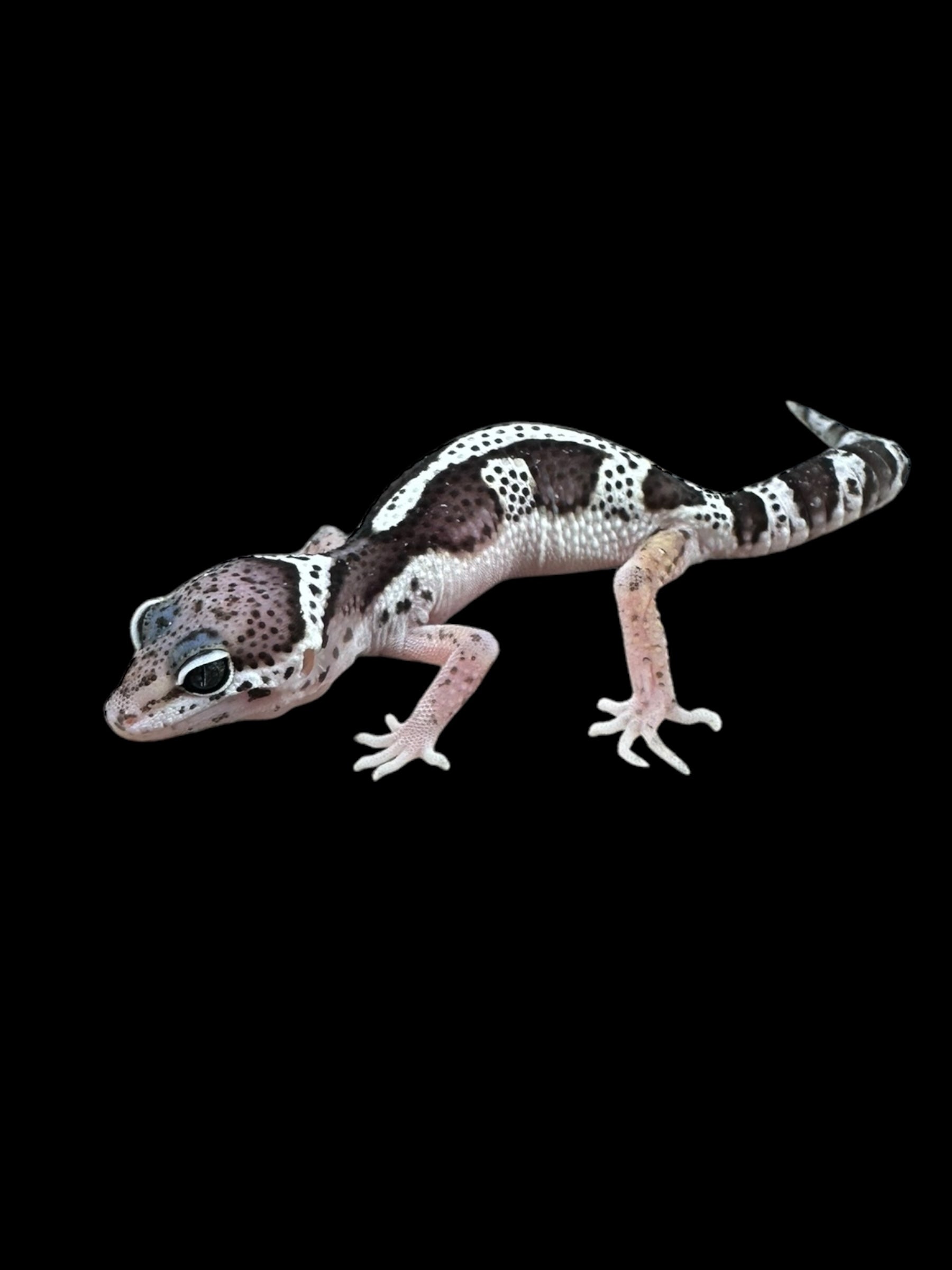
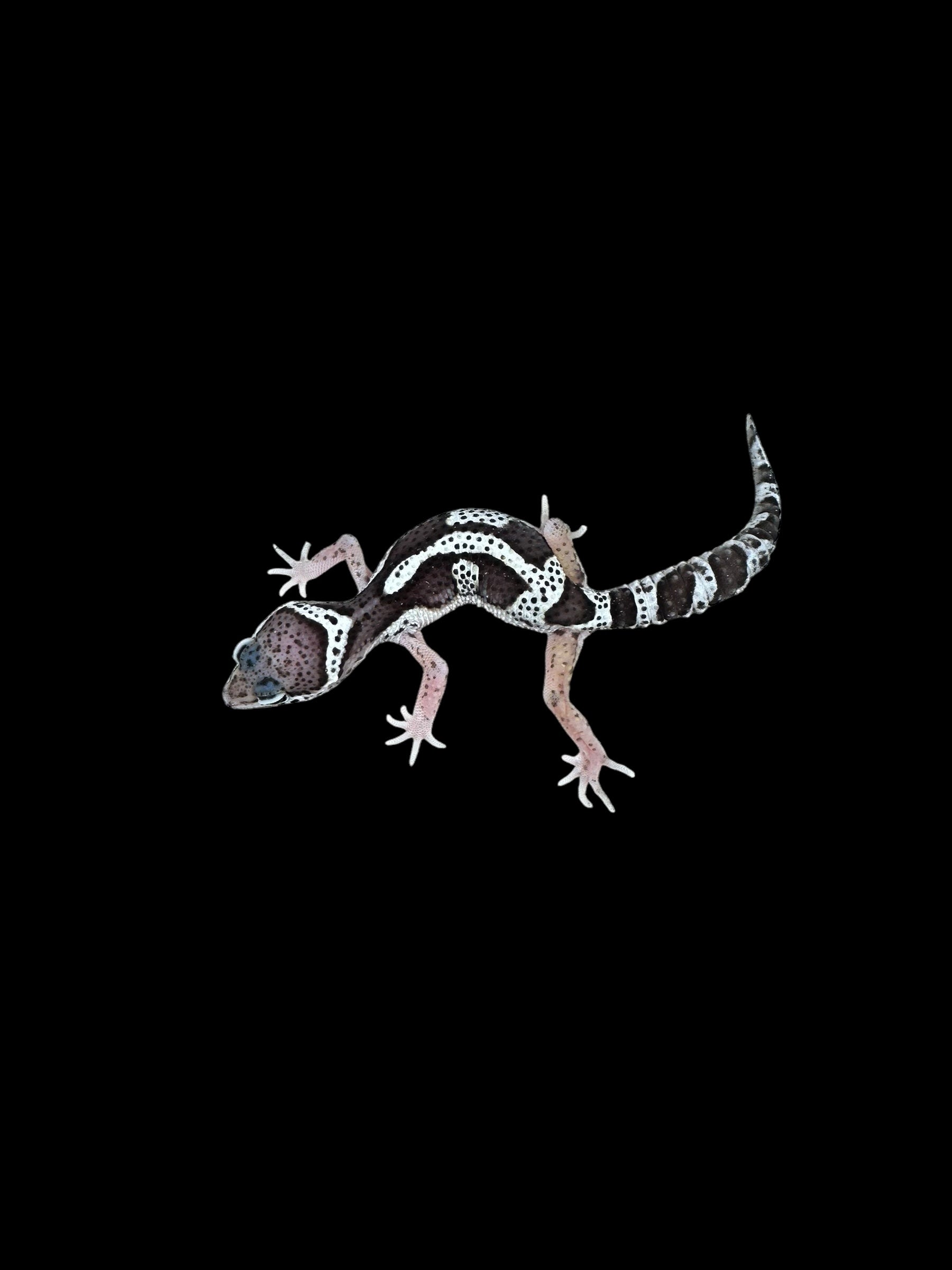
Leopard Gecko (Mack Snow Jungle)
Scientific Name: Eublepharis macularius
Common Name: Leopard Gecko (Mack Snow Jungle)
Species Overview
Size: Adult Leopard Geckos typically reach 8–10 inches (20–25 cm). They are medium-sized, durable lizards adapted to warm, arid environments.
Appearance: The Mack Snow Jungle combines the cool, reduced-yellow colouration of the Mack Snow gene with the irregular, broken patterning characteristic of the Jungle line. Individuals often hatch with crisp black-and-white or grey banding that becomes increasingly fragmented as they mature. The Jungle influence disrupts typical band formation, producing asymmetric markings, loops, broken saddles, or swirling patterns across the body and tail. Colour expression ranges from pale grey to soft pastel yellow depending on lineage, but the overall look remains high-contrast and visually dynamic.
Distribution: Leopard Geckos originate from Pakistan, Afghanistan, northwestern India, and Iran.
Habitat: In the wild, they inhabit rocky deserts and scrublands, relying on burrows and crevices for daytime shelter. In captivity, they thrive in warm, semi-arid environments with secure hiding areas and stable temperatures.
Behaviour: Leopard Geckos are nocturnal, calm, and well suited to routine care. They display natural behaviours such as nighttime exploring, burrowing, and active hunting.
Captive Care
Enclosure: Provide at least a 24 inches × 18 inches × 12 inches (60 × 45 × 30 cm) terrestrial enclosure with warm, cool, and humid hides. A naturalistic substrate such as sandy soil or a clay-based blend supports natural digging behaviour.
Temperature & Humidity: Maintain a warm end of 88–92°F (31–33°C) and a cool end around 75–80°F (24–27°C). Nighttime temperatures may fall to 70–74°F (21–23°C). Keep ambient humidity at 30–40%, with a humid hide at 60–70% for shedding. Regulate all heat sources using a thermostat.
Lighting: Low-level UVB (2–5%) supports metabolic and skeletal health. Provide a consistent 12-hour day/night cycle.
Diet: Offer gut-loaded roaches, crickets, mealworms, and silkworms. Feed adults every other day and juveniles daily. Dust prey with calcium and multivitamins. Ensure fresh water is always available.
Behaviour in Captivity: Leopard Geckos are hardy, predictable reptiles that adapt well to routine care. Lifespans of 15–20 years or more are common with proper husbandry.
Special Considerations: Jungle patterning varies significantly among individuals. Some may develop heavy pattern fragmentation, while others retain partial banding. Husbandry requirements remain identical to standard Leopard Gecko care.
Taxonomy Note
The Leopard Gecko (Eublepharis macularius) belongs to the family Eublepharidae. Jungle is a long-established line-bred pattern trait, and when paired with colour-modifying genes such as Mack Snow, the contrast between markings and background tones increases.
Genetics Note
Mack Snow (incomplete dominant)
Reduces yellow pigmentation in hatchlings, creating a black-and-white or grey starting appearance. Enhances contrast in pattern-focused line-bred traits.
Jungle (polygenic / line-bred)
Produces broken, irregular, or asymmetric patterning, disrupting typical banded Leopard Gecko markings.
These traits influence appearance only and do not alter standard care requirements.