


Photo Disclaimer
Description
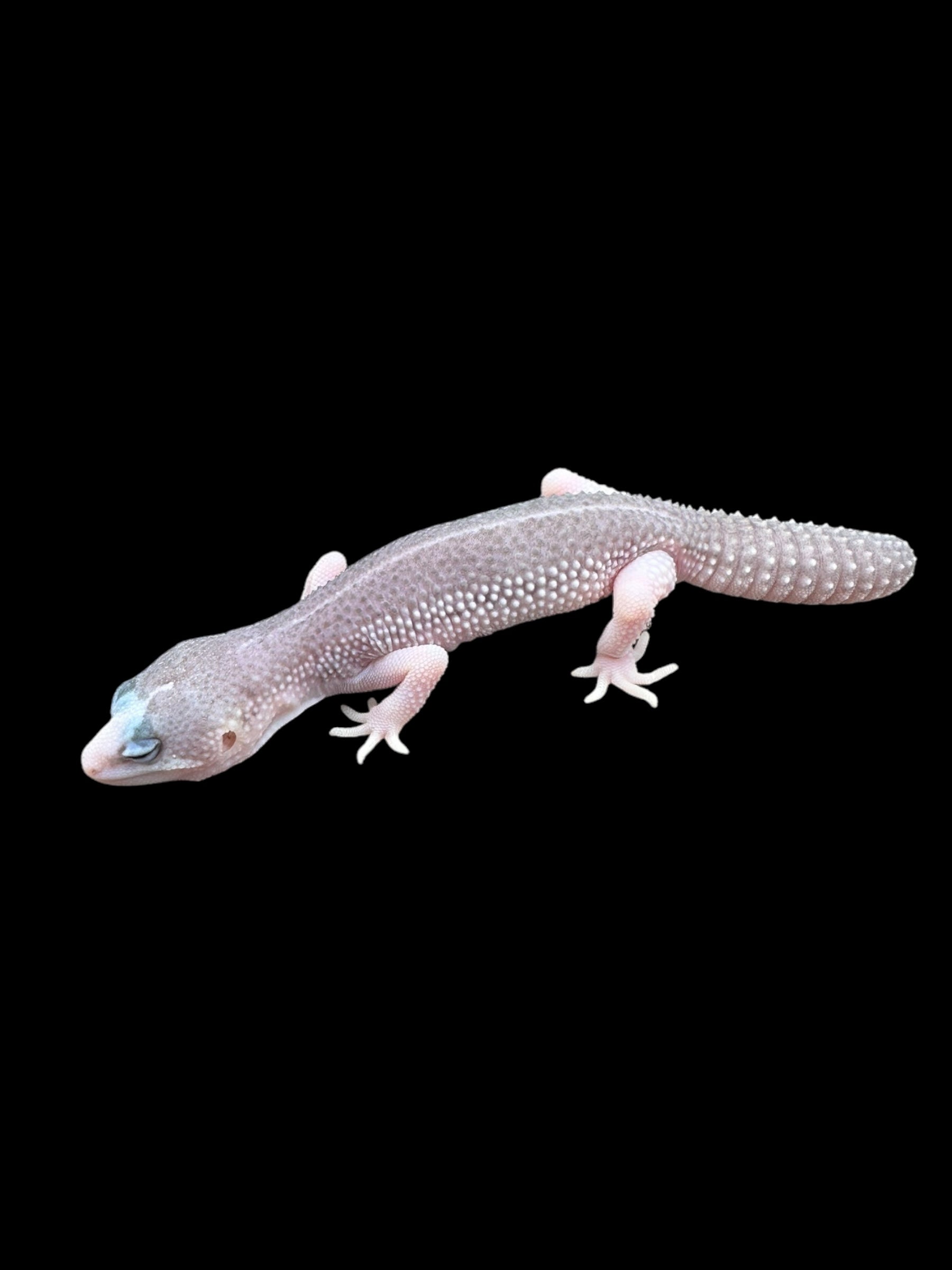
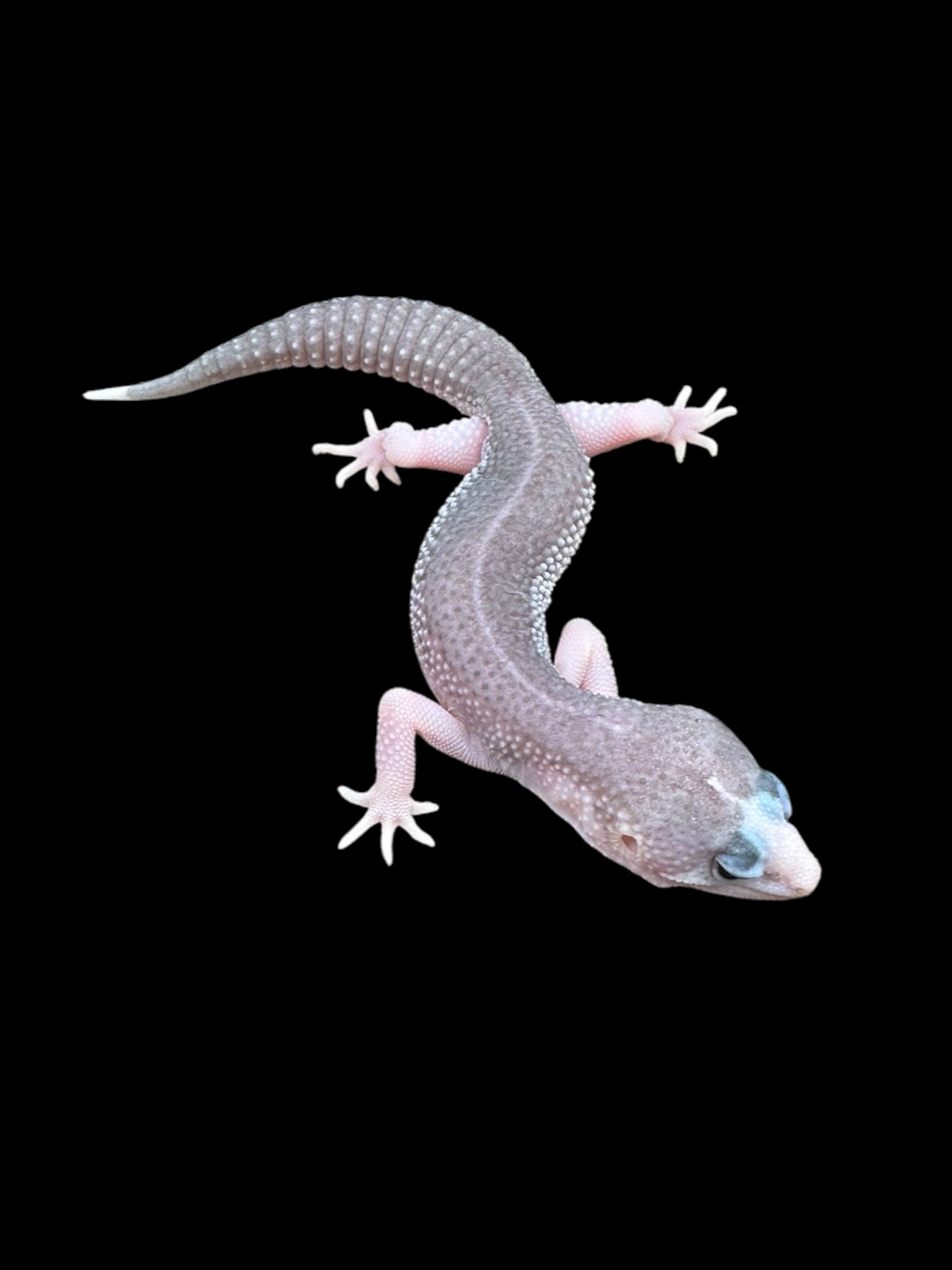
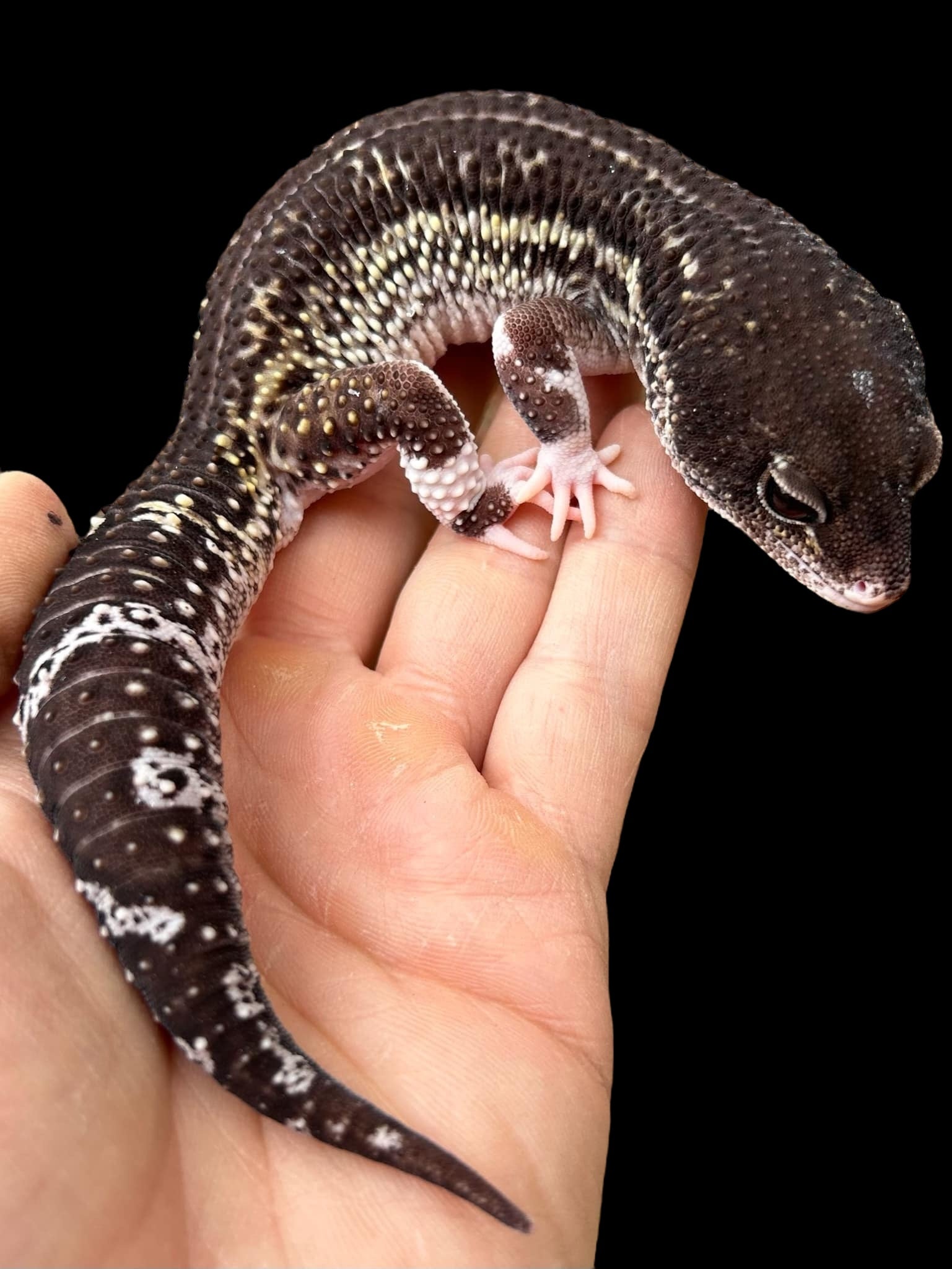
Leopard Gecko (Panda – Black Night Super Snow Eclipse)
Scientific Name: Eublepharis macularius
Common Name: Leopard Gecko (Panda – Black Night Super Snow Eclipse)
Species Overview
Size: Adult Leopard Geckos typically reach 8–10 inches (20–25 cm). They are medium-sized, durable lizards adapted to warm, arid habitats.
Appearance: The Panda is a striking multi-gene and multi-line combination created by pairing the Black Night melanistic line with the Super Snow and Eclipse traits. The result is a gecko with extremely high contrast, often showing bold black-and-white patterning reminiscent of a panda. Super Snow produces a clean, reduced pattern with strong contrast, while the Eclipse gene typically results in solid black eyes. The Black Night influence deepens overall pigmentation, darkening the blacks and muting warm tones. Many individuals appear nearly monochromatic, with deep charcoal patches over crisp white backgrounds and highly distinctive all-black or near-black eyes. Expression varies, but high-quality examples are among the most visually dramatic Leopard Gecko combinations.
Distribution: Leopard Geckos originate from Pakistan, Afghanistan, northwestern India, and Iran.
Habitat: In the wild, they inhabit rocky deserts and scrublands, using burrows and crevices for daytime refuge. In captivity, they thrive in warm, semi-arid environments with secure hiding spaces and stable temperatures.
Behaviour: Leopard Geckos are nocturnal, calm, and well suited to routine care. They regularly display natural behaviours such as nighttime wandering, burrowing, and hunting.
Captive Care
Enclosure: Provide at least a 24 inches × 18 inches × 12 inches (60 × 45 × 30 cm) terrestrial enclosure with warm, cool, and humid hides. A naturalistic substrate such as sandy soil or a clay-based blend supports natural digging behaviour.
Temperature & Humidity: Maintain a warm end of 88–92°F (31–33°C) and a cool end around 75–80°F (24–27°C). Nighttime temperatures may drop to 70–74°F (21–23°C). Keep ambient humidity at 30–40%, with a humid hide at 60–70% for shedding. Always regulate heat sources with a thermostat.
Lighting: Low-level UVB (2–5%) supports metabolic and skeletal health. Provide a consistent 12-hour day/night cycle.
Diet: Offer gut-loaded insects such as roaches, crickets, mealworms, and silkworms. Feed adults every other day and juveniles daily. Dust prey with calcium and multivitamins. Fresh water should always be available.
Behaviour in Captivity: Leopard Geckos thrive with stable conditions and predictable care. With proper husbandry, individuals commonly live 15–20 years or more.
Special Considerations: Eclipse eyes may be more sensitive to bright light in some individuals. As a heavily patterned and multi-gene combination, visual expression varies, especially regarding the degree of melanism and contrast.
Taxonomy Note
The Leopard Gecko (Eublepharis macularius) belongs to the family Eublepharidae. Super Snow and Eclipse are established genetic traits, while Black Night is a well-known polygenic melanistic line selectively bred to intensify dark pigmentation.
Genetics Note
Super Snow (incomplete dominant – super form)
Produces strong black-and-white contrast, reduced patterning, and an overall speckled or high-contrast appearance. The “Super” form occurs when two Snow alleles are present.
Eclipse (recessive)
Modifies eye pigmentation, usually resulting in solid black or nearly solid black eyes. May also amplify pattern reduction.
Black Night (polygenic / line-bred)
Selected for heightened melanism, deepening blacks and reducing warm tones. Enhances contrast significantly when paired with Snow and Eclipse genes.
These traits influence appearance only and do not alter standard care requirements.