


Photo Disclaimer
Description
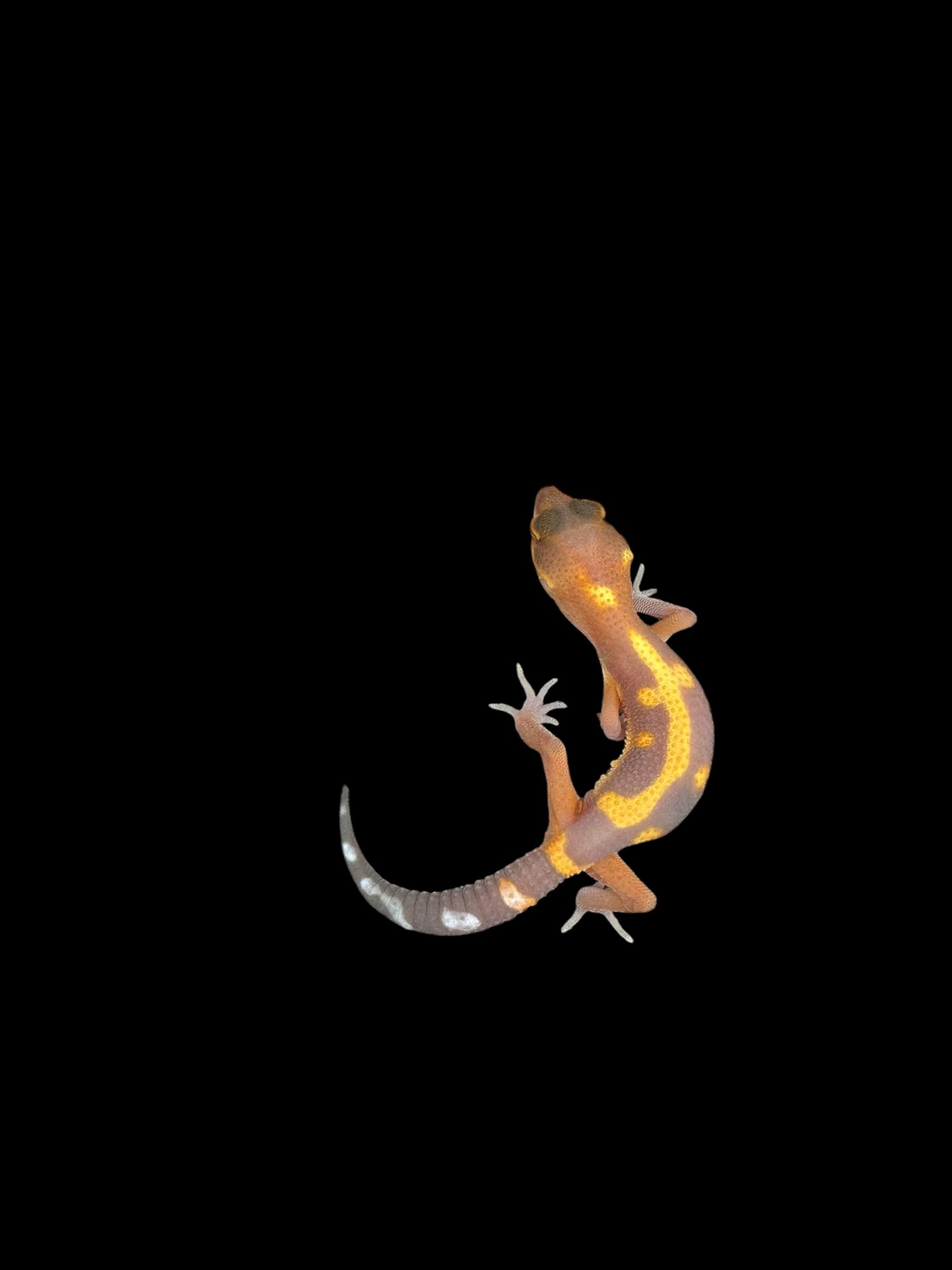
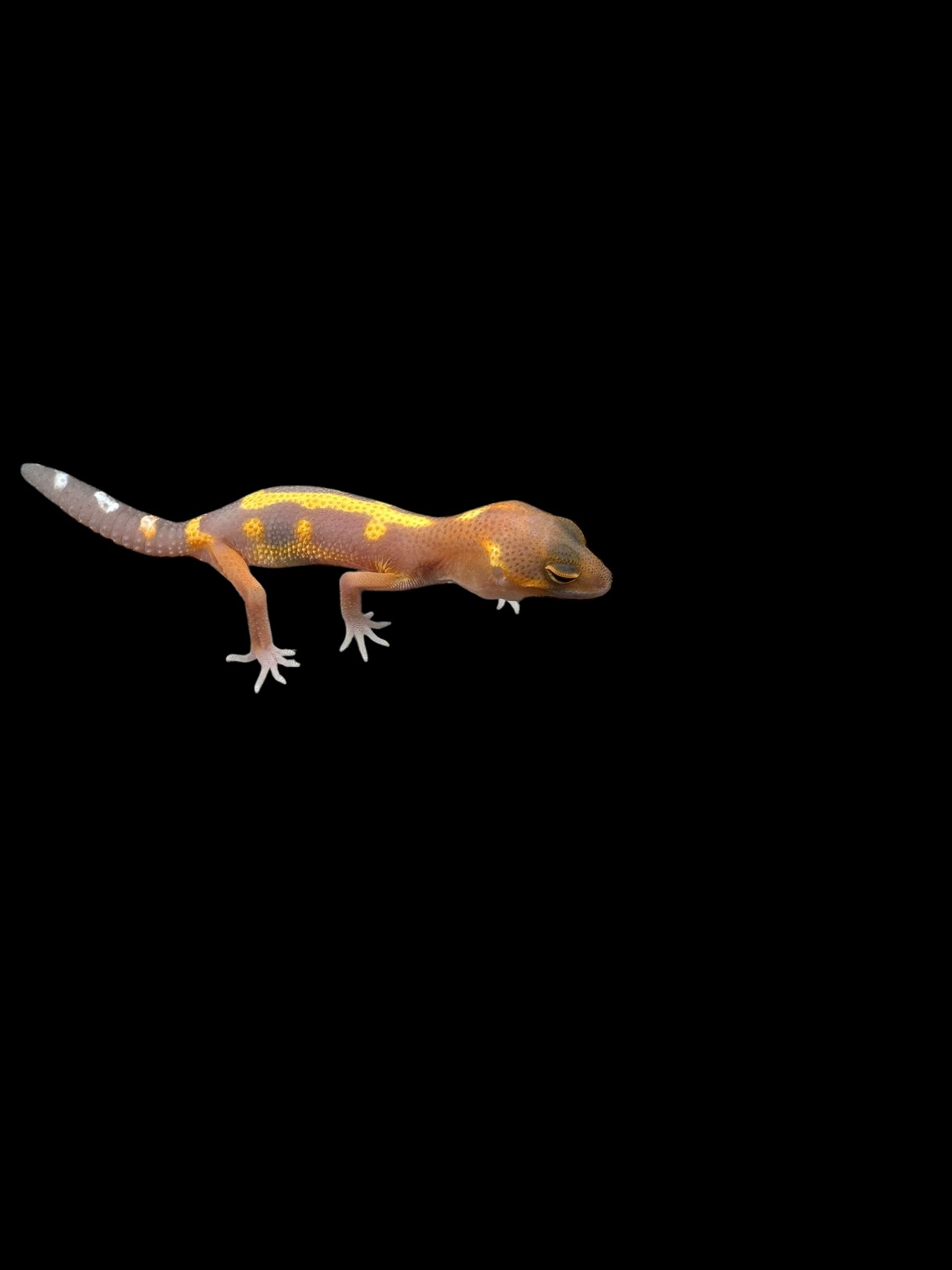
Leopard Gecko (Tremper Tangerine Jungle)
Scientific Name: Eublepharis macularius
Common Name: Leopard Gecko (Tremper Tangerine Jungle)
Species Overview
Size: Adult Leopard Geckos typically reach 8–10 inches (20–25 cm). They are medium-sized, hardy reptiles well adapted to warm, arid environments.
Appearance: This morph blends the warm, pastel colouring of the Tremper Albino gene with the rich orange saturation of the Tangerine line and the irregular patterning of the Jungle trait. Tremper Albino removes all black pigment, replacing it with creams, yellows, and soft oranges. Tangerine adds deeper orange tones that often intensify as the gecko matures. The Jungle trait disrupts typical banding, creating broken, swirled, or irregular patterns along the dorsum and sides. When combined, these influences produce a Leopard Gecko with bright orange-to-peach tones, soft pastel shading, and lively, unpredictable pattern morphology.
Distribution: Leopard Geckos originate from Pakistan, Afghanistan, northwestern India, and Iran.
Habitat: In nature, they inhabit rocky deserts and scrublands, sheltering in burrows during the day. In captivity, they thrive in warm, semi-arid enclosures with secure hiding areas.
Behaviour: Leopard Geckos are nocturnal, calm, and respond well to routine care. They tolerate gentle handling and display natural behaviours such as hunting insects, burrowing, and nighttime exploring.
Captive Care
Enclosure: Provide a terrestrial enclosure at least 24 inches × 18 inches × 12 inches (60 × 45 × 30 cm). Include warm, cool, and humid hides. A sandy soil or clay-based substrate supports natural digging and enrichment.
Temperature & Humidity: Maintain a warm side of 88–92°F (31–33°C) and a cool side around 75–80°F (24–27°C). Night temperatures may drop to 70–74°F (21–23°C). Keep humidity around 30–40%, with a humid hide elevated to 60–70% to support shedding. Use a thermostat to regulate heating elements.
Lighting: Because this is an albino-line morph, provide low-level UVB (2–5%) and ensure shaded areas are available. Maintain a consistent 12-hour day/night cycle.
Diet: Offer gut-loaded insects including roaches, crickets, silkworms, and mealworms. Adults eat every other day; juveniles daily. Dust prey with calcium and multivitamin supplements. Provide fresh water at all times.
Behaviour in Captivity: Leopard Geckos are hardy and long-lived, often reaching 15–20 years or more. This morph thrives with stable routines and proper environmental conditions.
Special Considerations: Albino-line animals may show mild light sensitivity. Colour saturation can vary widely depending on the strength of the Tangerine lineage.
Taxonomy Note
The Leopard Gecko (Eublepharis macularius) belongs to the family Eublepharidae. This morph combines both recessive and line-bred traits commonly used in high-colour selective breeding projects.
Genetics Note
This morph includes:
-
Tremper Albino (recessive) – Removes black pigment and creates warm pastel colouration.
-
Tangerine (polygenic / line-bred) – Enhances orange pigmentation, often intensifying with age.
-
Jungle (polygenic / line-bred) – Produces broken, swirled, or irregular dorsal patterning.
These traits influence appearance only and do not alter Leopard Gecko husbandry.