


Photo Disclaimer
Description
Long-tailed Grass Lizard
Scientific Name: Takydromus sexlineatus
Common Name: Long-tailed Grass Lizard, Six-lined Grass Lizard
Species Overview
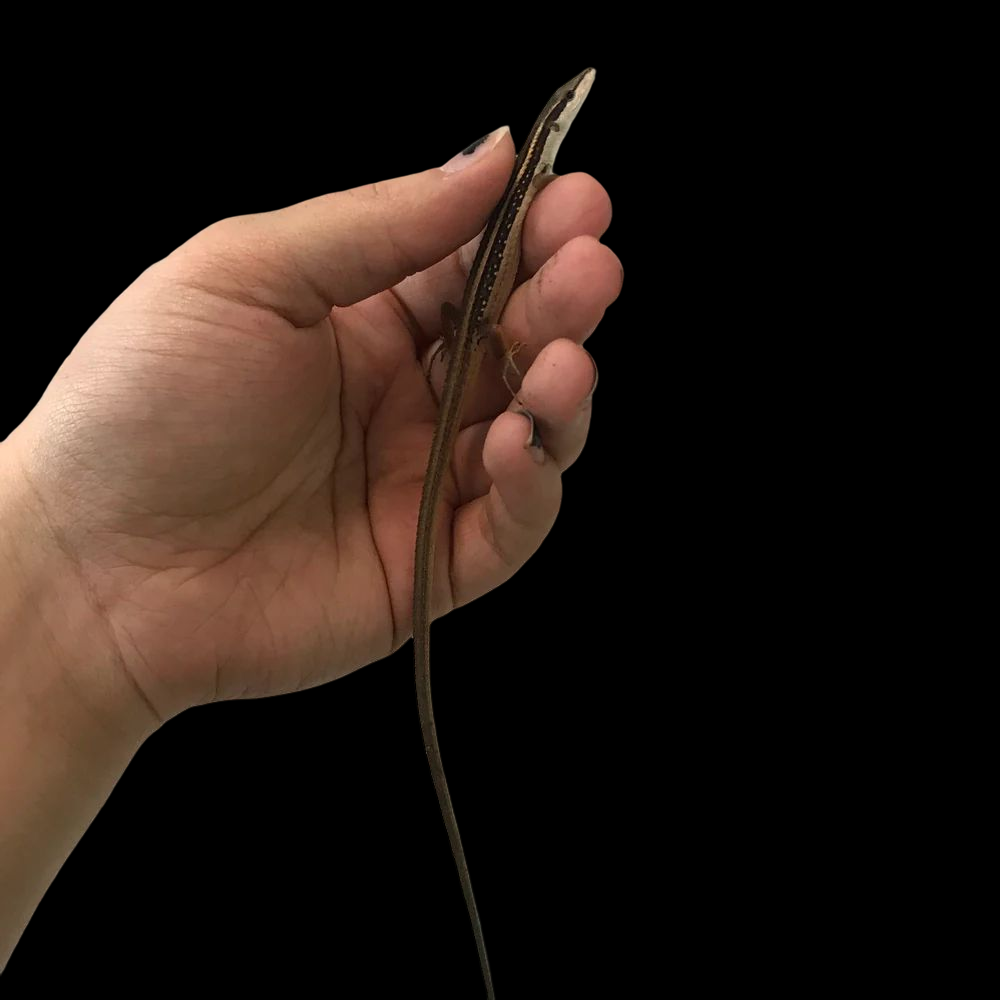
Size: Adults typically reach 10 to 12 inches (25 to 30 cm) in total length, with the tail making up more than two-thirds of their total length.
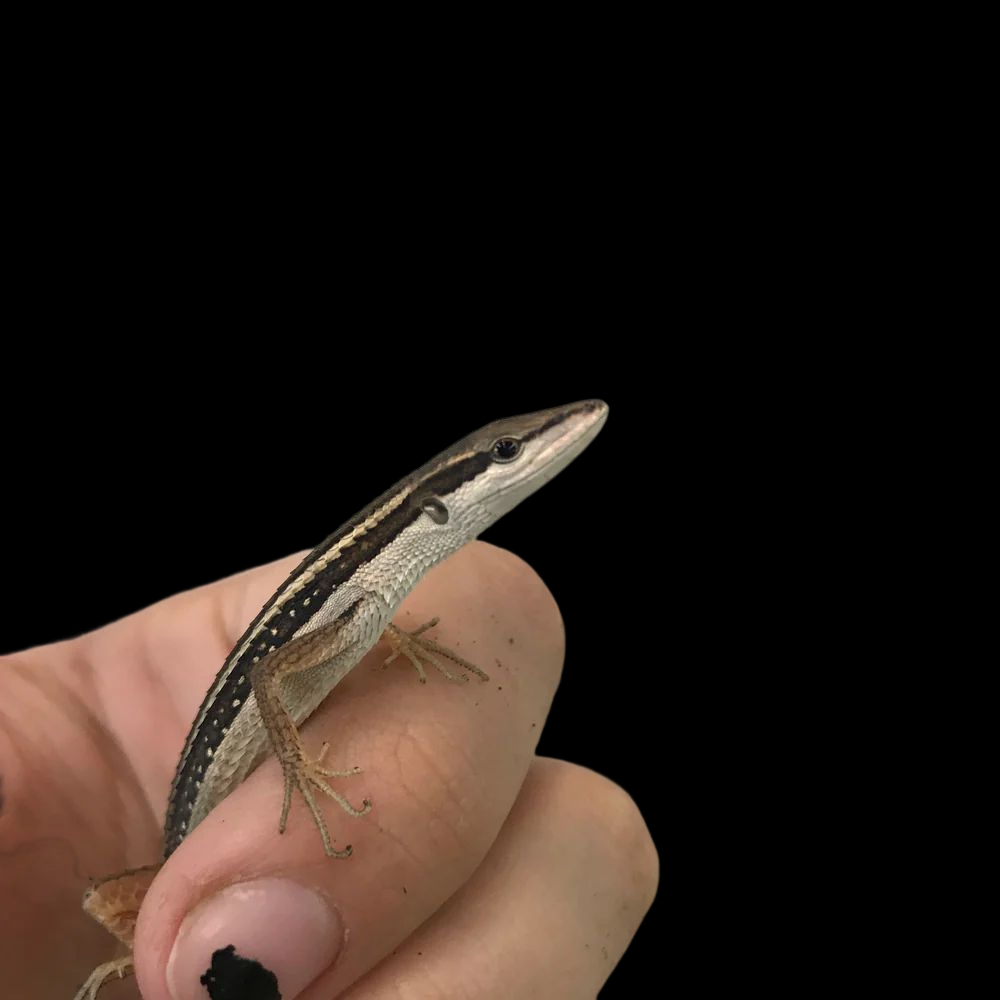
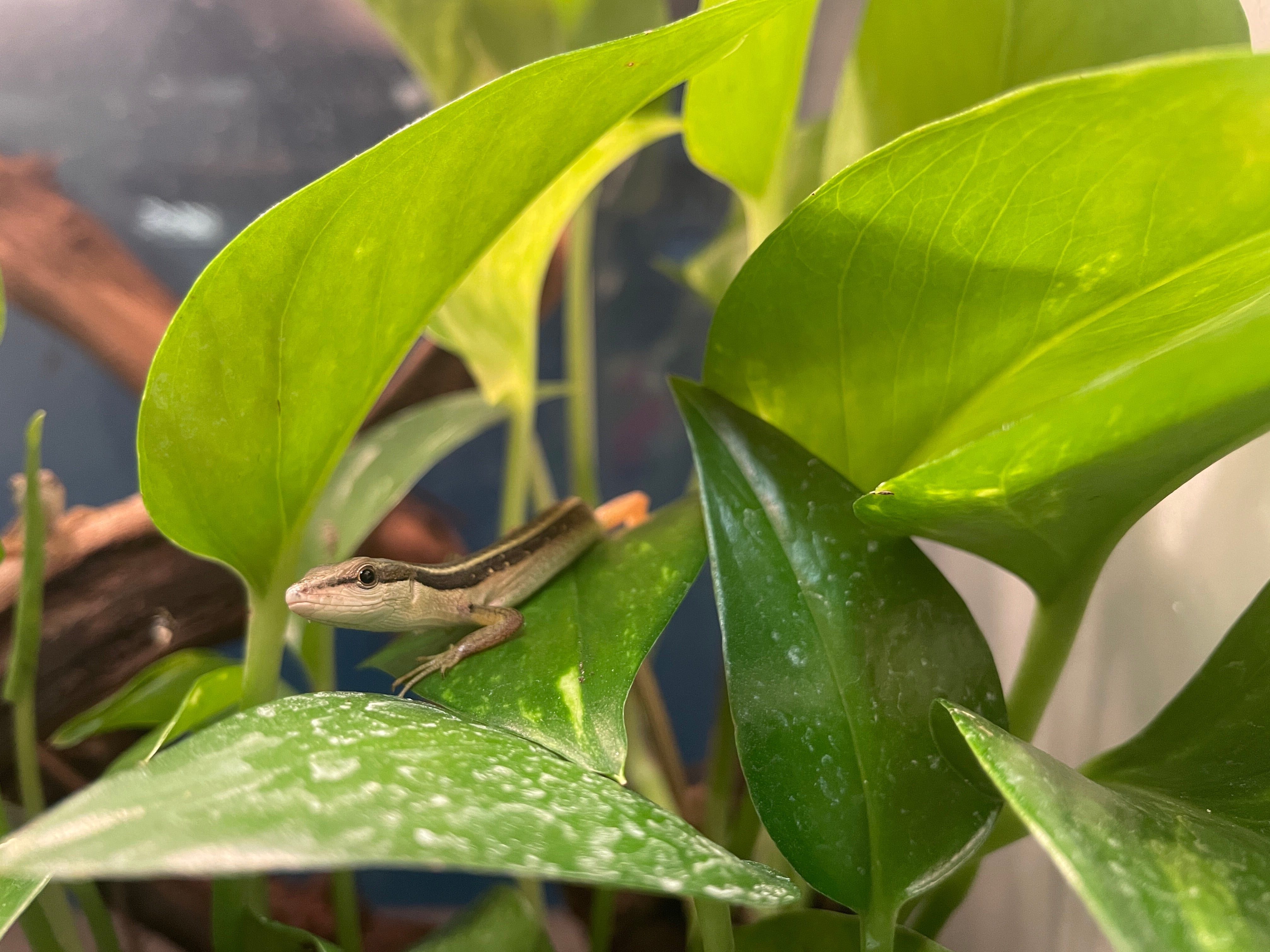
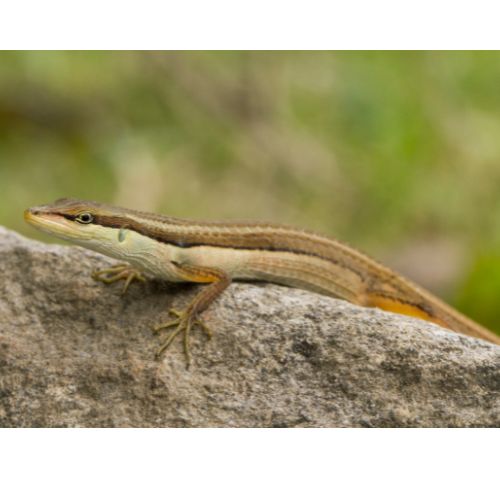
Appearance: The Long-tailed Grass Lizard is slender, agile, and defined by its exceptionally long, whip-like tail. Body colouration ranges from olive to bright green or brown, depending on locality and mood. Most individuals display six pale longitudinal stripes running from the head to the tail, along with subtle speckling. Their limbs are long and delicate, and the tail assists with balance when navigating grass and shrubs. The head is narrow and pointed, suited for quick, insect-hunting movements.
Distribution: This species is native to Southeast Asia, including Thailand, Vietnam, Cambodia, Laos, Malaysia, and parts of southern China.
Habitat: Long-tailed Grass Lizards inhabit grasslands, forest edges, agricultural fields, and areas with tall grasses or low shrubs. They rely on dense vegetation for climbing, shelter, and hunting while remaining close to open sunlit spaces for basking.
Behaviour: These lizards are diurnal, extremely fast, and highly arboreal within grasses and shrubs. They use rapid movements and tail agility to escape predators. They feed on small insects such as crickets, flies, and other soft-bodied arthropods. Social groups may form loosely in the wild, with males displaying mild territorial behaviour during breeding seasons.
Captive Care
Enclosure: Provide a vertically oriented enclosure at least 24 inches × 18 inches × 24 inches (60 × 45 × 60 cm) for a pair or small group. Include tall grasses, bamboo, branches, vines, and plenty of visual cover. Secure perches and dense foliage are essential for their climbing nature and sense of security.
Temperature and Humidity:
Basking area: 95 to 100°F (35 to 38°C)
Ambient daytime temperature: 80 to 88°F (27 to 31°C)
Night temperatures: 70 to 75°F (21 to 24°C)
Humidity should range from 50 to 70 percent, with light daily misting and good ventilation.
Lighting: Provide full-spectrum lighting with moderate to strong UVB (5 to 7 percent). Bright lighting encourages natural basking and maintains strong colouration.
Diet: Offer small, fast-moving insects such as flightless fruit flies, tiny crickets, small roaches, black soldier fly larvae, and small mealworms. Dust insects with calcium frequently and provide multivitamins on a regular schedule.
Behaviour in Captivity: Long-tailed Grass Lizards are highly active and do best in large, planted enclosures. They are delicate and do not tolerate frequent handling. When housed properly, they display natural climbing, hunting, and basking behaviours and thrive in small groups.
Special Considerations:
• Provide ample vertical cover—these lizards feel exposed in bare enclosures.
• Avoid handling except when necessary; they are delicate and easily stressed.
• Their long tails can be damaged if the enclosure décor is unstable.
• Offer small, frequent feedings to meet their high activity levels.
Taxonomy Note
The Long-tailed Grass Lizard is part of the genus Takydromus, a group of fast, slender lacertids adapted to life among tall grasses and shrubs. Members of this genus are known for their extreme tail length, agility, and insectivorous diet.
Genetics Note
No established morphs exist for this species. Natural variation includes differences in stripe clarity, dorsal shade intensity, and the exact green or brown tones exhibited, all of which fall within normal variation for Takydromus sexlineatus.