

Photo Disclaimer
Description
Oak Toad
Scientific Name: Anaxyrus quercicus
Common Name: Oak Toad
Species Overview
Size: One of the smallest toad species in North America, adults typically reach 0.75 to 1.3 inches (2 to 3.3 cm), with females slightly larger than males.
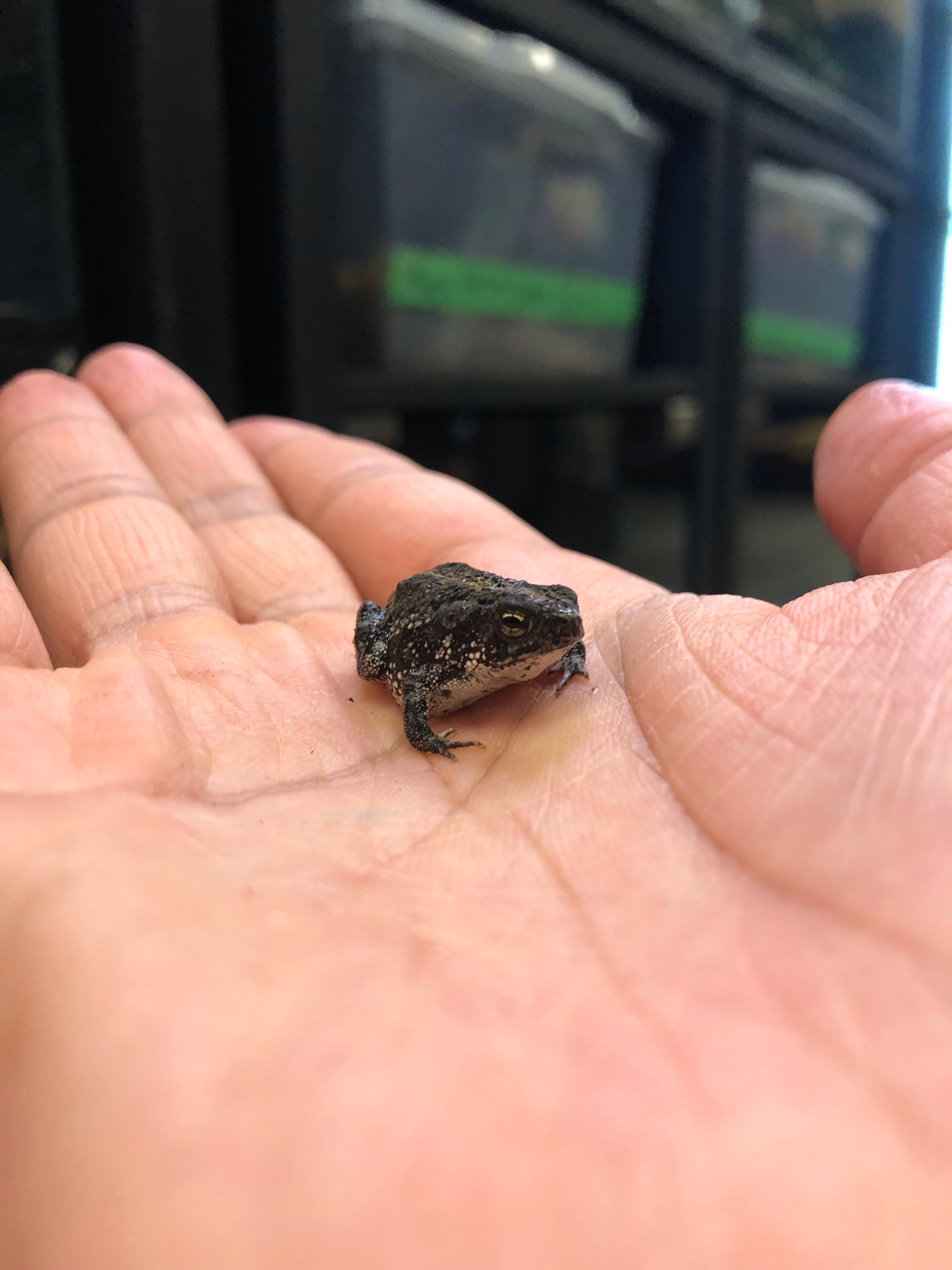
Appearance: The Oak Toad is a tiny, slender toad with a smooth to finely granular texture and a distinctive bright dorsal stripe that ranges from white to yellow or orange. The base colour varies from grey and brown to charcoal, often mottled with subtle darker markings. The parotoid glands are small and oval, and the limbs are slender and lightly patterned. The underside is pale and generally unmarked. Juveniles often appear darker with a more pronounced stripe. Despite their size, their markings are bold and instantly recognisable.
Distribution: Native to the southeastern United States, including Florida, Georgia, South Carolina, and parts of Alabama and Mississippi. They are strongly tied to sandy, pine-dominated ecosystems.
Habitat: Wild populations inhabit longleaf pine forests, sandhills, scrubby flatwoods, and open sandy areas with seasonal wetlands. They prefer loose, sandy soil for burrowing and rely on temporary rain pools for breeding. In captivity, they require soft, diggable substrate, strong ventilation, and moderate humidity.
Behaviour: Primarily diurnal to crepuscular, Oak Toads are unusually active during the day compared to many toad species. They are quick, alert, and highly fossorial, disappearing into sand rapidly when disturbed. They are solitary and possess a distinctive high-pitched chirping call during breeding seasons.
Captive Care
Enclosure: Due to their very small size, a single adult or small group can be comfortably housed in a 24 × 18 × 18 inches (60 × 45 × 45 cm) enclosure. Provide deep, soft sand mixed with soil or coconut fibre to allow natural burrowing. Add leaf litter, small cork flats, and low plants to create secure hiding areas. Ensure décor is scaled appropriately for such small animals.
Temperature and Humidity:
Ambient temperature: 72 to 80°F (22 to 27°C)
Warm area: 82 to 84°F (28 to 29°C)
Night temperature: 65 to 70°F (18 to 21°C)
Humidity: 50 to 70%, with light misting. Provide partial drying through the day to match their natural sandy environment.
Lighting: Provide low-level UVB (2 to 5%) with gentle lighting. Maintain a consistent day and night cycle. Bright lights should be offset with shaded areas, as these toads may become stressed under intense exposure.
Diet: Offer very small prey such as fruit flies, pinhead crickets, springtails, small roaches, and tiny worms. Supplement prey with calcium and multivitamins. Juveniles require frequent feedings, while adults can be fed moderately several times per week.
Behaviour in Captivity: Oak Toads are shy but active when comfortable, especially during the day. They burrow readily and should be provided deep, soft substrate to prevent stress. Handling should be avoided due to their extremely small size and delicate skin.
Genetics Note
There are no recognised morphs for the Oak Toad. Natural variation occurs in dorsal stripe brightness, base colour tone, and spotting, but these differences represent normal population-level diversity rather than defined genetic morphs.