
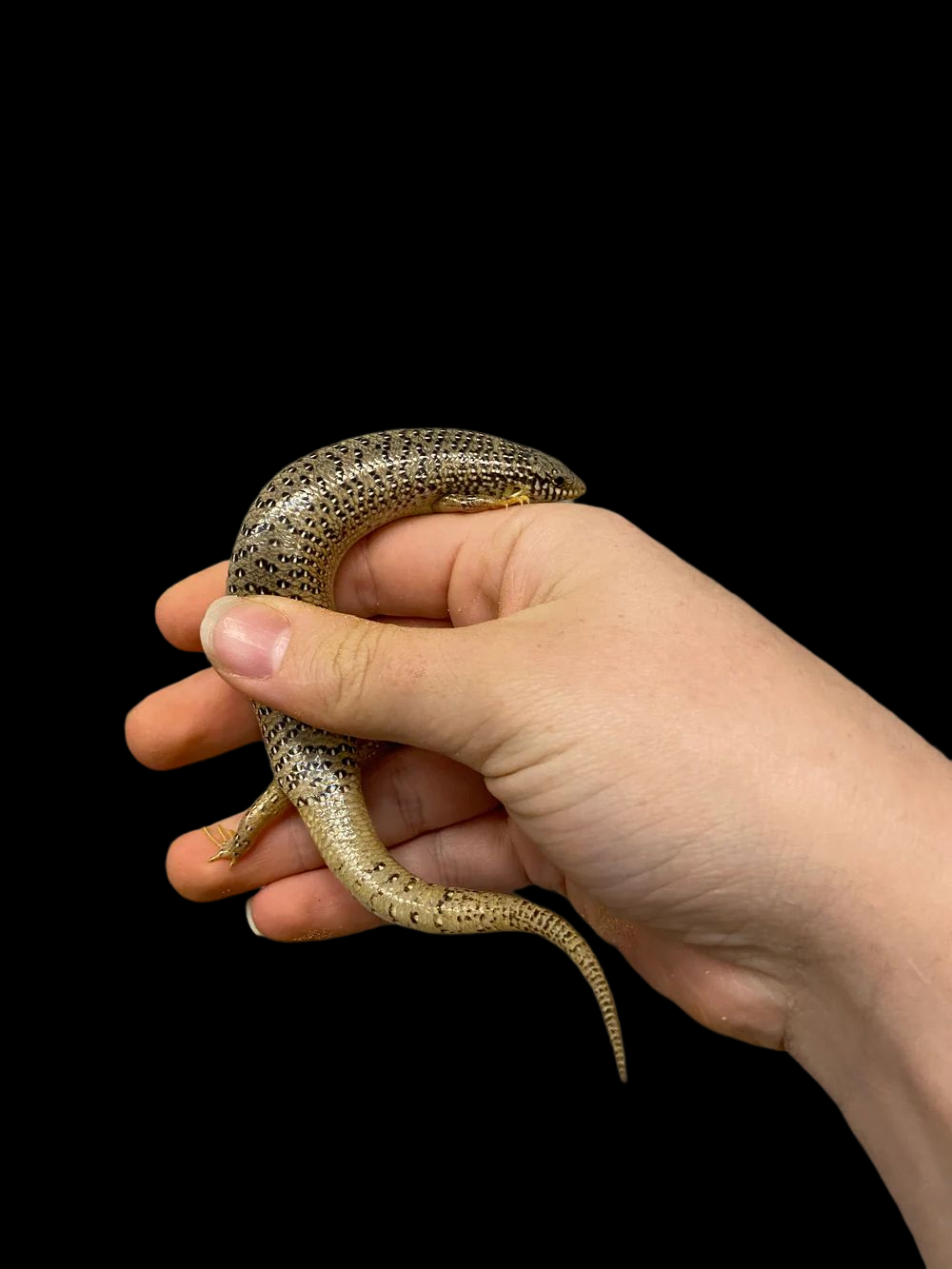
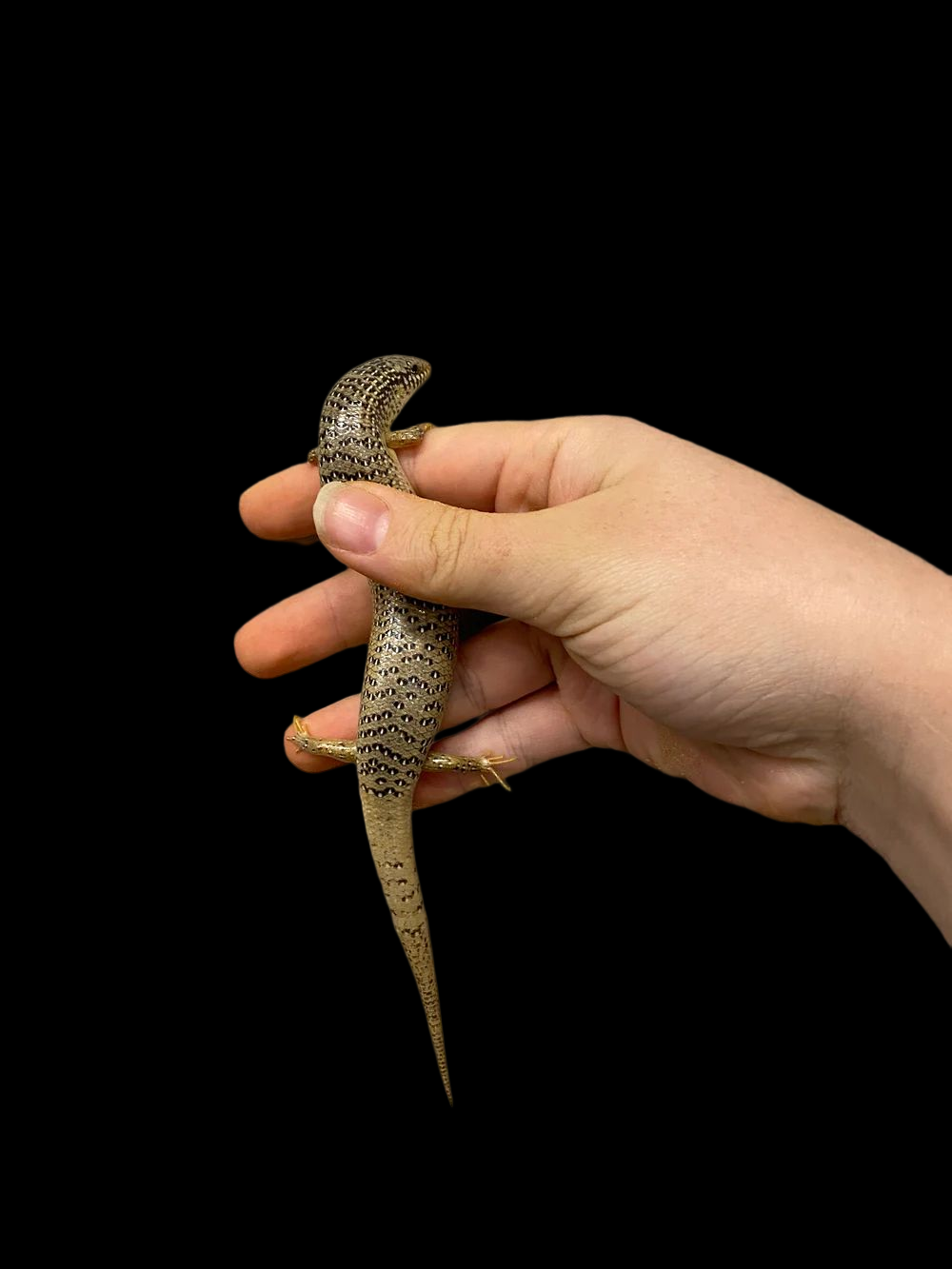
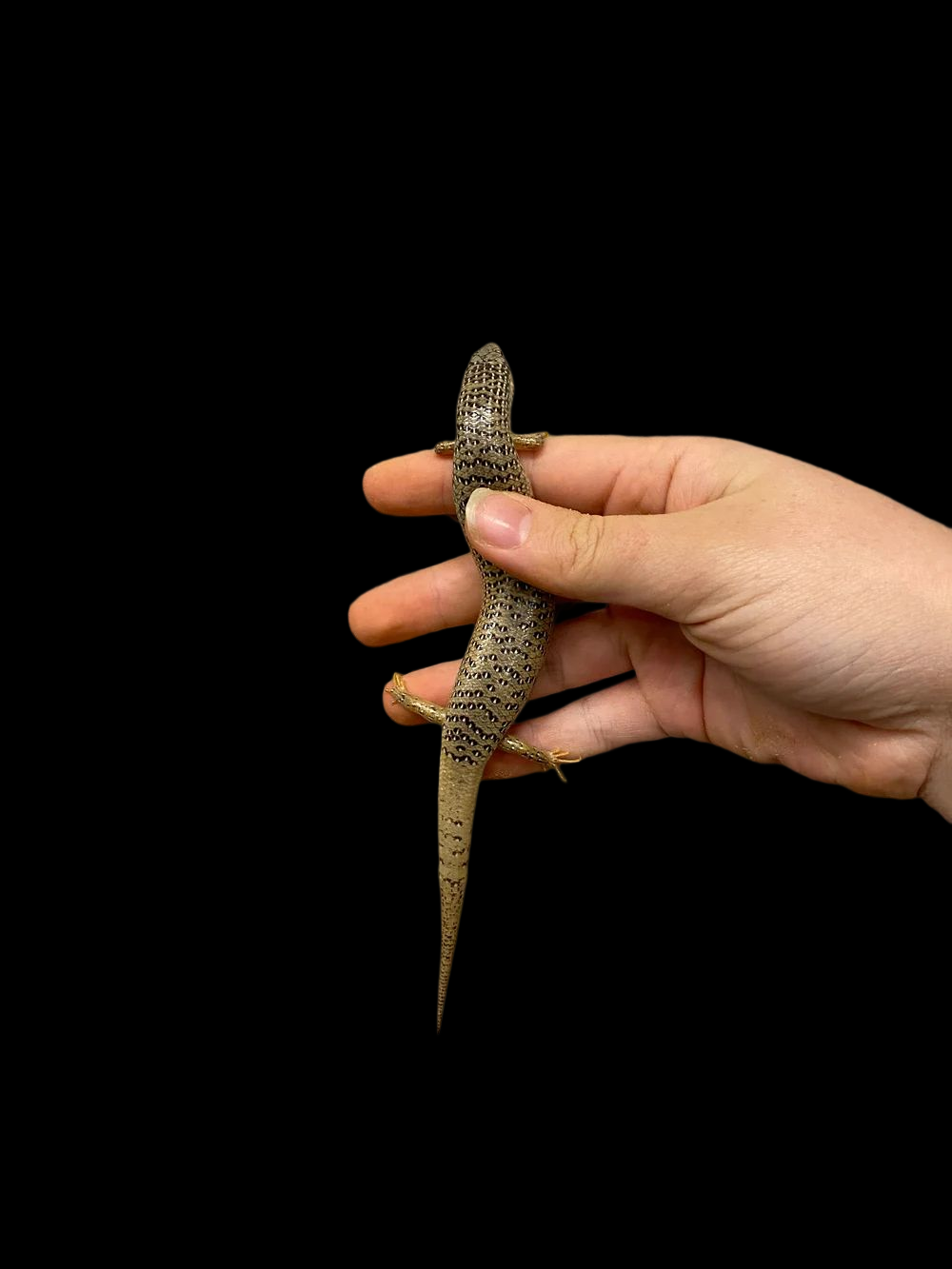


Photo Disclaimer
Description
Ocellated Skink
Scientific Name: Chalcides ocellatus
Common Name: Ocellated Skink, Eyed Skink
Species Overview
Size: Adults typically reach 8 to 12 inches (20 to 30 cm) in total length, with a smooth, streamlined body and relatively short limbs.
Appearance: The Ocellated Skink is named for its distinctive “eye spots” or ocelli—small dark-edged markings scattered along the flanks and back. Their coloration ranges from tan and sandy brown to olive or grey, often with subtle iridescence. The body is elongated and sleek, allowing them to move quickly through loose soil and vegetation. Their head is narrow, and the limbs, while short, are strong enough for digging and scrambling through ground cover.
Distribution: Found across North Africa, the Middle East, and parts of southern Europe, including Italy, Greece, and Malta.
Habitat: This species inhabits dry grasslands, coastal scrub, rocky plains, agricultural margins, and sandy or loose-soil environments. They prefer warm, open habitats with scattered vegetation and ample hiding places under rocks, logs, or debris.
Behaviour: Ocellated Skinks are diurnal, ground-dwelling, and fast-moving. They are alert and quick to retreat when disturbed, often diving into loose substrate. Their diet consists of insects, small invertebrates, and occasional plant matter. They are generally shy but may become bolder with consistent, gentle husbandry.
Captive Care
Enclosure: Provide a terrestrial enclosure at least 36 × 18 × 18 inches (90 × 45 × 45 cm) for a small group or an adult. This footprint supports their active, ground-based behaviour. Use deep, diggable substrate and provide numerous hides, rock piles, cork flats, and low branches. A larger 4 × 2 × 2 feet (120 × 60 × 60 cm) enclosure can be used when keeping multiple individuals.
Temperature and Humidity:
Basking area: 95 to 105°F (35 to 41°C)
Ambient daytime temperature: 78 to 85°F (26 to 29°C)
Cool side: 72 to 75°F (22 to 24°C)
Night temperatures: 65 to 72°F (18 to 22°C)
Humidity should remain low to moderate, around 30 to 50 percent, with a humid hide available for shedding.
Lighting: Provide full-spectrum lighting with moderate UVB (5 to 10 percent). Bright lighting encourages natural foraging and basking behaviour.
Diet: Feed a varied insectivorous diet including crickets, roaches, mealworms, black soldier fly larvae, small snails, and silkworms. Offer chopped vegetables, flowers, or soft fruits sparingly. Supplement with calcium frequently and multivitamins weekly.
Behaviour in Captivity: Ocellated Skinks are lively, alert reptiles that thrive in naturalistic setups. They enjoy digging, foraging, and exploring ground-level structure. Handling should be minimal—they are fast, slippery, and prone to stress when restrained. With proper care, they display active and inquisitive behaviour.
Special Considerations:
• Provide deep, loose substrate such as soil–sand blends to support digging.
• Ensure numerous low hides—they rely heavily on ground cover for security.
• These skinks are agile and can escape small openings—ensure tight-fitting lids.
• Best kept as display animals due to their speed and low tolerance for handling.
Taxonomy Note
The Ocellated Skink belongs to the genus Chalcides, a diverse group of smooth, often limb-reduced skinks adapted to sandy and rocky Mediterranean and North African habitats. Chalcides ocellatus is one of the most widespread and variable members of the group.
Genetics Note
No formally recognized morphs exist for this species. Natural variation includes differences in ocelli number and clarity, base colour shade, and pattern intensity across geographic populations. These differences reflect locality-based genetic diversity rather than selective breeding.