

Photo Disclaimer
Description
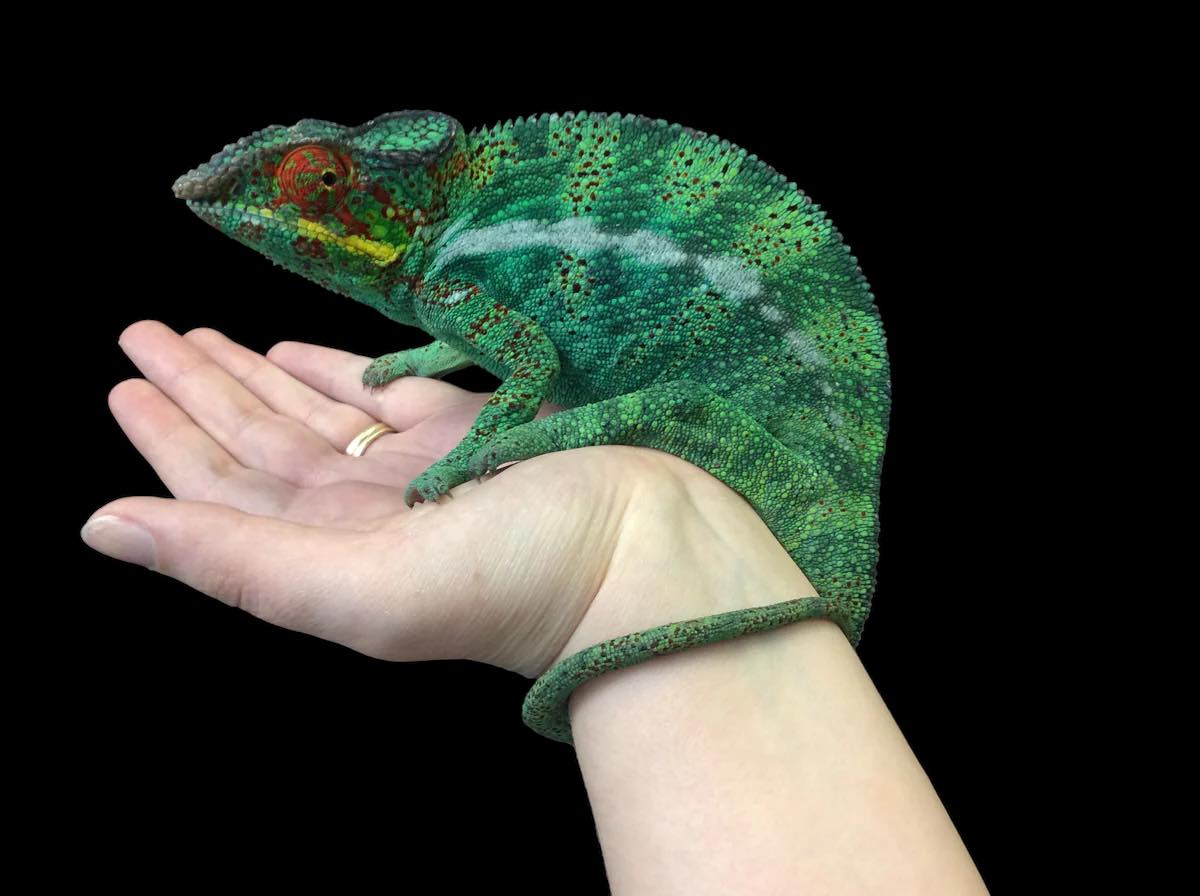
Panopher Chameleon (Nosy Faly)
Scientific Name: Furcifer pardalis
Common Name: Nosy Faly Panther Chameleon
Species Overview
Size: Males typically reach 14 to 20 inches (36 to 51 cm), while females average 10 to 14 inches (25 to 36 cm).
Appearance: The Nosy Faly Panther Chameleon is known for its crisp, icy colour palette and sharply defined contrasts. Males usually display white to pale blue bodies with bold dark blue or nearly black barring, often accented by turquoise highlights along the face, lips, and casque. Some individuals may show yellow tints or subtle red speckling depending on lineage. Females remain soft-toned in peach, tan, or light brown with faint patterning. This locale is prized for its clean, frosty aesthetic and distinctive barring consistency.
Distribution: Native to Nosy Faly, a small island off the northwest coast of Madagascar.
Habitat: Nosy Faly Panther Chameleons inhabit humid coastal forest edges, shrubs, and low-to-mid canopy vegetation. Their island environment provides dense foliage, fluctuating humidity, and strong sunlight exposure.
Behaviour: These chameleons are solitary and territorial, communicating through pronounced colour changes. Males display sharply intensified colours during territorial interactions or courtship. They hunt visually, relying on depth perception and rapid tongue projection. Their movements are deliberate and rhythmic, helping them blend with shifting foliage.
Captive Care
Enclosure: Provide a vertically oriented enclosure at least 36 × 18 × 36 inches (90 × 45 × 90 cm) for one adult, with a larger 48 × 24 × 48 inches (120 × 60 × 120 cm) setup strongly recommended for enhanced climbing space, ventilation, and environmental stability. Use screen or hybrid enclosures. Fill the habitat with dense live plants, sturdy branches, cork sections, and secure horizontal perches arranged throughout the mid and upper levels to create a layered canopy that allows for natural movement, hiding, and thermoregulation.
Temperature and Humidity:
Basking area: 85 to 90°F (29 to 32°C)
Ambient daytime: 75 to 82°F (24 to 28°C)
Night temperatures: 65 to 72°F (18 to 22°C)
Humidity: 50 to 70%, achieved through regular misting cycles with natural rises and falls.
Lighting: Provide strong full-spectrum lighting, including a T5 HO UVB fixture in the 5 to 6% range. Additional plant lighting supports live foliage and helps maintain healthy daytime brightness.
Diet: Offer a varied insect diet including crickets, roaches, black soldier fly larvae, silkworms, hornworms, and occasional mealworms or superworms. Ensure feeders are well gut-loaded and supplement with calcium frequently and multivitamins weekly.
Behaviour in Captivity: Nosy Faly Panther Chameleons thrive in well-vegetated, hands-off enclosures. They show their most vibrant colours when secure and minimally stressed. Bright, frosty tones and high-contrast barring are most pronounced when the animal is confident and in good health.
Special Considerations:
• Maintain dense foliage for privacy and comfort.
• Allow humidity cycles rather than maintaining constant moisture.
• Avoid unnecessary handling.
• Ensure strong ventilation and drainage.
Taxonomy Note
The Panther Chameleon belongs to the family Chamaeleonidae. Nosy Faly is a small island locale known for producing some of the brightest white and blue tones seen within the species, making it one of the more recognizable regional variations.
Genetics Note
Nosy Faly is a locality form rather than a selective morph. Natural variation occurs within the locale, including differences in base whiteness, blue saturation, and bar intensity. Maintaining pure Nosy Faly lines requires breeding individuals exclusively from this locale, as cross-locale pairings produce mixed colouration not characteristic of Nosy Faly.