


Photo Disclaimer
Description
Peter’s Banded Skink
Scientific Name: Scincopus fasciatus
Common Name: Peter’s Banded Skink, Peters’ Banded Skink
Species Overview
Size: Adults typically reach 10 to 14 inches (25 to 36 cm) in total length, with thick bodies and short, powerful limbs.
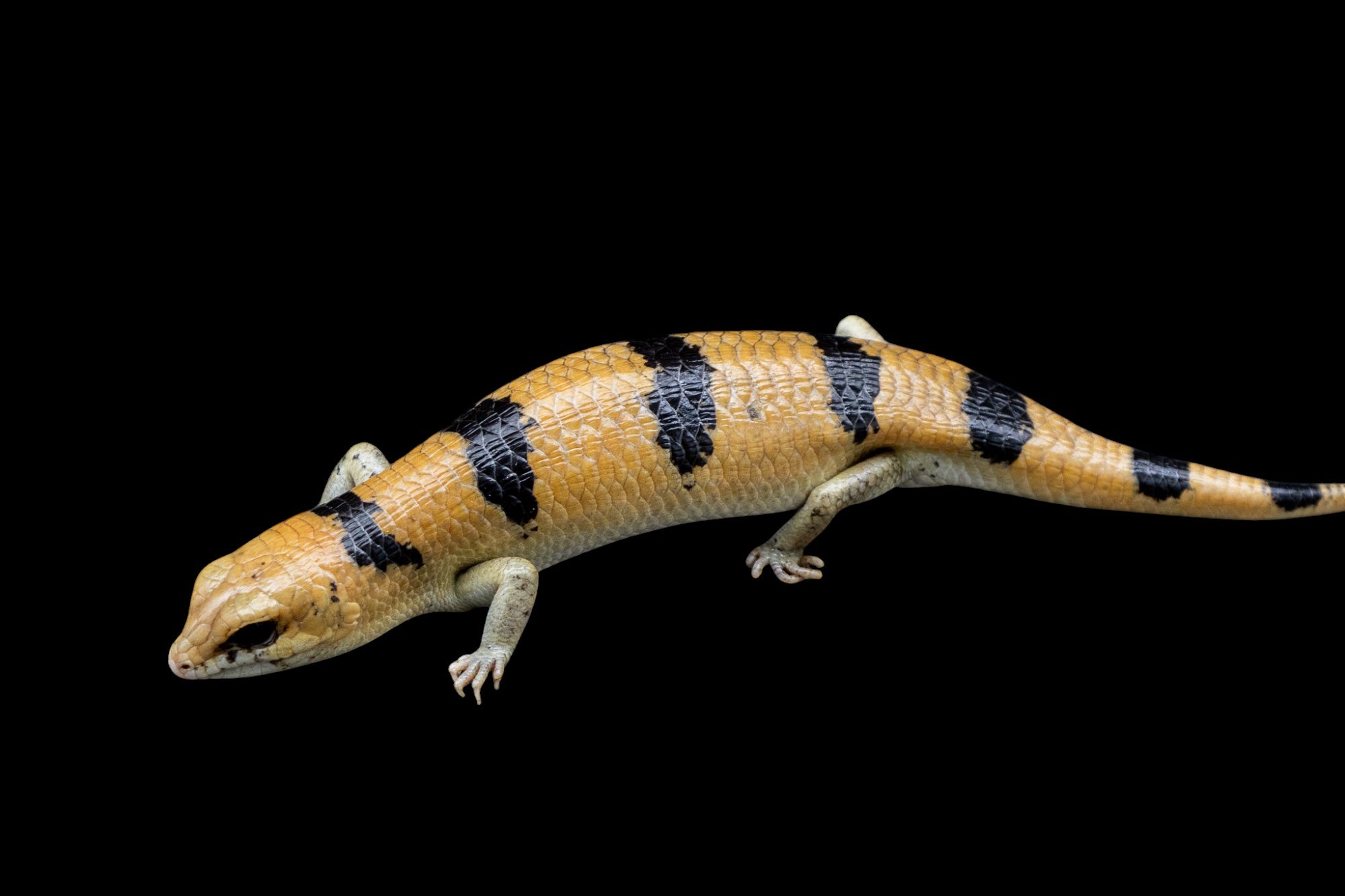
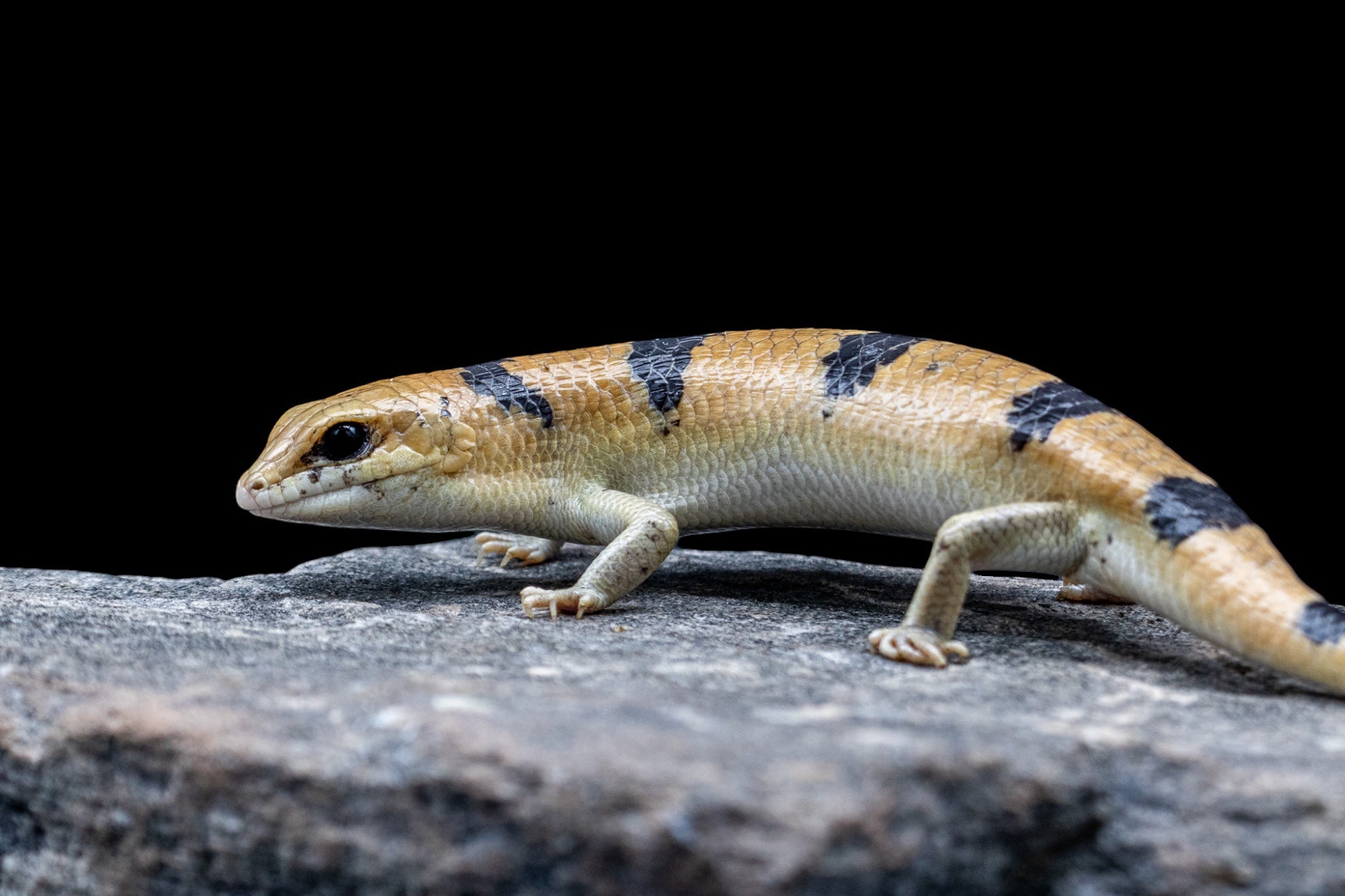
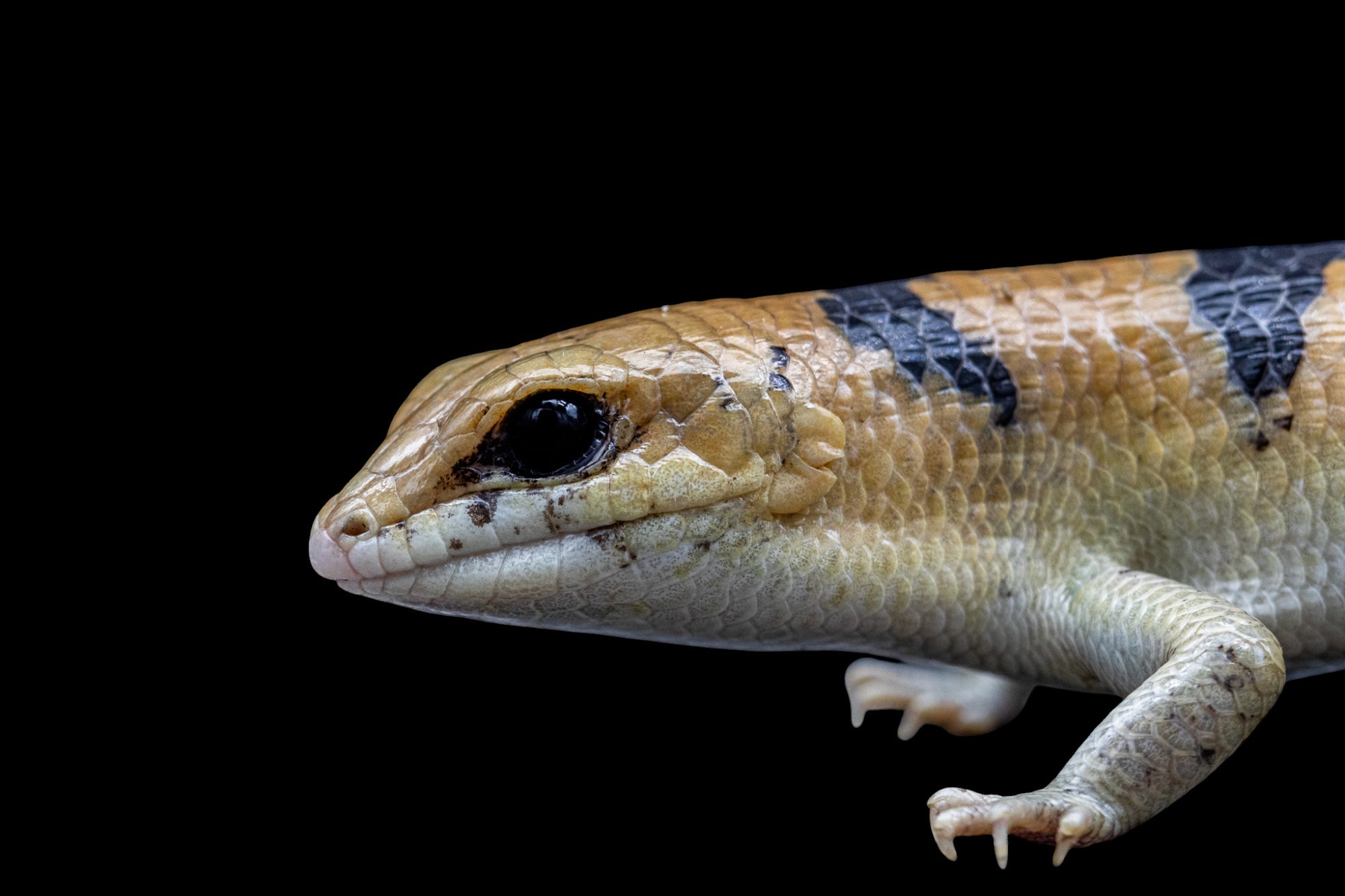
Appearance: Peter’s Banded Skinks are striking desert lizards with smooth, glossy scales and bold dark banding across a sandy yellow, tan, or golden base colour. Their bodies are stout and cylindrical, adapted for burrowing. The head is wedge-shaped, allowing them to push through loose sand. The tail is thick, rounded, and used for storing fat reserves. Their bright, contrasting pattern combined with their robust build gives them a distinctive, eye-catching appearance.
Distribution: Native to arid regions of North Africa, including Niger, Algeria, Mali, and surrounding Saharan zones.
Habitat: This species inhabits hot, dry deserts with sandy substrate, scattered rocks, and sparse vegetation. They spend much of their time buried beneath the sand, using it for temperature regulation, security, and ambush-style protection.
Behaviour: Peter’s Banded Skinks are crepuscular to diurnal depending on temperature, spending the hottest hours buried. They are generally shy but can become calm and confident with consistent care. They feed on insects, small invertebrates, and plant matter. Their burrowing behaviour is central to their lifestyle, and they often “swim” through soft sand with ease.
Captive Care
Enclosure: Provide a terrestrial enclosure at least 36 × 18 × 18 inches (90 × 45 × 45 cm) for one or two individuals, though a 4 × 2 × 2 feet (120 × 60 × 60 cm) enclosure offers ideal space for burrowing and movement. Use a deep soil–sand substrate mixture appropriate for arid species, allowing natural digging and burrowing while remaining dry on top. Furnish with flat rocks, stacked hides, cork, and desert-style décor, ensuring all heavy items are securely placed on the enclosure bottom to prevent collapse.
Temperature and Humidity:
Basking area: 110 to 120°F (43 to 49°C)
Warm side: 90 to 100°F (32 to 38°C)
Cool side: 75 to 85°F (24 to 29°C)
Night temperatures: 65 to 75°F (18 to 24°C)
Humidity: 20 to 40%, consistent with their natural desert conditions.
Lighting: Provide bright full-spectrum lighting with strong UVB (10 to 12%). Intense lighting supports normal basking behaviour and bone health.
Diet: Offer a varied diet of crickets, roaches, mealworms, superworms, black soldier fly larvae, and occasional plant matter such as leafy greens and vegetables. Supplement with calcium frequently and multivitamins weekly. Younger skinks require more insects, while adults can take more plant material.
Behaviour in Captivity: With proper care, Peter’s Banded Skinks become hardy, engaging display animals. They enjoy digging, burrowing, and bathing in warm light. Though often shy at first, they typically tolerate interaction once acclimated and may become quite personable over time.
Special Considerations:
• Deep substrate is essential for natural burrowing behaviour.
• Provide multiple hides to reduce stress.
• Maintain low humidity to avoid respiratory issues.
• Ensure enrichment through rocks, tunnels, and varied terrain.
Taxonomy Note
Peter’s Banded Skinks belong to the genus Scincopus, a small group of desert-adapted skinks from the Sahara region. Their smooth scales and burrowing behaviour reflect their specialization for living in hot, sandy environments.
Genetics Note
There are no recognised morphs for Scincopus fasciatus. Natural differences in band sharpness, colour tone, and intensity occur across individuals and localities, representing typical variation rather than selective breeding traits.