

Photo Disclaimer
Description
Pied Pectinata
Scientific Name: Ctenosaura pectinata
Common Name: Pied Western Spiny-tailed Iguana, Pied Pectinata
Species Overview
Size: Adults typically reach 3 to 4 feet (91 to 122 cm) in total length, with males developing heavier heads, larger femoral pores, and more pronounced dorsal spines.
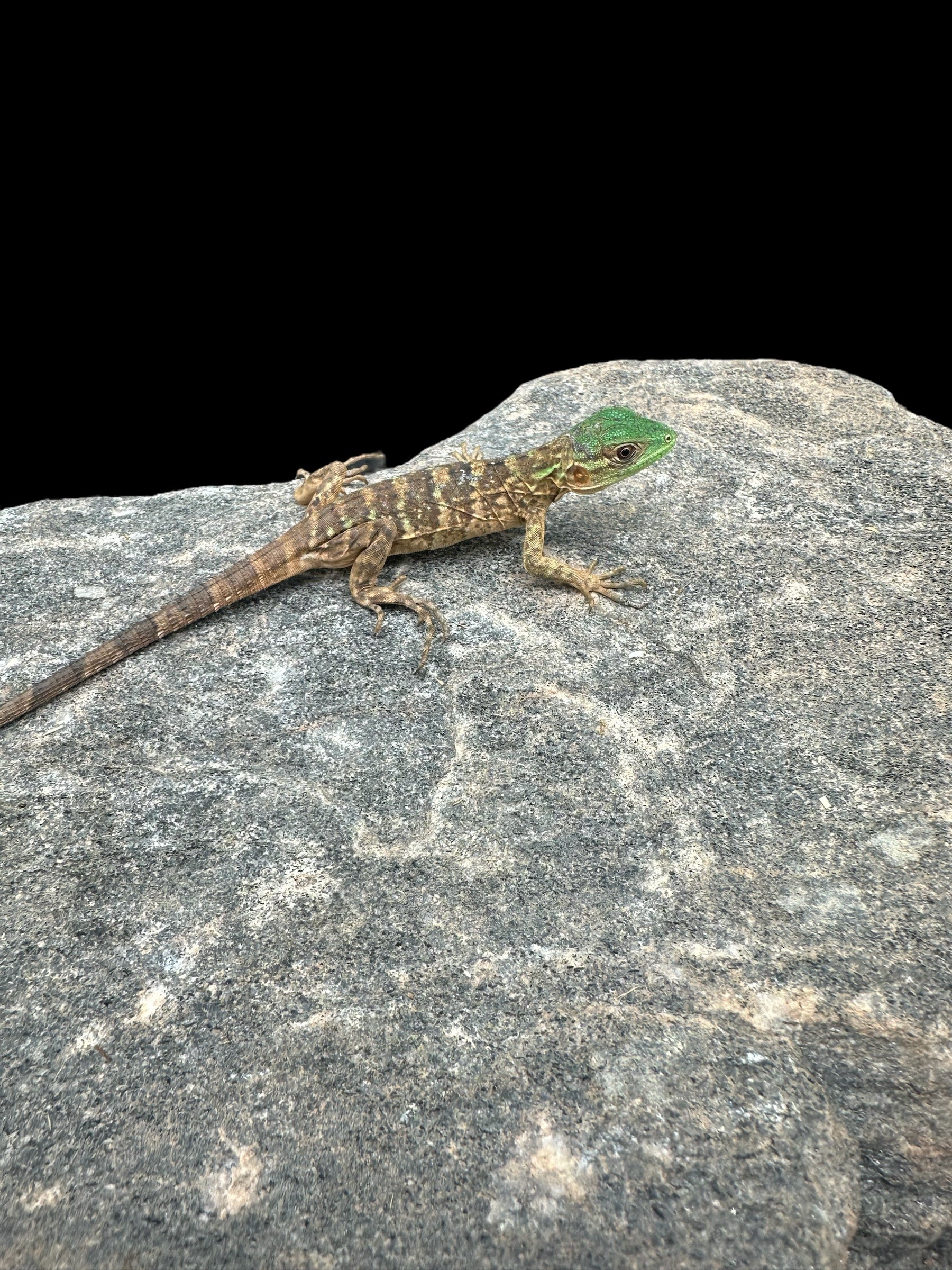
Appearance: The Pied Pectinata is a colour morph of the Western Spiny-tailed Iguana characterised by irregular patches of white or cream contrasting against the natural dark grey, black, or brown base. These pied areas may appear as blotches, broken pattern segments, or extensive white regions depending on the individual. The species retains its rugged, keeled scales, strong tail rings, and sharply pointed dorsal crest. Males may display faint blue or green tones during breeding season, while females generally remain more muted.
Distribution: The species Ctenosaura pectinata is native to western Mexico, inhabiting dry forests, rocky canyons, scrublands, and coastal regions. The pied patterning occurs only in captive populations and is not known as a natural locality form.
Habitat: In the wild, these iguanas occupy arid to semi-arid environments with abundant rock piles, hollow logs, cliffs, and scrub vegetation. They use their muscular tails for defence and rely on crevices for shelter. High heat, strong sunlight, and dry conditions define their native habitat.
Behaviour: Western Spiny-tailed Iguanas are diurnal, fast, and highly alert. They bask openly but retreat quickly when threatened. They are strong climbers and runners, feeding on a mix of vegetation, flowers, fruits, and insects. Captive-bred pied individuals may be calmer but still retain the species’ naturally wary temperament.
Captive Care
Enclosure: Provide a large terrestrial enclosure at least 6 × 3 × 4 feet (180 × 90 × 120 cm) for one adult, with larger custom builds strongly recommended. These iguanas are extremely active and require horizontal space for running as well as climbing opportunities. Furnish with rocky ledges, cork, thick branches, sturdy hides, and basking shelves. A deep soil–sand mixture is appropriate for this arid species, remaining dry on top while supporting natural digging behaviour.
Temperature and Humidity:
Basking area: 115 to 125°F (46 to 52°C)
Warm side: 95 to 105°F (35 to 40°C)
Cool side: 75 to 85°F (24 to 29°C)
Night temperatures: 68 to 75°F (20 to 24°C)
Humidity: 20 to 40%, reflecting their naturally dry environment.
Lighting: Provide bright full-spectrum lighting with strong UVB (10 to 12%). High-intensity light is essential for calcium metabolism, basking behaviour, and the species’ overall vigour.
Diet: Offer a primarily herbivorous diet including dark leafy greens, squash, flowers, cactus pads, and a rotation of vegetables. Insects such as roaches or crickets can be offered sparingly, especially for juveniles. Supplement routinely with calcium and provide multivitamins weekly.
Behaviour in Captivity: Pied Pectinatas are active, powerful display animals. They may become accustomed to keepers with time but generally prefer minimal handling. When provided proper space and enrichment, they show alert basking behaviour, strong feeding responses, and impressive athleticism.
Special Considerations:
• Provide a secure enclosure—this species is fast, strong, and can climb effectively.
• Ensure multiple basking platforms for thermoregulation.
• Maintain low humidity to prevent respiratory issues.
• Offer enrichment such as logs, elevated shelves, and sturdy climbing structures.
Taxonomy Note
The Pied Pectinata is a colour morph of the Western Spiny-tailed Iguana, Ctenosaura pectinata, a species well known for its speed, desert adaptations, and powerful tail. The pied trait arises in captive-bred lines and does not reflect a wild locality variant.
Genetics Note
The “Pied” trait is a genetic colour morph characterised by patches of leucistic-type depigmentation. Expression varies widely from minimal white spotting to extensive pied patterning. This gene behaves independently of the species’ natural colour variation and is maintained through selective breeding. Natural genetic variation within the species includes differences in darker or lighter base tones and faint blues or greens during breeding season.