
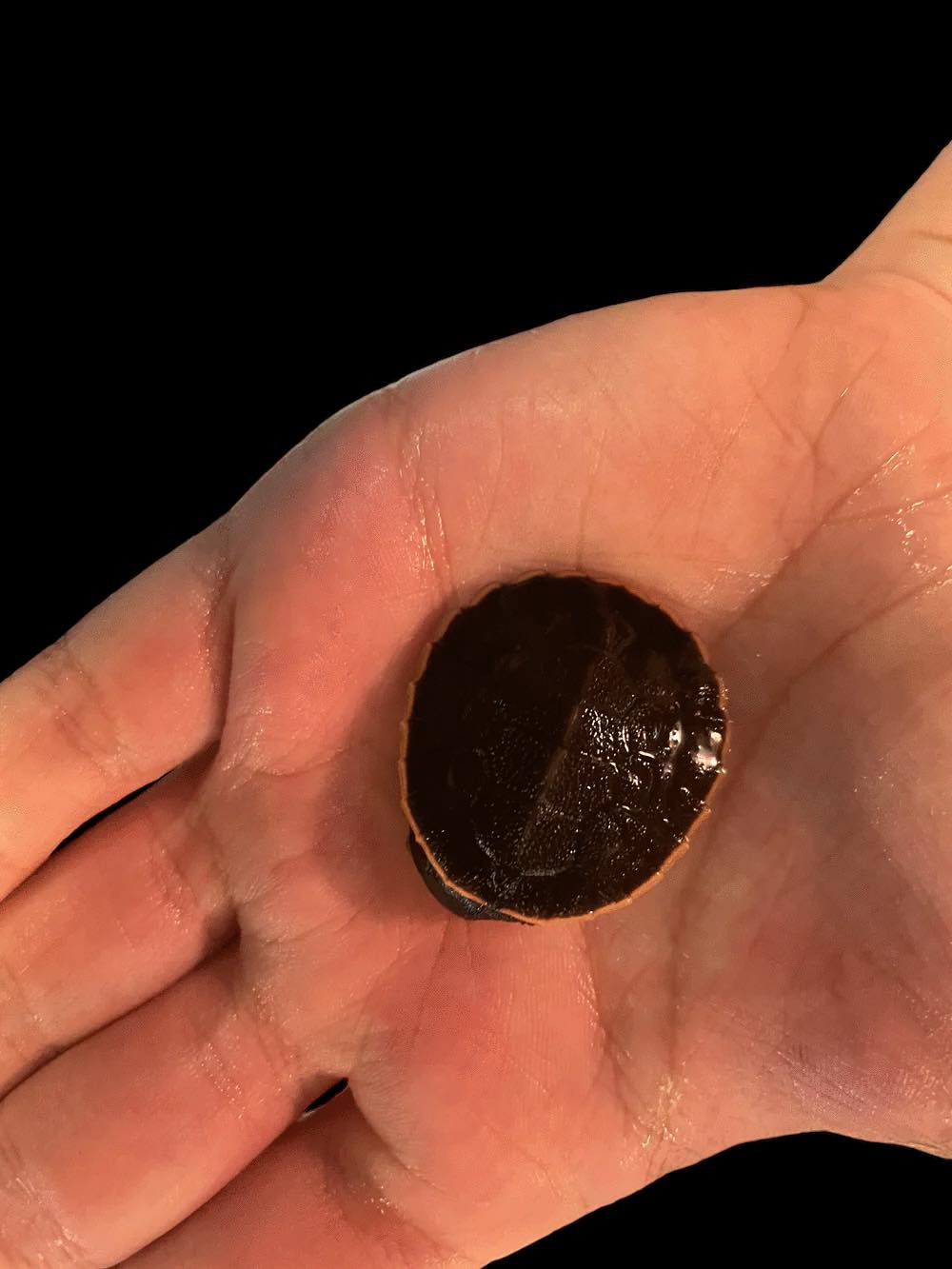
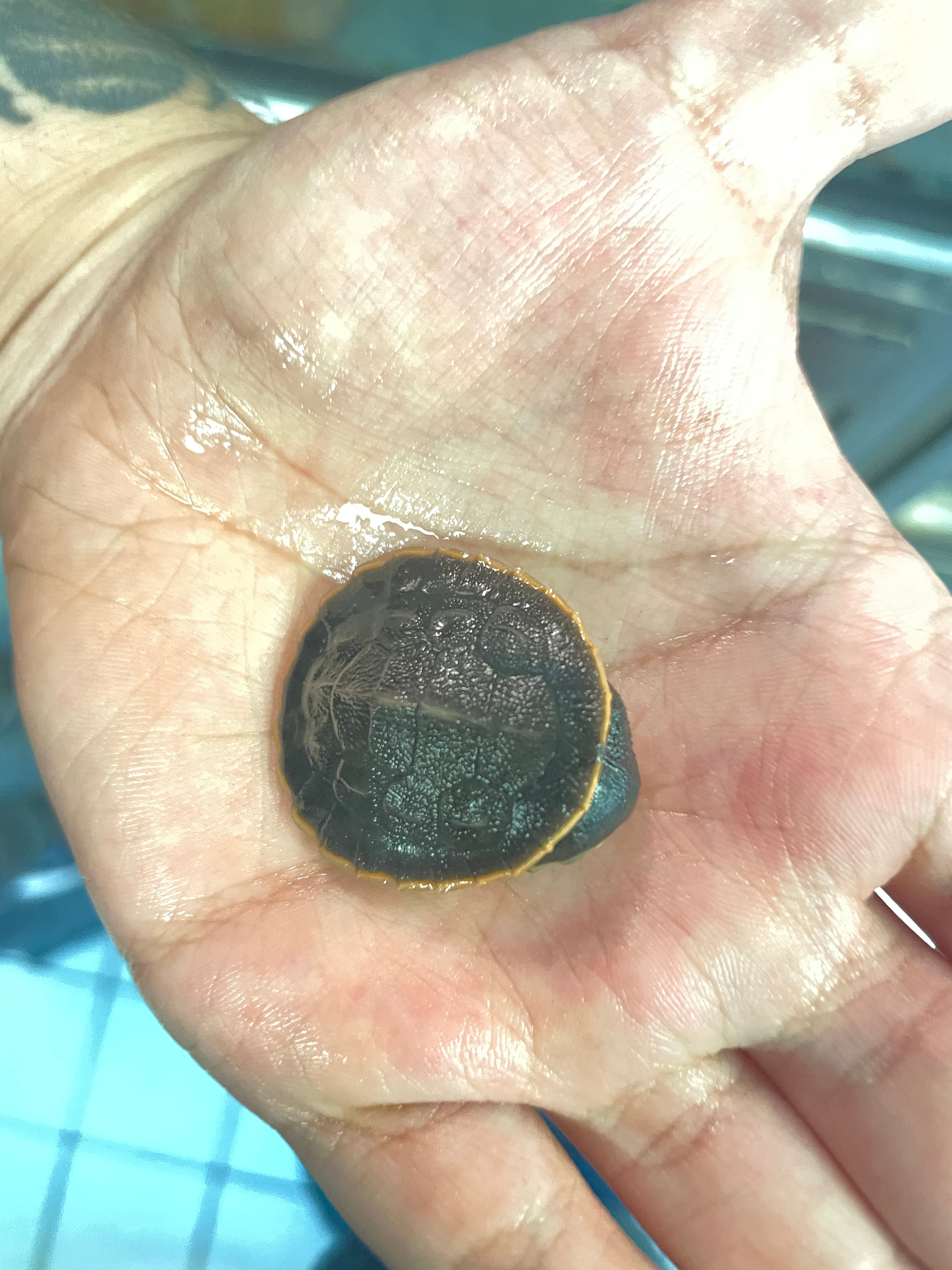


Photo Disclaimer
Description
Pink-bellied Side-necked Turtle
Scientific Name: Emydura subglobosa
Common Name: Pink-bellied Side-necked Turtle, Red-bellied Sideneck Turtle
Species Overview
Size: Males typically reach 5 to 6 inches (13 to 15 cm), while females grow larger at 7 to 9 inches (18 to 23 cm).
Appearance: The Pink-bellied Side-necked Turtle is known for its vibrant pink to reddish plastron that contrasts strikingly with its smooth olive, grey, or brown carapace. The limbs and neck often show red, orange, or salmon-coloured highlights, especially in juveniles and females. The head usually has fine striping or soft speckling, and like all side-necked turtles, it folds its head sideways under the shell rather than retracting it straight back. Females are noticeably broader and more robust, while males have longer tails and slimmer bodies.
Distribution: Native to Papua New Guinea and parts of northern Australia, where it inhabits tropical freshwater systems.
Habitat: In the wild, this species thrives in warm, slow-moving rivers, billabongs, swamps, and floodplain lagoons. These waters are often heavily vegetated and warm year-round. In captivity, they require a spacious aquatic environment with deep water, stable heat, and strong filtration.
Behaviour: Pink-bellied Side-necked Turtles are active, social, and strong swimmers. They bask regularly, explore submerged structure, and display curious, interactive behaviour. They are diurnal and remain highly alert to movement in their environment.
Captive Care
Enclosure: Provide an aquatic enclosure with a minimum footprint of 48 × 24 inches (120 × 60 cm) for one adult, offering deep water, submerged logs, driftwood, rocks, open swimming space, and a secure basking platform. This species appreciates warm, stable water conditions and benefits from dense aquatic plants or floating cover. Filtration must be powerful due to their high activity level.
Temperature and Humidity:
Water temperature: 78 to 82°F (26 to 28°C)
Basking area: 92 to 96°F (33 to 36°C)
Ambient air temperature: 80 to 86°F (27 to 30°C)
Lighting: Provide full-spectrum lighting with 10–12% UVB to support proper shell growth and metabolic health. Ensure the basking area is fully dry and easily accessible.
Diet: Offer a varied omnivorous diet consisting of insects, worms, crustaceans, small fish, high-quality aquatic turtle pellets, dark leafy greens, aquatic plants, and occasional fruits or vegetables. Juveniles require higher protein intake, while adults shift to a more balanced mix of animal and plant matter.
Behaviour in Captivity: These turtles are active, engaging, and often become confident with keepers. They swim energetically, bask frequently, and benefit from complex, enriched aquatic environments. Their social nature allows them to coexist with others of the same species when space permits.
Special Considerations
• Requires warm, clean water and strong filtration.
• Highly active swimmers—provide ample depth and open space.
• Juveniles need higher protein; adults require a balanced diet.
• Provide both basking zones and submerged hiding places.
Taxonomy Note
Emydura subglobosa is part of the Australian and New Guinea side-necked turtle group within the family Chelidae. This species is known for its distinctive red or pink ventral colouring, which is especially vivid in juveniles.
Genetics Note
There are no recognised morphs for the Pink-bellied Side-necked Turtle. Differences in plastron colour intensity, red tones, and shell shade occur naturally and vary with age, sex, and locality rather than selective breeding.