



Photo Disclaimer
Description
Red Eye Crocodile Skink
Scientific Name: Tribolonotus gracilis
Common Name: Red Eye Crocodile Skink, Red-Eyed Crocodile Skink
Species Overview
Size: Adults typically reach 8 to 10 inches (20 to 25 cm) in total length.
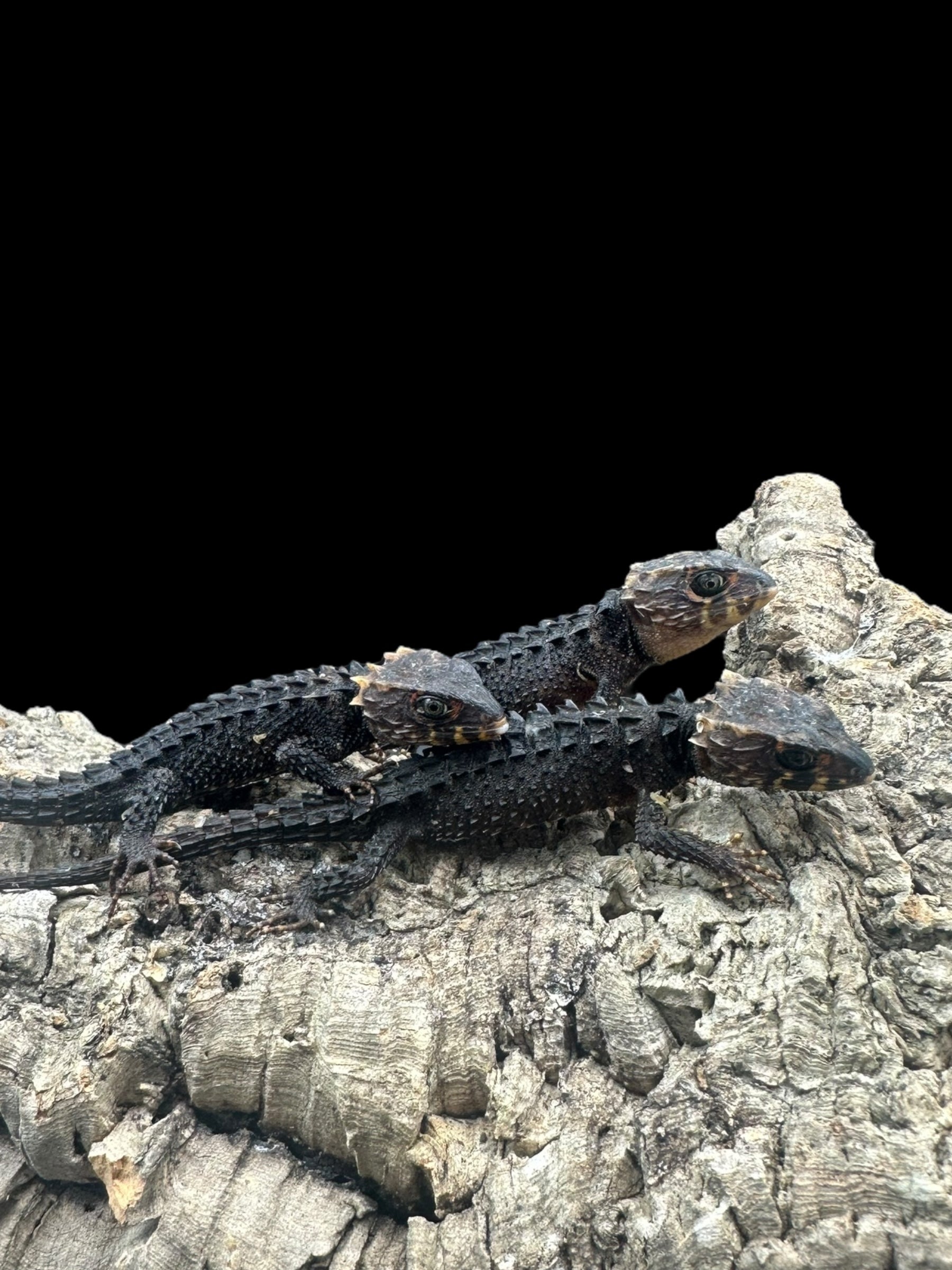
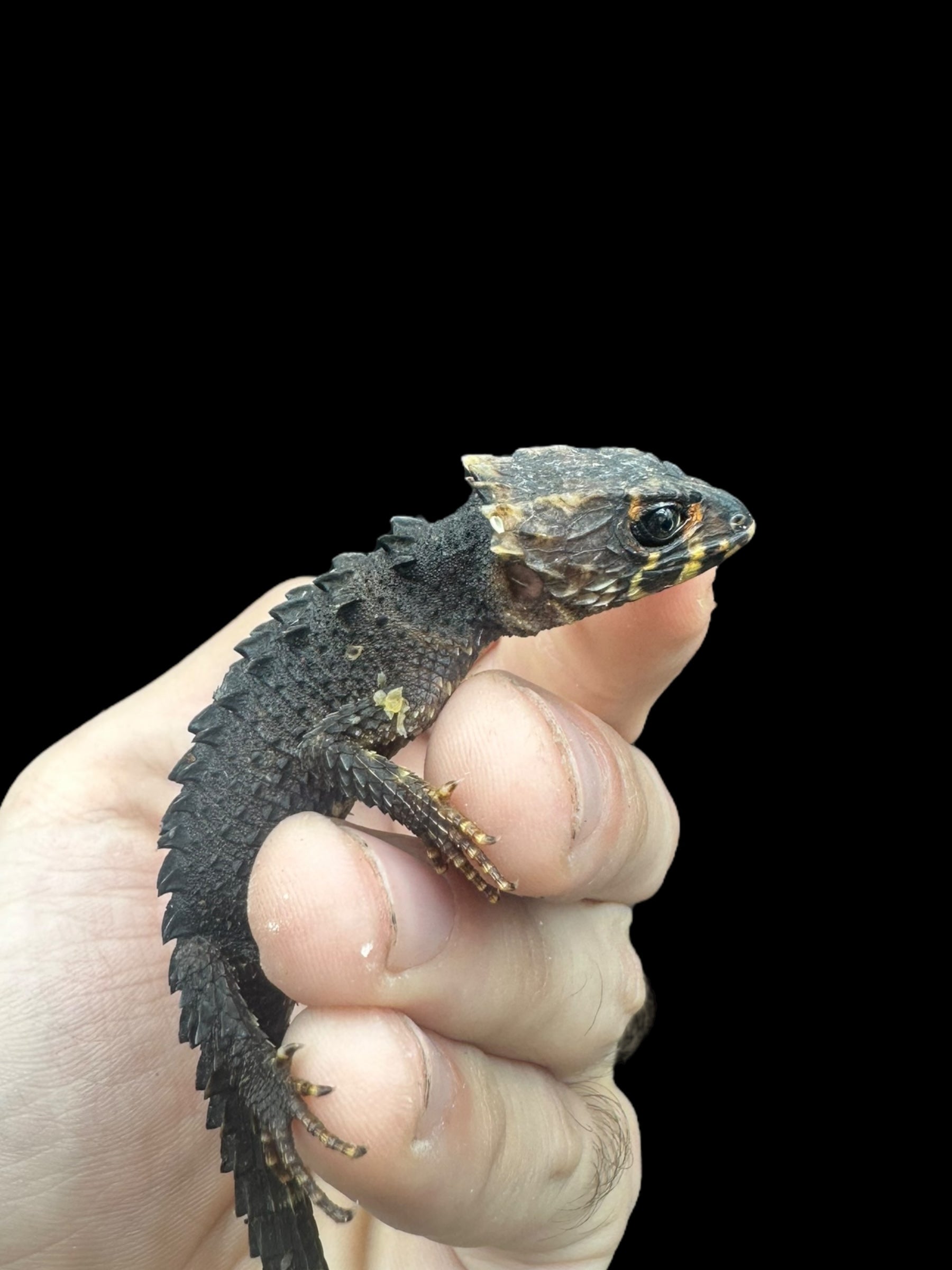
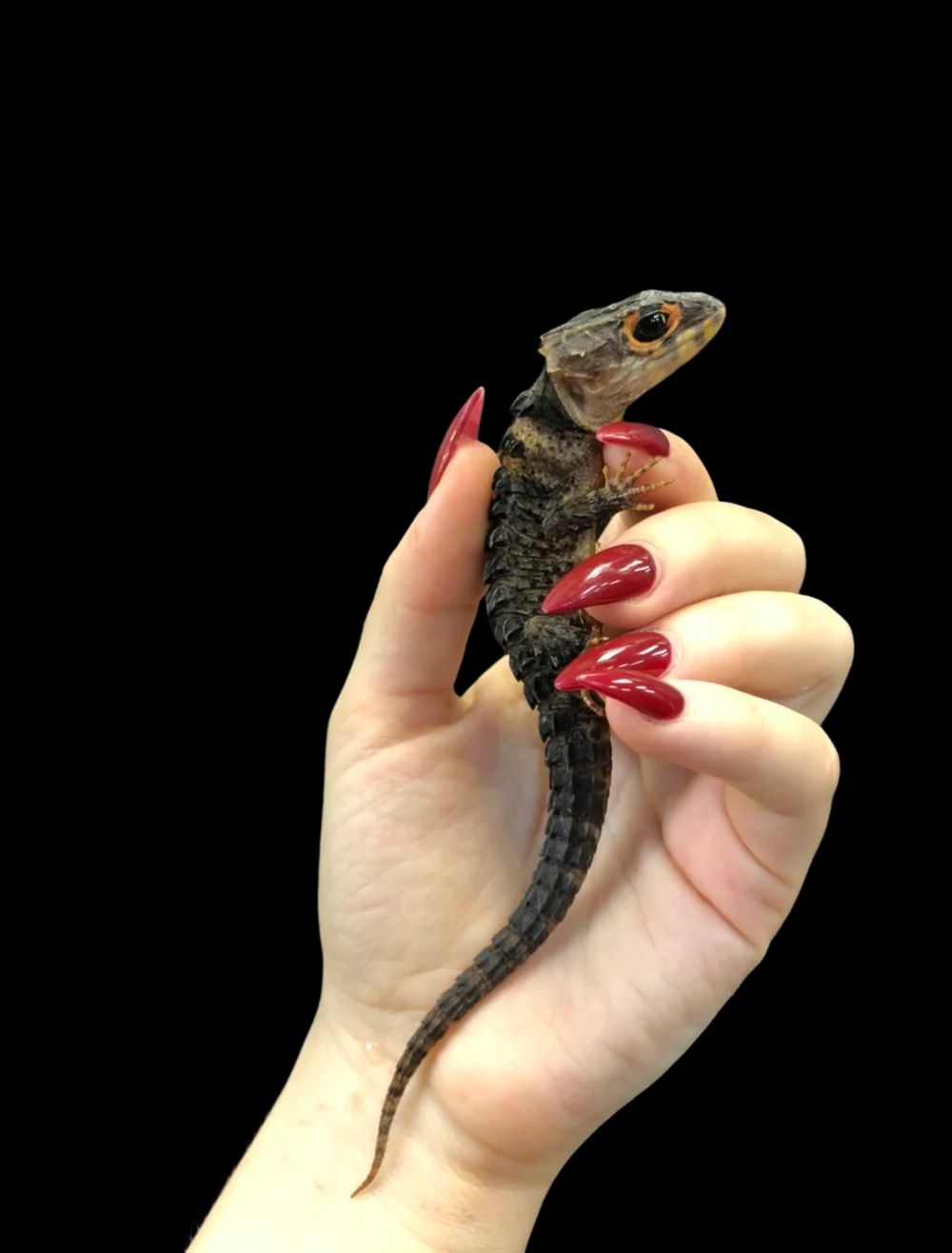
Appearance: This species has a distinctive crocodile-like appearance with heavily keeled dorsal scales and a dramatic orange or red ring encircling each eye. The body is dark brown to nearly black with an armour-plated texture. Their head is wedge-shaped, and the tail is stiff and spined. Their expressive look and unique behaviour make them a standout tropical species.
Distribution: Native to the southern lowland rainforests of New Guinea.
Habitat: Red Eye Crocodile Skinks inhabit cool, shaded rainforest floors with deep leaf litter, moss-covered logs, and high humidity. They favour areas near streams or dense vegetation where moisture remains stable.
Behaviour: They are crepuscular to nocturnal, shy, and highly secretive. Much of their time is spent hidden beneath logs or within dense ground cover. When threatened, they may freeze or “play dead.” Their movements are subtle, and they thrive best in quiet, low-light environments.
Captive Care
Enclosure: Provide an enclosure measuring 36 × 18 × 18 inches (90 × 45 × 45 cm) for a single adult. Furnish with deep soil-based tropical substrate, leaf litter, moss, cork, bark pieces, and live plants to create a cool forest-floor microhabitat. Ample hides and shaded areas are essential, as this species avoids bright, open spaces.
Temperature and Humidity:
Warm side: 75 to 80°F (24 to 27°C)
Cool side: 70 to 74°F (21 to 23°C)
Night temperatures: 68 to 72°F (20 to 22°C)
Humidity: 70 to 90%, supported by misting, thick substrate, and dense foliage.
Lighting: Provide low to moderate full-spectrum lighting with gentle UVB (approximately 5%). Avoid bright or harsh illumination—dim, filtered conditions mimic their natural habitat.
Diet: Offer crickets, roaches, earthworms, black soldier fly larvae, mealworms, and occasional snails or soft-bodied invertebrates. Ensure all feeders are gut-loaded and supplement with calcium frequently and multivitamins weekly.
Behaviour in Captivity: Red Eye Crocodile Skinks are shy, quiet reptiles that rarely tolerate handling. They flourish in heavily planted, humid enclosures with minimal disturbance. With proper care, they become visible during evening hours and display subtle, natural behaviours.
Special Considerations:
• Cohabitation should be approached with caution. Provide ample space, abundant hiding spots, and carefully monitor behaviour.
• Pairs are generally safest as one male with one female. Multiple males may display territorial behaviour.
• Maintain high humidity with good airflow to prevent mould and respiratory problems.
• Handling should be minimal and only when necessary.
Taxonomy Note
Tribolonotus gracilis belongs to a small genus of crocodile-like skinks known for their unique armour, distinct eye coloration, and defensive vocalizations. They are one of the most visually recognizable rainforest skinks.
Genetics Note
There are no recognised morphs for Tribolonotus gracilis. Natural variation includes slight differences in eye-ring brightness, dorsal tone, and body texture, all within normal species diversity.
Estimate shipping