


Photo Disclaimer
Description
Red-eyed Tree Frog
Scientific Name: Agalychnis callidryas
Common Name: Red-eyed Tree Frog
Species Overview
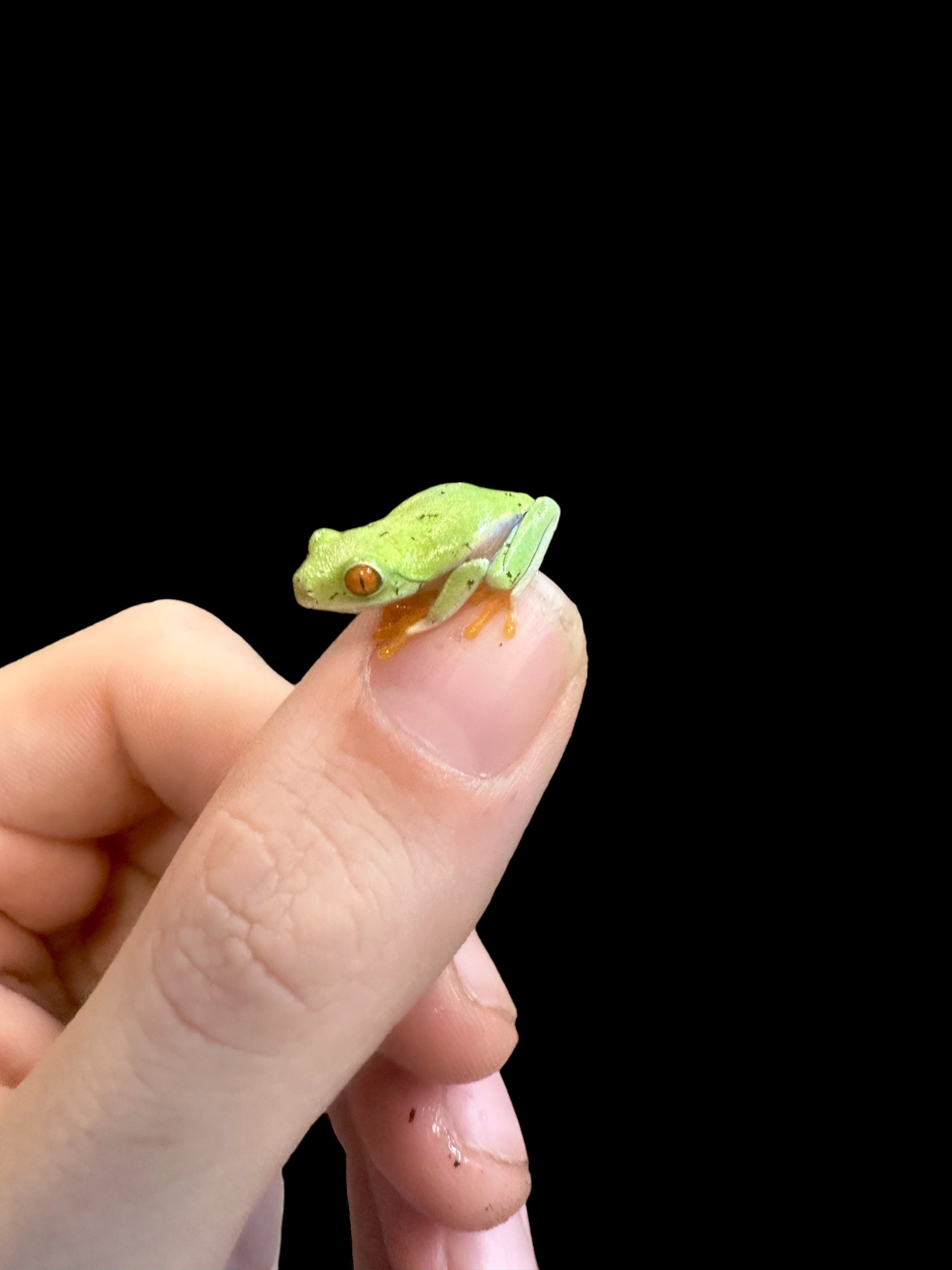
Size: Adults typically reach 2 to 3 inches (5 to 7.5 cm), with females slightly larger.
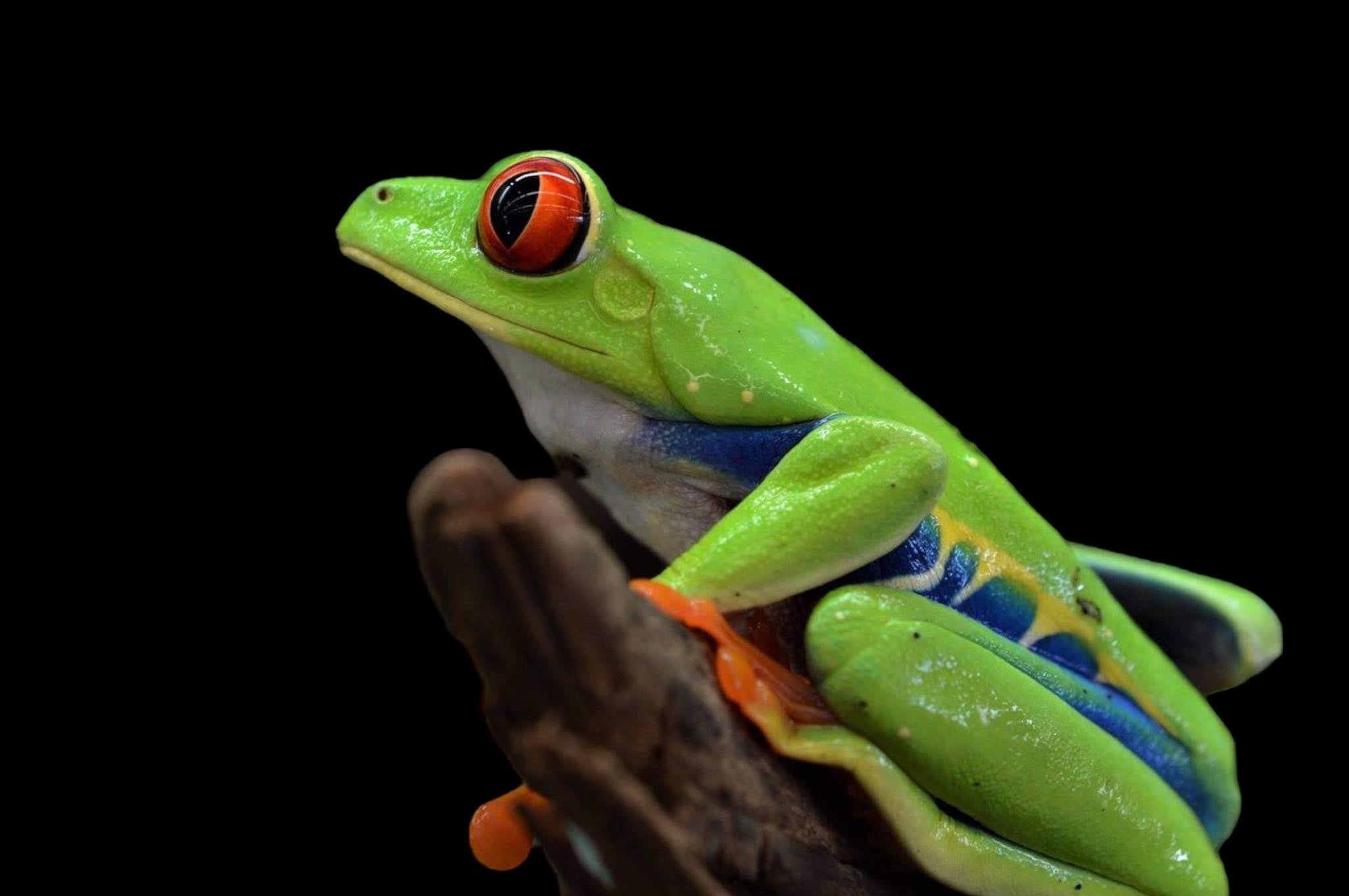
Appearance: The Red-eyed Tree Frog is one of the most iconic amphibians in the world, instantly recognisable by its vivid red eyes with vertical pupils. The dorsum is typically bright green, sometimes shifting to blue or brown depending on stress or temperature. The sides display striking blue and yellow vertical bars, while the toes are bright orange or red. The belly is pale, and the skin is smooth. Limbs are long and agile with large adhesive toe pads designed for climbing broad, smooth leaves.
Distribution: Native to Central America, including Mexico (southern regions), Belize, Guatemala, Honduras, Nicaragua, Costa Rica, and Panama.
Habitat: Wild individuals inhabit humid lowland and mid-elevation rainforests, especially near rivers, ponds, and temporary pools. They spend most of their lives in the canopy or mid-canopy, descending to lower vegetation primarily during breeding.
Behaviour: Nocturnal and highly arboreal, Red-eyed Tree Frogs are energetic climbers that rest during the day pressed against leaves with eyes closed and limbs tucked in to camouflage themselves. At night they become active hunters. Males produce soft, chuckling calls during the rainy season.
Captive Care
Enclosure: A single adult or small group thrives in an 18 × 18 × 24 inches (45 × 45 × 60 cm) enclosure, while larger groups benefit from a 24 × 18 × 24 inches (60 × 45 × 60 cm) setup. Provide tall branches, broad-leafed plants, cork flats, and dense foliage to replicate their arboreal habitat. Use a moisture-retentive substrate such as coco fibre, soil blends, or sphagnum mixes to maintain humidity while allowing partial drying periods. Include a wide, shallow water basin for hydration.
Temperature and Humidity:
Ambient temperature: 75 to 82°F (24 to 28°C)
Warm area: up to 84°F (29°C)
Night temperature: 70 to 74°F (21 to 23°C)
Humidity: 70 to 100%, maintained with regular misting and strong ventilation.
Lighting: Provide low to moderate UVB (2 to 5%) with bright, diffused lighting. Red-eyed Tree Frogs avoid direct light but benefit from a naturalistic day–night cycle.
Diet: Offer small to medium insects such as crickets, roaches, black soldier fly larvae, silkworms, and the occasional waxworm. Juveniles may also eat fruit flies. Supplement all prey with calcium and multivitamins.
Behaviour in Captivity: Red-eyed Tree Frogs adapt well to spacious, planted terrariums. They are active at night, climbing and hunting readily. Their defensive behaviour often includes flashing their bright red eyes to startle predators. Handling should be minimal due to their sensitive, permeable skin.
Special Considerations:
• If handling is unavoidable, use wet, powder-free gloves or a soft, damp net.
• Maintain strong airflow—stagnant, saturated air may cause health issues.
• Provide abundant broad leaves for resting, hiding, and nighttime perching.
• Avoid oversaturated substrates while maintaining high overall humidity.
• Use only dechlorinated or RO water for misting and hydration.
• Ensure secure enclosure access; they are strong jumpers and fast climbers.
Taxonomy Note
Agalychnis callidryas belongs to the family Phyllomedusidae, a group of arboreal leaf frogs known for bold coloration and climbing adaptations. It is closely related to species such as the Blue-sided Tree Frog (Agalychnis annae) but is distinguished by its bright red eyes and characteristic flank striping.
Genetics Note
There are no recognised morphs for Agalychnis callidryas. Natural variation occurs in side colour intensity, body hue, and spot patterns on the flanks, but none represent defined genetic morphs.