


Photo Disclaimer
Description
Red Saharan Uromastyx
Scientific Name: Uromastyx geyri
Common Name: Red Saharan Uromastyx, Geyr’s Uromastyx
Species Overview
Size: Adults typically reach 10 to 14 inches (25 to 36 cm) in total length, with males often slightly larger and more robust.
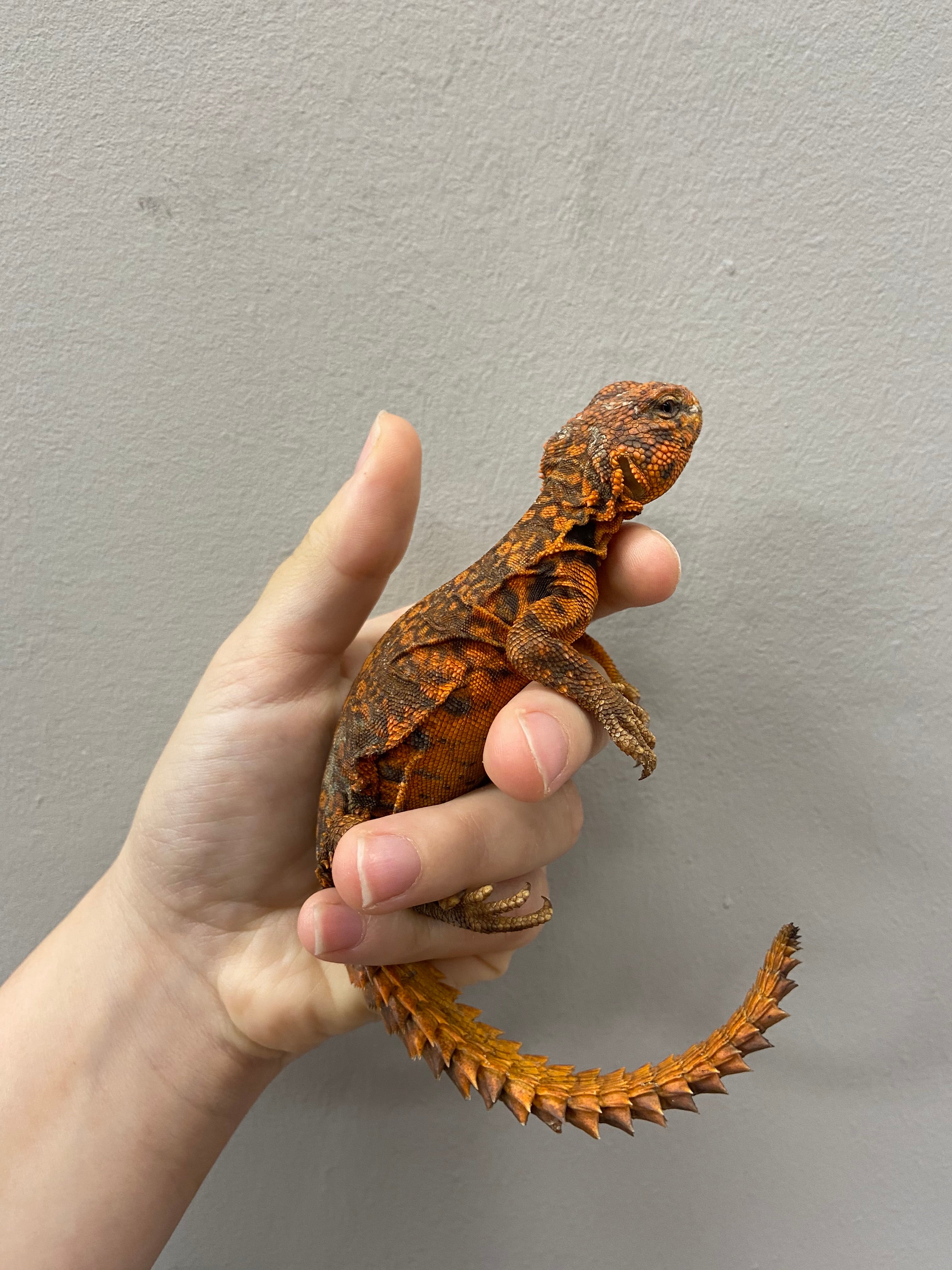
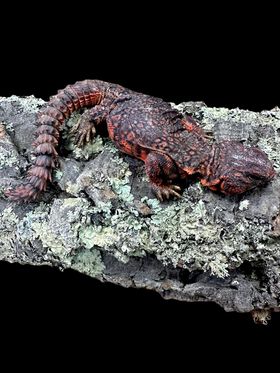
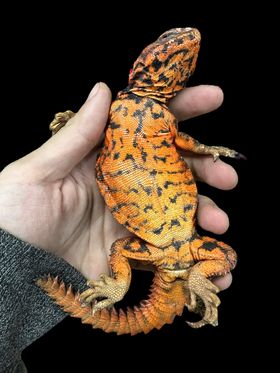
Appearance: The Red Saharan Uromastyx is one of the most vibrant uromastyx species, displaying intense shades of orange, red, and sometimes deep cherry or brick tones across the back. These colours contrast beautifully against a pale or sandy base. Females tend to be more muted, often with peach, rust, or soft orange markings. The body is sturdy with a wide head, thick limbs, and the characteristic spiny, heavily armoured tail typical of all uromastyx.
Distribution: Native to the central Sahara region, particularly Niger and Mali.
Habitat: This species inhabits rocky desert plateaus, dry wadis, and sun-exposed cliffs. Their environment is extremely hot, dry, and bright, with minimal vegetation. They shelter in burrows or rock crevices to escape intense midday heat and predators.
Behaviour: Red Saharan Uromastyx are diurnal, basking-intensive, and highly heat-tolerant. They spend much of their day basking, grazing, and retreating into burrows. They are typically calm and become bold in captivity, often approaching keepers for food. Their herbivorous diet and personable behaviour make them one of the more keeper-friendly desert reptiles.
Captive Care
Enclosure: Provide an enclosure at least 4 × 2 × 2 feet (120 × 60 × 60 cm) for a single adult. These lizards require significant floor space for grazing and basking. Furnish the habitat with rock ledges, secure basking shelves, caves, and stacked stone structures. Use a deep soil–sand substrate appropriate for arid species, remaining dry on top while supporting natural digging behaviour. Excellent ventilation is essential.
Temperature and Humidity:
Basking area: 120 to 135°F (49 to 57°C)
Warm side: 100 to 110°F (38 to 43°C)
Cool side: 80 to 90°F (27 to 32°C)
Night temperatures: 70 to 75°F (21 to 24°C)
Humidity: 10 to 30%, with a consistently dry environment.
Lighting: Provide very bright full-spectrum lighting with strong UVB (10 to 12%). Intense lighting is necessary for digestion, colour expression, and normal desert behaviour. Supplemental plant grow lights may be used to support edible greens grown in the enclosure.
Diet: Offer a strictly herbivorous diet consisting of dark leafy greens (collard, mustard, turnip, dandelion), squash, lentils, beans (cooked or sprouted), edible flowers, and occasional seeds. Avoid high-oxalate greens. Do not feed insects except rarely and only for juveniles. Supplement calcium routinely and provide multivitamins weekly.
Behaviour in Captivity: This species is generally calm, curious, and friendly. They thrive with regular routine, strong heat gradients, and ample grazing opportunities. They often become interactive display animals and show bright colours when well lit and healthy.
Special Considerations:
• Avoid feeding high-protein insect diets—this species is herbivorous.
• Provide multiple basking areas and secure rock ledges.
• Ensure extremely bright lighting and proper UVB exposure.
• Maintain a dry habitat; humidity higher than recommended can lead to respiratory issues.
• While generally tolerant of other uromastyx, cohabitation requires caution and ample space—monitor interactions closely.
Taxonomy Note
The Red Saharan Uromastyx belongs to the genus Uromastyx, a group of spiny-tailed lizards adapted to some of the hottest desert environments on Earth. Uromastyx geyri is especially prized for its bright coloration and manageable adult size.
Genetics Note
There are no formally recognised morphs for Uromastyx geyri, but colour intensity varies naturally across individuals and localities. Some lines produce deeper crimson or orange tones, while others display softer peach or apricot hues. These variations represent natural diversity rather than selective genetic morphs.