


Photo Disclaimer
Description
Red Tegu
Scientific Name: Salvator rufescens
Common Name: Red Tegu, Argentine Red Tegu
Species Overview
Size: Adults typically reach 3.5 to 4.5 feet (107 to 137 cm) in total length, with males becoming significantly bulkier than females.
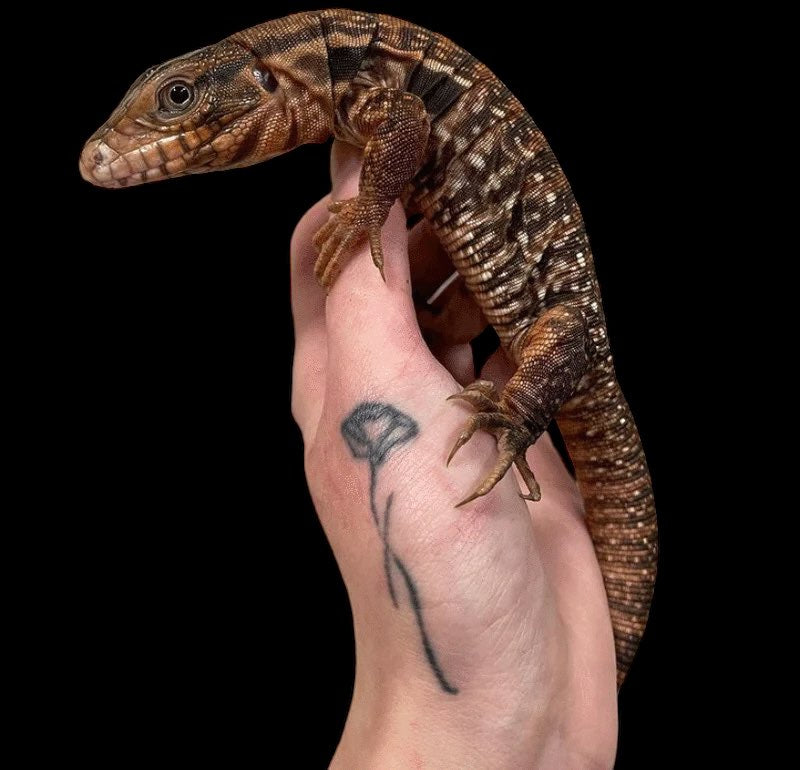
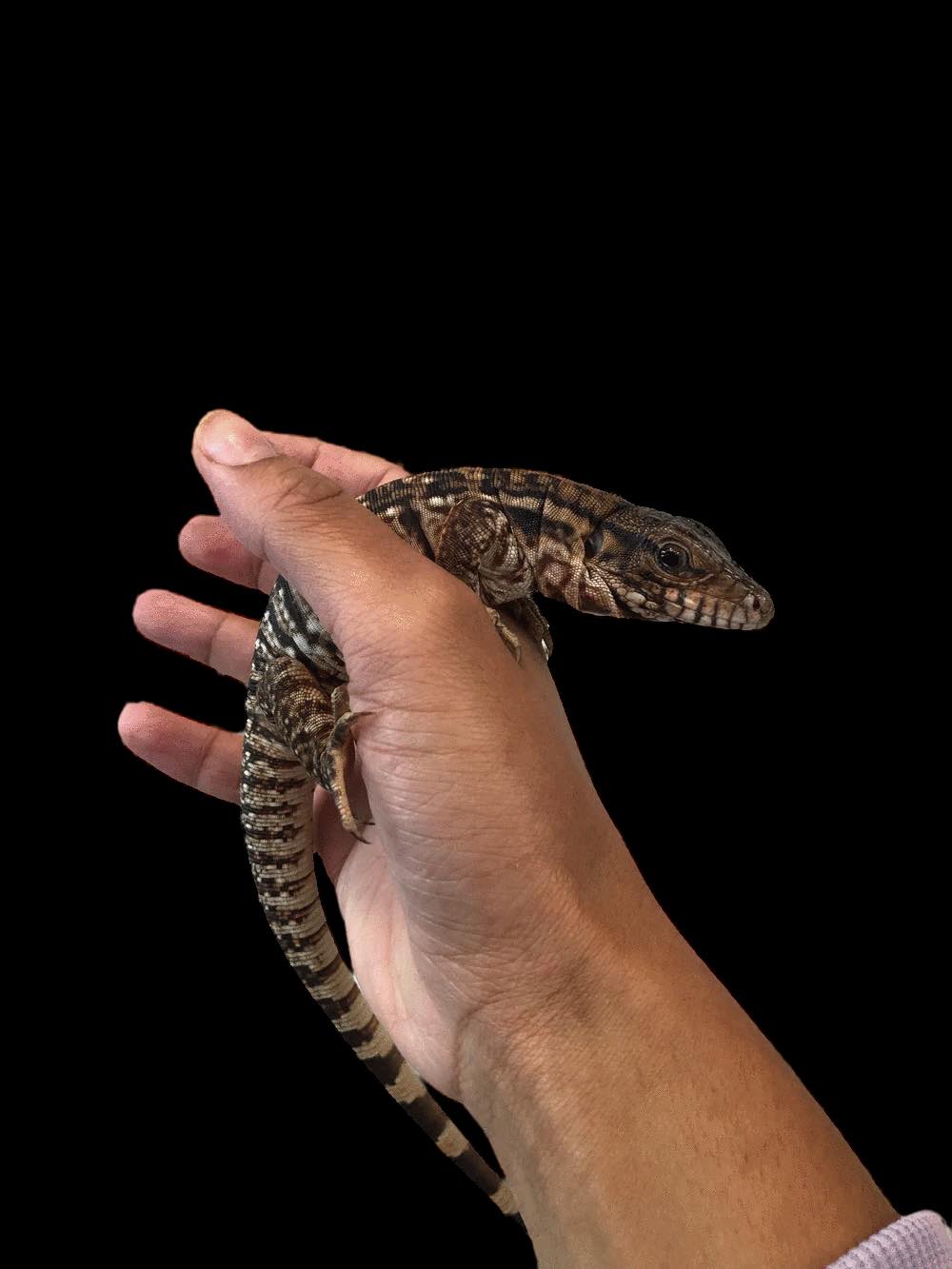
Appearance: The Red Tegu is a large, powerful lizard known for its deep reddish, brick, or copper-toned coloration that intensifies with maturity. Patterning often includes speckling, banding, or marbling across the head, body, and limbs. Males develop large jowls and broader heads, while females remain more streamlined. Their scales are smooth, giving them a polished appearance, and their muscular build reflects their strong, terrestrial lifestyle.
Distribution: Native to western Paraguay, Bolivia, and northern Argentina.
Habitat: This species inhabits dry forests, savannas, scrublands, and semi-arid grasslands. They shelter in burrows, under logs, or within natural depressions. Seasonal temperature variation and long warm periods define their natural environment.
Behaviour: Red Tegus are intelligent, diurnal, and highly active. In the wild, they forage widely for food, bask frequently, and dig extensive burrows. They are known for their problem-solving abilities and strong feeding responses. Captive individuals often become interactive display animals, though they require consistent training and proper space to avoid behavioural issues.
Captive Care
Enclosure: Provide a single adult with an enclosure at least 8 × 4 × 4 feet (240 × 120 × 120 cm). Red Tegus are extremely active and require deep substrate for digging, large basking zones, and ample floor space. Use a soil-based or soil–sand substrate deep enough to allow burrowing, maintaining overall humidity without remaining soaked. Furnish with logs, heavy hides, basking platforms, and sturdy décor.
Temperature and Humidity:
Basking area: 115 to 130°F (46 to 54°C)
Warm side: 90 to 95°F (32 to 35°C)
Cool side: 75 to 82°F (24 to 28°C)
Night temperatures: 70 to 75°F (21 to 24°C)
Humidity: 60 to 80%, maintained with regular misting, deep substrate, and a large water basin.
Lighting: Provide bright full-spectrum lighting with strong UVB (10 to 12%). High-intensity daylight and heat support digestion, metabolism, and natural behaviour. Tegus benefit from a well-defined thermal gradient and long photoperiods.
Diet: Red Tegus are omnivorous. Offer a varied diet including insects (roaches, crickets, worms), lean meats, quail eggs, freshwater fish, and small amounts of rodents. Provide fruits and vegetables such as berries, figs, papaya, squash, and dark leafy greens. Avoid high-fat or low-nutrition items. Supplement calcium frequently and provide multivitamins weekly.
Behaviour in Captivity: Red Tegus are highly intelligent and can become bold and interactive with consistent care. They recognize routines, explore their environment, and respond well to enrichment. Handling is generally tolerated when done calmly, but young tegus may be defensive. Adults are strong and require thoughtful husbandry to maintain safety and comfort.
Special Considerations:
• Provide deep substrate for burrowing and humidity control.
• Avoid housing adults together outside of supervised breeding attempts.
• Ensure strong, secure enclosure construction—tegus are powerful diggers.
• Offer enrichment such as scent trails, digging areas, and puzzle feeders.
• Maintain humidity while ensuring proper ventilation.
Taxonomy Note
The Red Tegu is part of the genus Salvator, which includes several large South American tegus. Salvator rufescens is closely related to the Argentine Black and White Tegu but distinguished by its red and copper colouration and its native dry-forest range.
Genetics Note
There are no formally recognised morphs for Salvator rufescens. Natural variation includes differences in red saturation, speckle density, and tone (from rusty tan to deep crimson). These variations reflect normal geographic and individual diversity.