


Photo Disclaimer
Description
Reinwardt’s Flying Frog
Scientific Name: Rhacophorus reinwardtii
Common Name: Reinwardt’s Flying Frog, Black-webbed Tree Frog
Species Overview
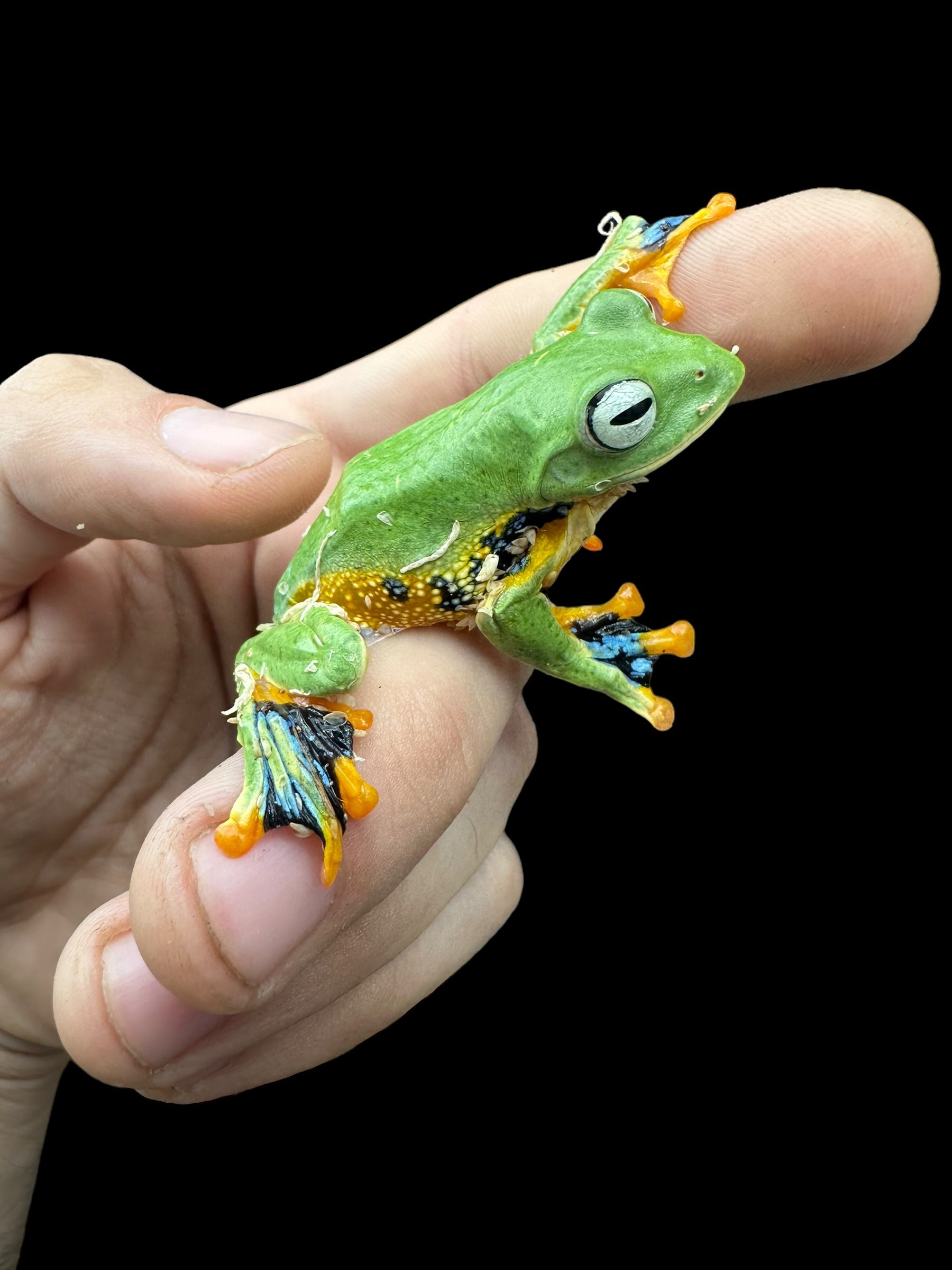
Size: Adults typically reach 3 to 4 inches (7.5 to 10 cm), with females slightly larger.
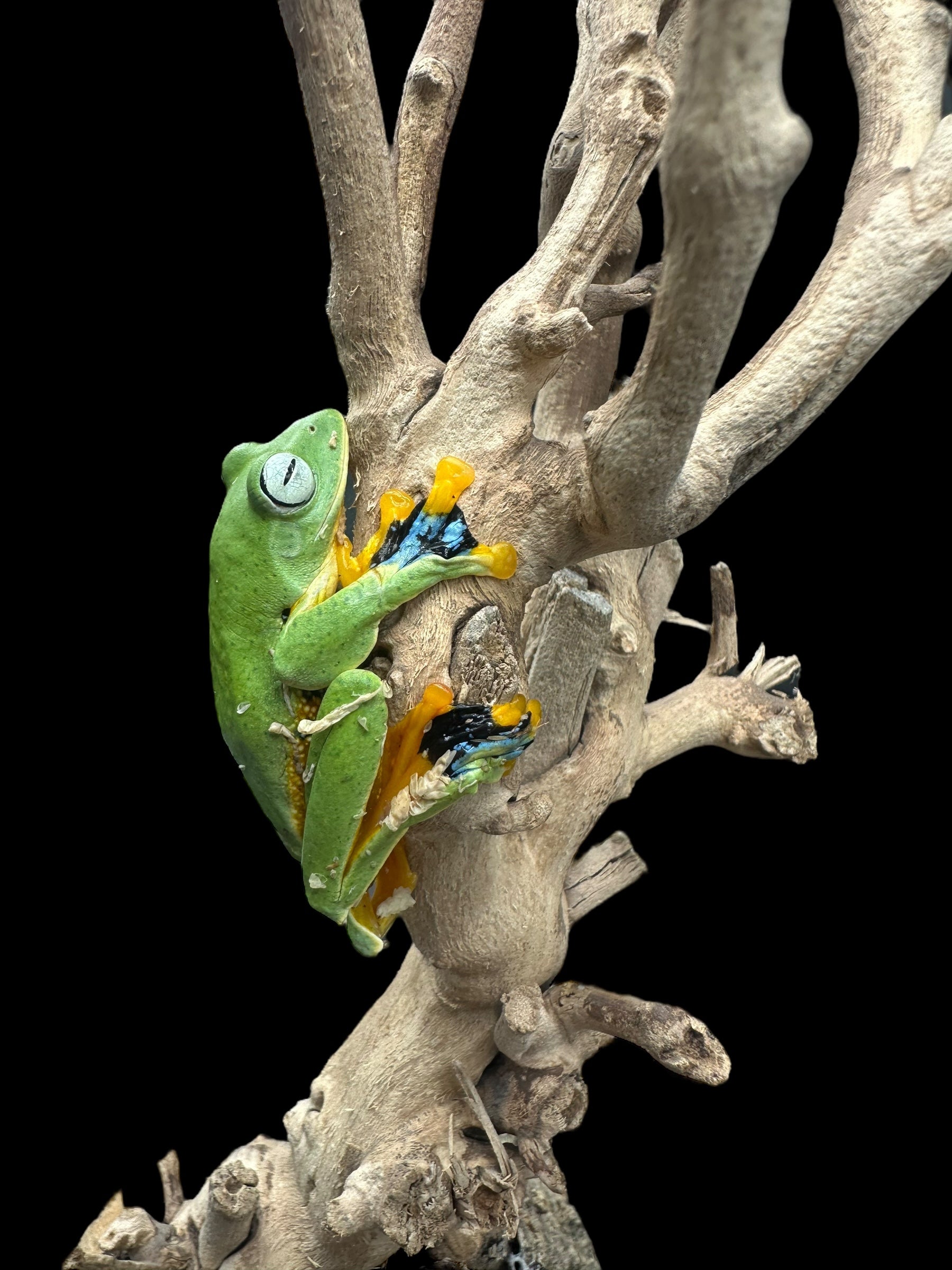
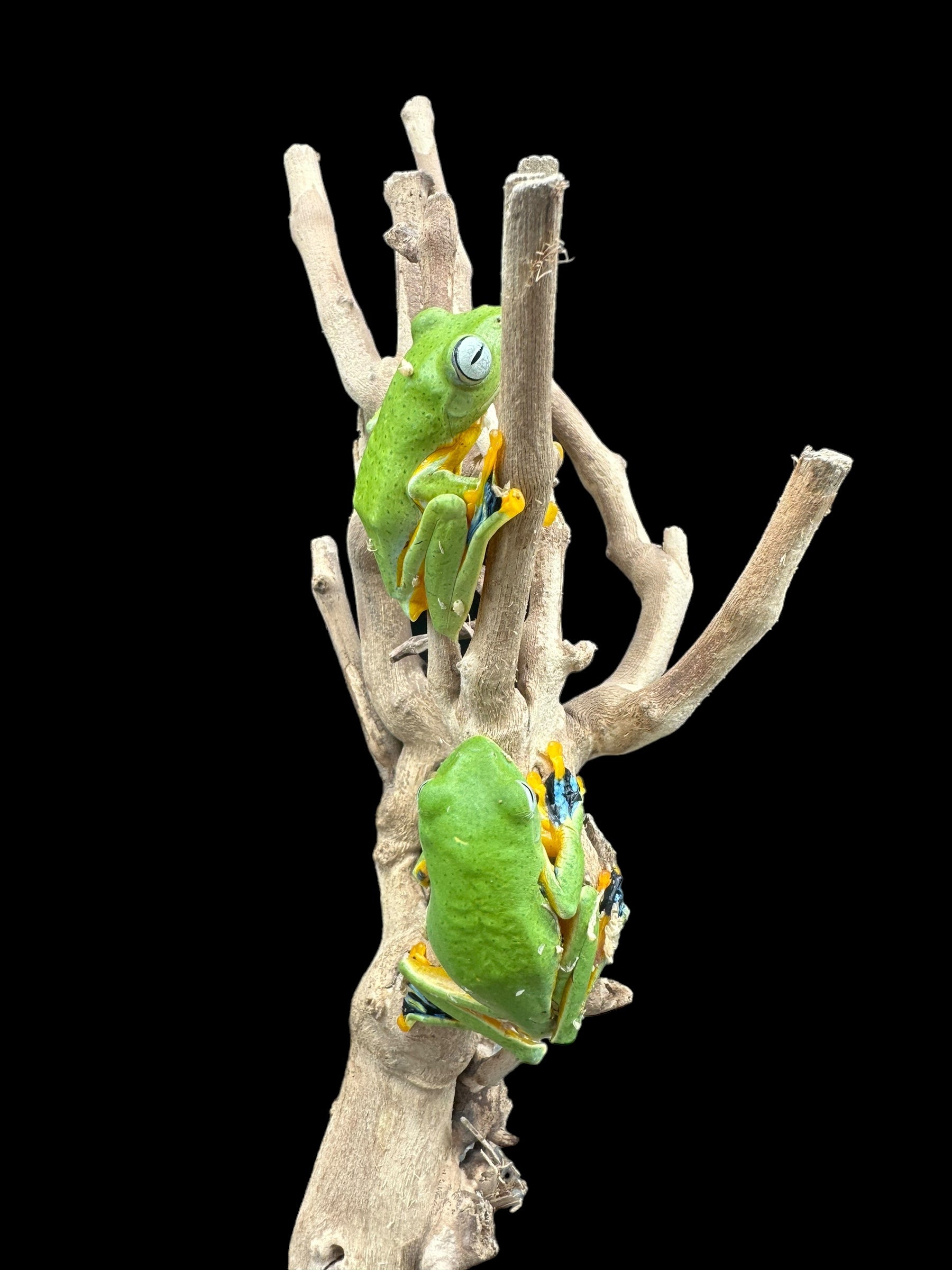
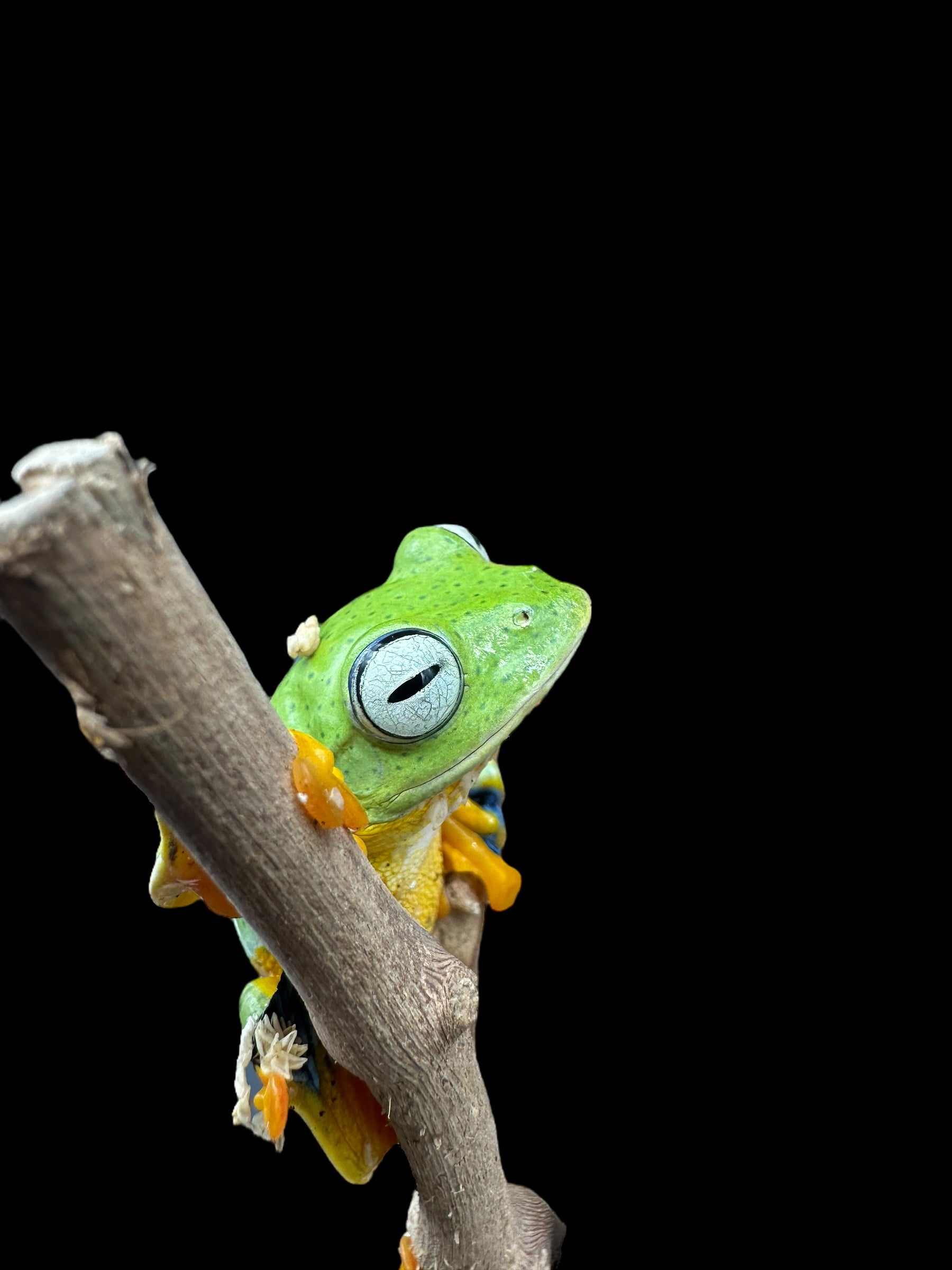
Appearance: Reinwardt’s Flying Frog is a large, striking arboreal species known for its extensive webbing and gliding ability. The dorsum ranges from bright to emerald green, often with subtle bluish tones. The toes and webbing are vivid orange to black, forming a dramatic contrast when the frog spreads its feet during leaps. The belly is pale, and the sides may show soft white or blue spotting. Eyes are large, forward-facing, and golden, with horizontal pupils. Skin is smooth and glossy, suited for life in humid treetops.
Distribution: Native to Southeast Asia, including Indonesia, Malaysia, and surrounding island regions.
Habitat: Found in tropical lowland and hill rainforests, typically high in the canopy or on tall understory vegetation near permanent or seasonal pools. They rarely descend to the forest floor except during breeding.
Behaviour: Primarily nocturnal and highly arboreal, these frogs use their large toe pads and fully webbed feet to climb and glide between branches. They build foam nests above water where tadpoles drop into pools after hatching. They are bold, strong jumpers with impressive aerial control.
Captive Care
Enclosure: A single adult or small group thrives in an 18 × 18 × 24 inches (45 × 45 × 60 cm) enclosure, though this large, active species benefits greatly from a 24 × 18 × 24 inches (60 × 45 × 60 cm) setup. Provide tall climbing branches, cork tubes, vines, and large broad leaves for resting. Use a moisture-retentive substrate such as coco fibre, soil blends, or sphagnum mixes to support humidity. Include a wide, shallow water basin suitable for soaking.
Temperature and Humidity:
Ambient temperature: 75 to 82°F (24 to 28°C)
Warm area: up to 84°F (29°C)
Night temperature: 70 to 74°F (21 to 23°C)
Humidity: 70 to 100%, achieved through regular misting and dense foliage.
Lighting: Provide moderate UVB (around 5%) with bright, diffused lighting. This species benefits from strong light that supports plant growth and natural activity rhythms.
Diet: Offer medium to large insects such as crickets, roaches, silkworms, black soldier fly larvae, hornworms, and the occasional waxworm. Juveniles can also receive fruit flies. Supplement all prey with calcium and multivitamins.
Behaviour in Captivity: Reinwardt’s Flying Frogs are active, strong climbers that appreciate tall enclosures with plenty of vertical pathways. They are bold eaters, often hunting readily at night. Handling should be minimized because of their sensitive skin and tendency to leap unpredictably.
Special Considerations:
• Use wet, powder-free gloves or a soft, damp net if handling is unavoidable—this species is powerful and can jump long distances.
• Provide numerous tall climbing structures to accommodate their gliding behaviour.
• Maintain strong ventilation alongside high humidity to avoid stagnant air.
• Use only dechlorinated or RO water for misting and hydration.
• Avoid oversaturated substrate; allow moderate drying cycles.
• Ensure enclosure access is secure—these frogs can escape quickly and leap with significant force.
Taxonomy Note
Rhacophorus reinwardtii belongs to the family Rhacophoridae, the “flying frogs,” known for extensive webbing and gliding ability. It is closely related to Rhacophorus nigropalmatus, sharing similar morphology and behaviour but differing in colour and regional distribution.
Genetics Note
There are no recognised morphs for Rhacophorus reinwardtii. Natural variation occurs in webbing darkness, dorsal hue, and spotting, but none represent defined genetic morphs.