




Photo Disclaimer
Description
Reticulated Glass Frog
Scientific Name: Hyalinobatrachium valerioi
Common Name: Reticulated Glass Frog
Species Overview
Size: Adults typically reach .9 to 1 inches (2.4 to 2.6 cm), with females slightly larger.
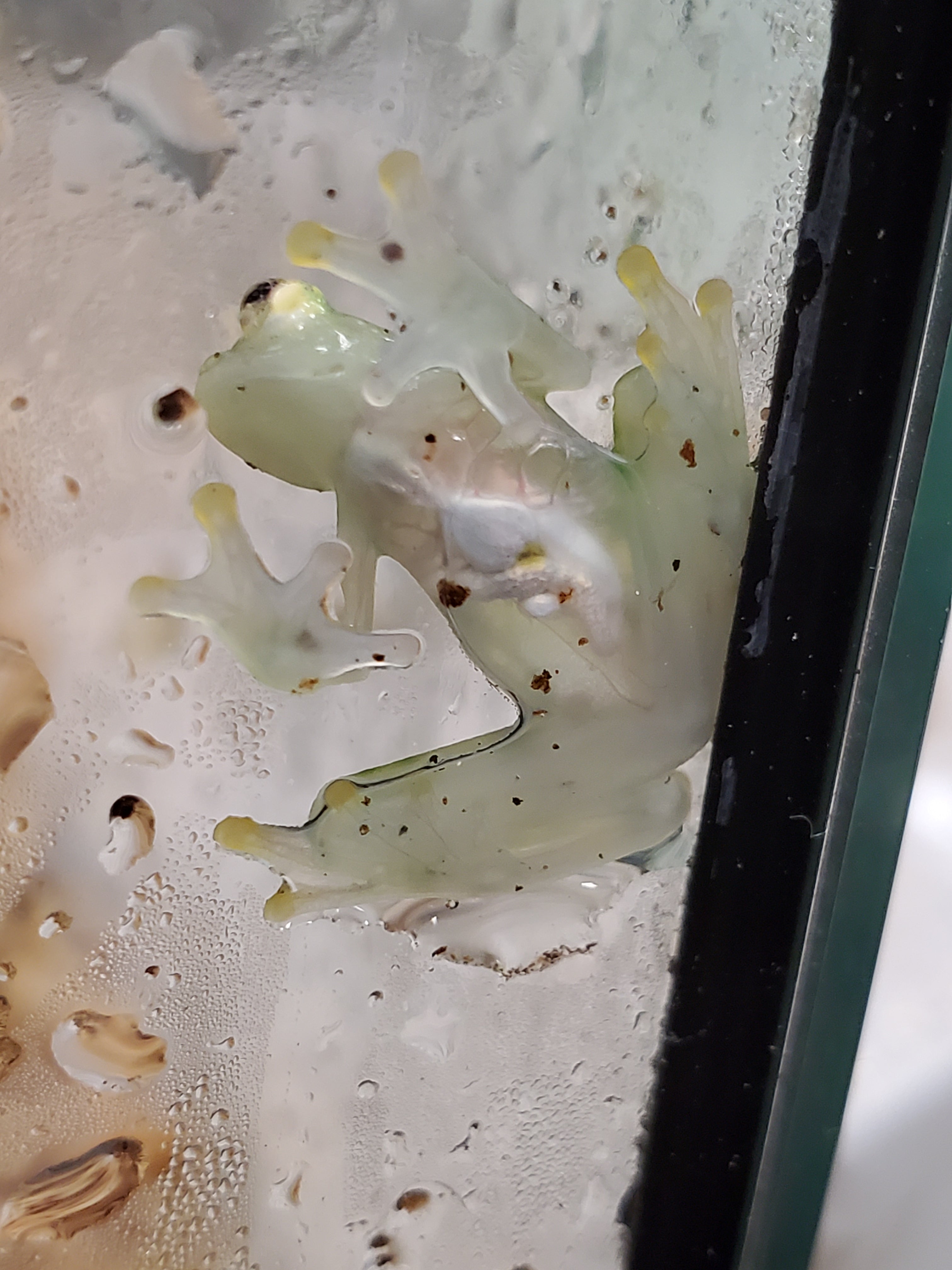
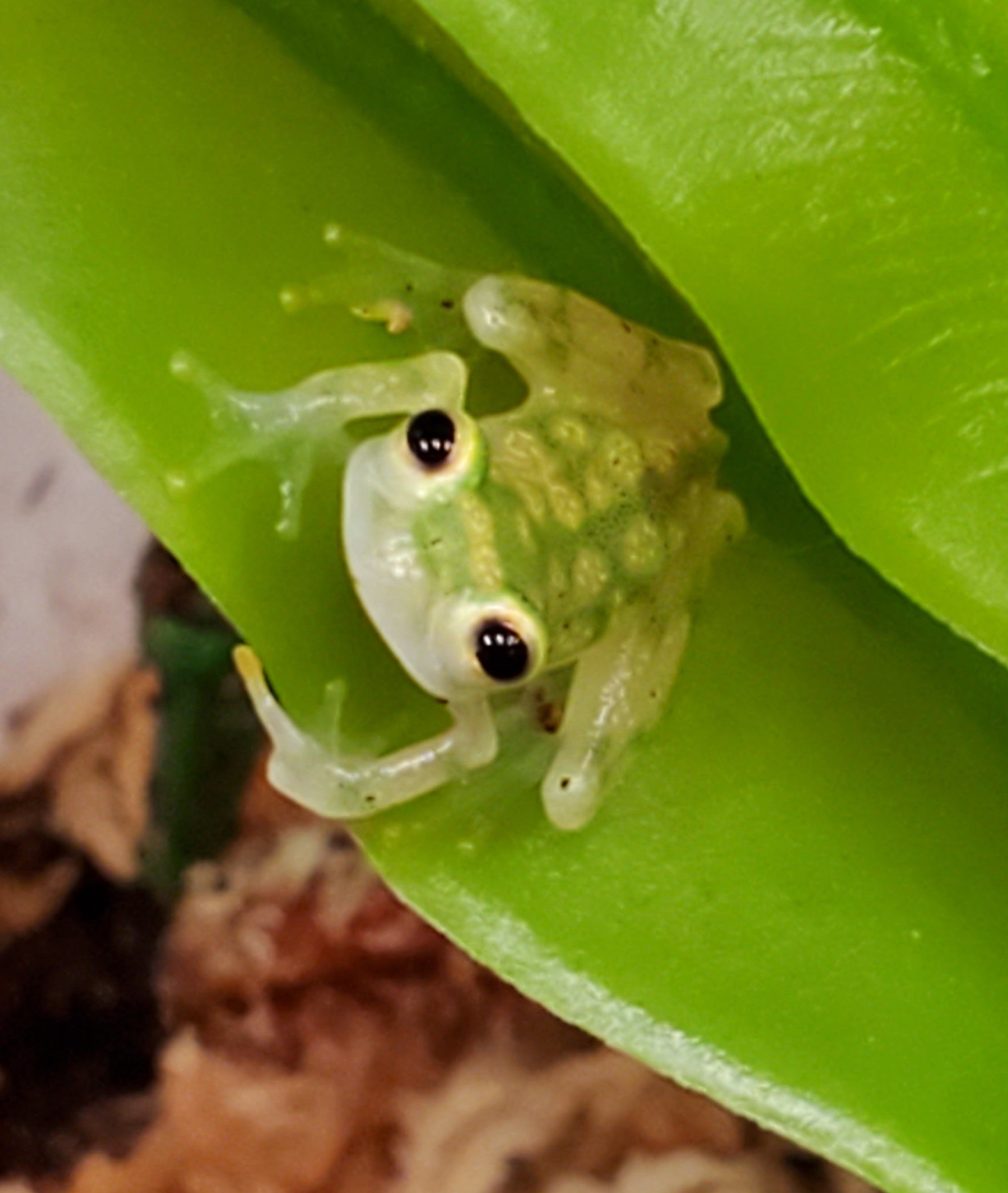
Appearance: The Reticulated Glass Frog has a smooth, bright green dorsum sprinkled with fine yellow speckles. The ventral surface is partially transparent, revealing internal organs, as is typical for glass frogs. Limbs are slender with small round toe pads, well suited for gripping delicate leaves. The eyes are large, pale, and forward-facing with horizontal pupils, creating the alert expression typical of Hyalinobatrachium species.
Distribution: Found throughout Central America, including Costa Rica, Panama, the Pacific lowlands and slopes of western Colombia and Ecuador.
Habitat: Wild individuals inhabit humid lowland and mid-elevation rainforests near clear, flowing streams. They rest on leaves overhanging water and require stable moisture and clean, well-oxygenated microhabitats.
Behaviour: Nocturnal and shy, Reticulated Glass Frogs rely on camouflage and stillness for protection. Males call softly from leaves above streams and guard egg clusters laid on vegetation. They are sensitive to environmental fluctuations.
Captive Care
Enclosure: A single adult or small group thrives in a 12 × 12 × 18 inches (30 × 30 × 45 cm) enclosure, while larger groups benefit from an 18 × 18 × 24 inches (45 × 45 × 60 cm) setup. Provide abundant broad leaves, thin branches, and elevated perches placed near water features. Use a moisture-retentive substrate such as coco fibre, soil blends, or sphagnum to maintain high humidity. Include a shallow water basin or a gentle running-water element to simulate their natural streamside habitat.
Temperature and Humidity:
Ambient temperature: 72 to 78°F (22 to 26°C)
Warm area: up to 80°F (27°C)
Night temperature: 68 to 72°F (20 to 22°C)
Humidity: 80 to 100%, achieved through frequent misting, dense foliage, and strong moisture retention.
Lighting: Provide low UVB (around 2%) with soft, diffused lighting to avoid stress.
Diet: Offer very small insects such as fruit flies, springtails, tiny crickets, small roaches, and isopods. Supplement prey with calcium and multivitamins.
Behaviour in Captivity: This species thrives in cool, humid, densely planted terrariums with plenty of leaf cover. They remain motionless for long periods during the day and become active at night. Handling should be strictly avoided due to their delicate structure and sensitive skin.
Special Considerations:
• If handling is unavoidable, use wet, powder-free gloves or a soft, damp net.
• Maintain high humidity with strong ventilation—avoid stagnant air.
• Provide broad leaves above water features to mimic natural perching and calling sites.
• Keep temperatures on the cooler end of the tropical range.
• Use only clean, dechlorinated water for misting and hydration.
• Ensure the enclosure is escape-proof—this species can fit through very small gaps.
Taxonomy Note
Hyalinobatrachium valerioi belongs to the family Hyalinobatrachium, a group known for transparent ventral surfaces, delicate builds, and breeding behaviour tied to running water. This species is identifiable by its fine golden eyes and yellow speckling.
Genetics Note
There are no recognised morphs for Hyalinobatrachium valerioi. Natural variation occurs in speckling density, dorsal hue, and translucency, but none represent defined genetic morphs.